Pravićes me od Blata
“You will make me out of Mud”Presented within Not So Romantic, a project initiated by Arthur Heck at Gap’s Zurich, Pravićeš me od blata (“You’ll make me out of mud”) is a new series of ceramic sculptures reflecting on intimacy, memory, and the fragile nature of existence.
The title refers to a common expression from the former Yugoslavia, often spoken by parents to their children. At once affectionate and unsettling, the phrase carries a sense of urgency: a reminder to recognize and value what is present before it becomes something that can only be remembered.
Working with clay, a material deeply connected to the earth and to processes of transformation, the series explores the tension between permanence and disappearance. The glossy surfaces, with their jewel-like shine and references to glamour, create a contrast between fragility and ornament, vulnerability and desire. Through this tension, the ceramics inhabit a space between tenderness and theatricality, where beauty becomes a way of holding onto what is inevitably passing.
During Not So Romantic, the materials continued to evolve. The emergence of rust became part of the work itself, allowing the ceramics to transform in dialogue with the environment and the specific conditions of the site. This ongoing change reinforces the central reflection of the series: how matter can preserve traces of what is temporary.
Pravićeš me od blata considers the act of shaping and being shaped by others, by memory, and by time. The sculptures become vessels for presence, carrying the fragile traces of relationships while acknowledging the inevitable return of all things to the earth.


Photos by Arthur Heck
Sharing the Table with Someone Familiar
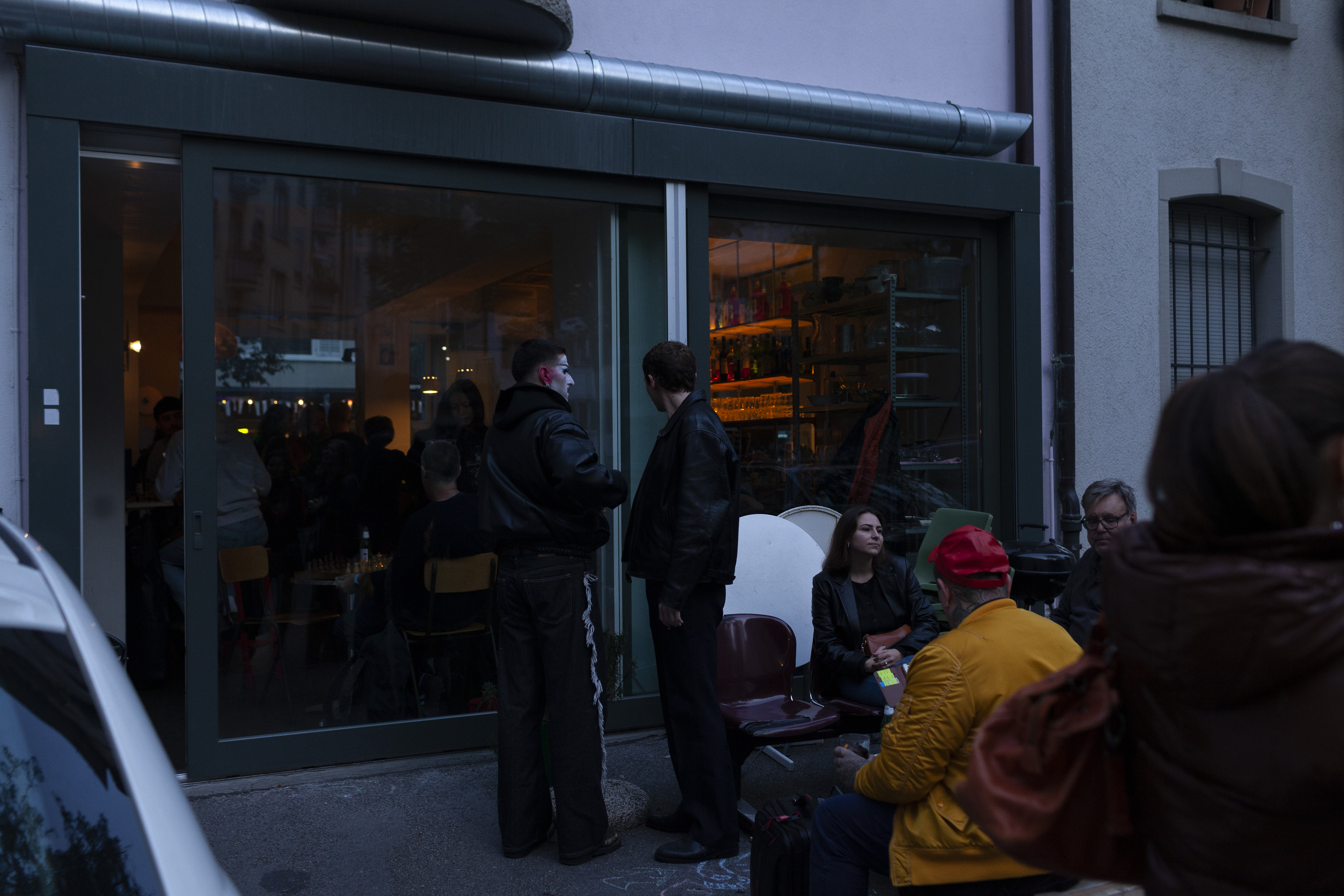
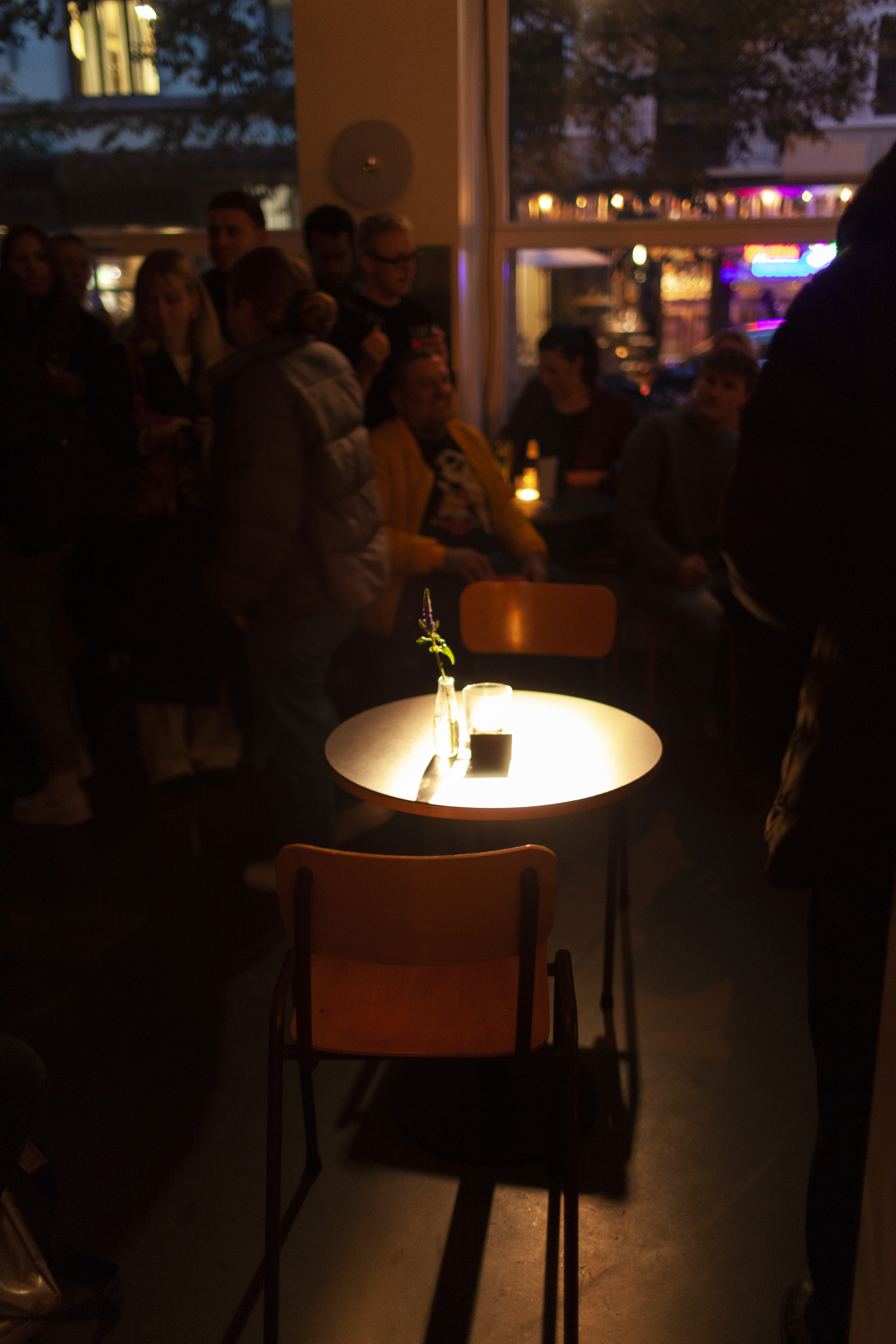
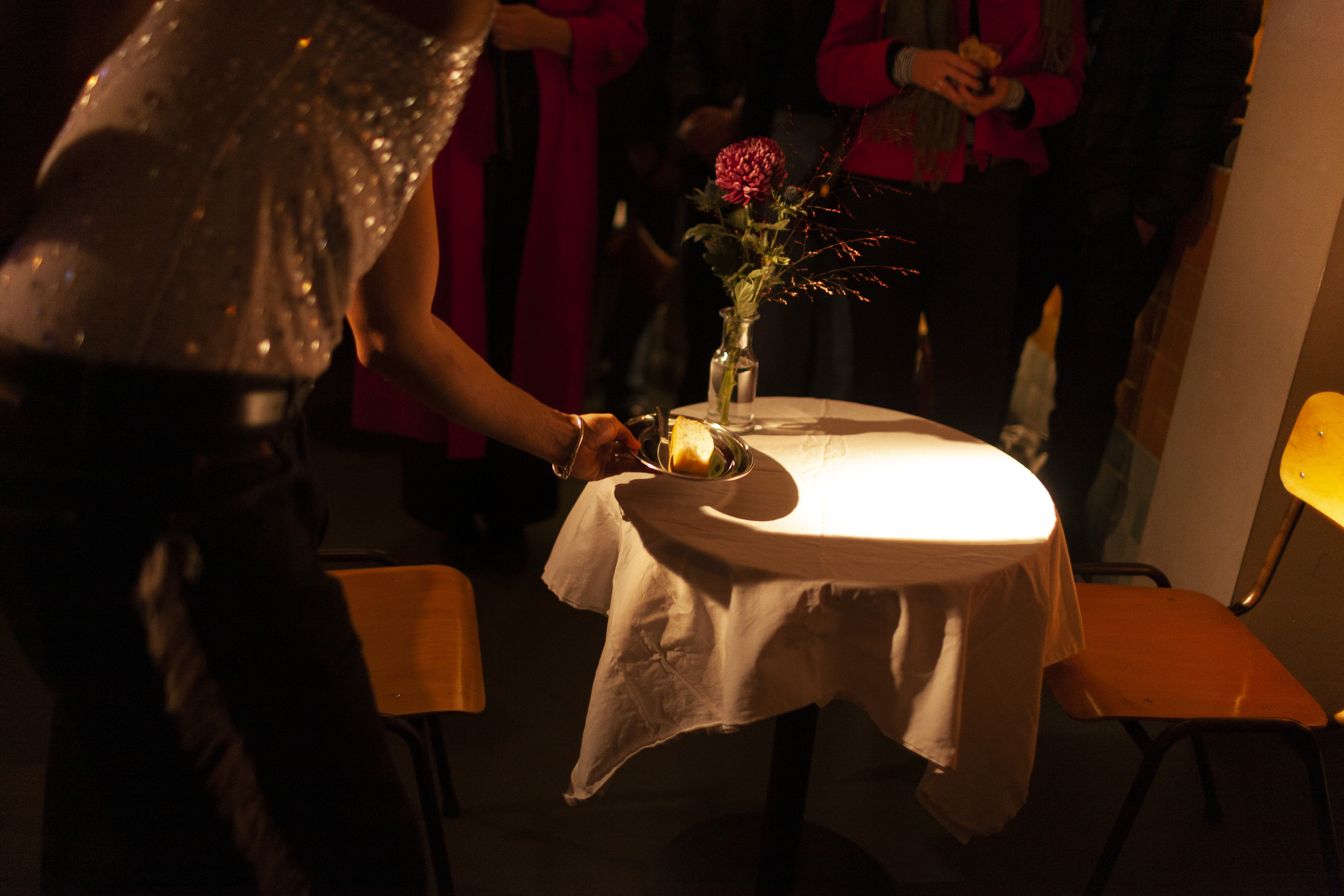
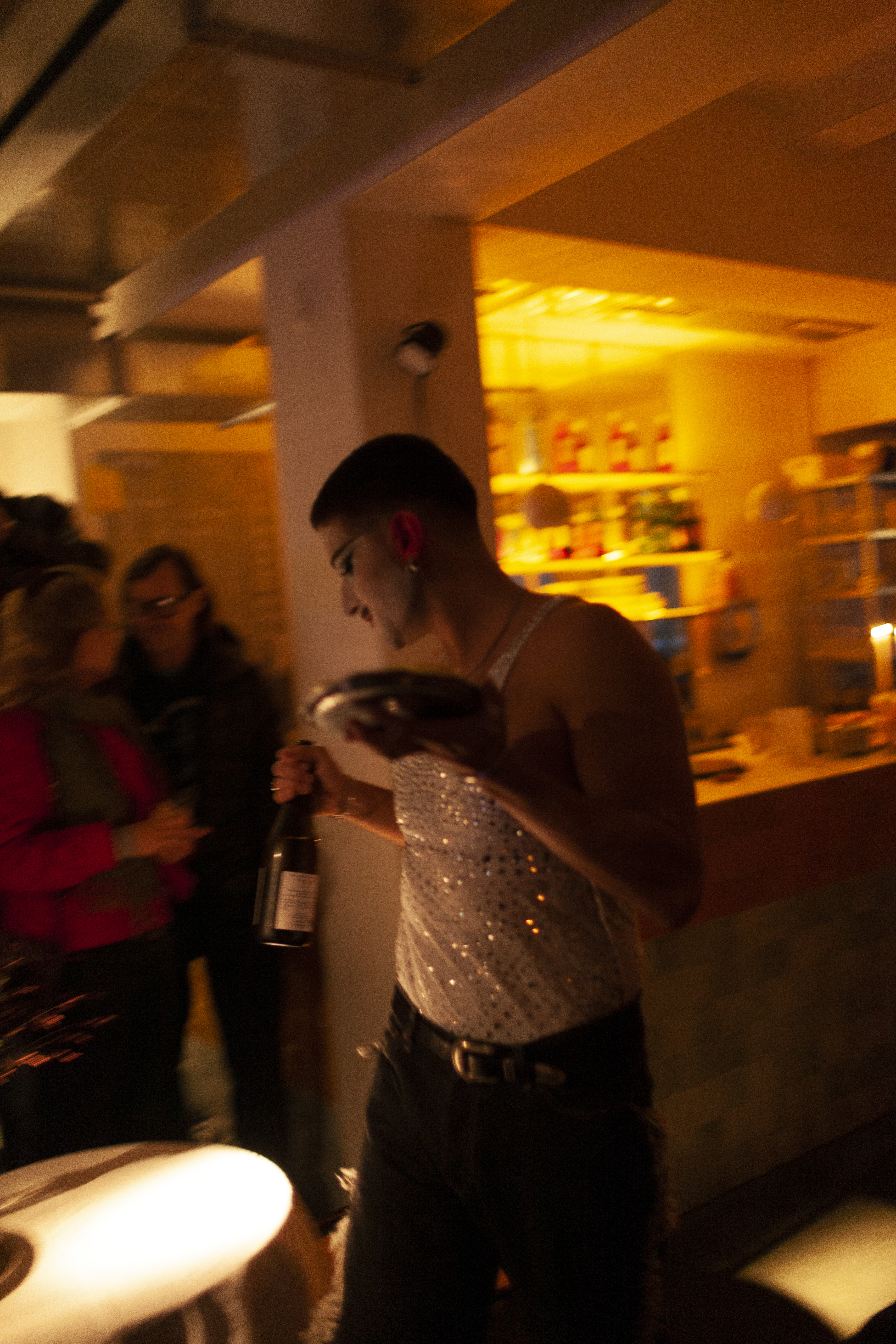
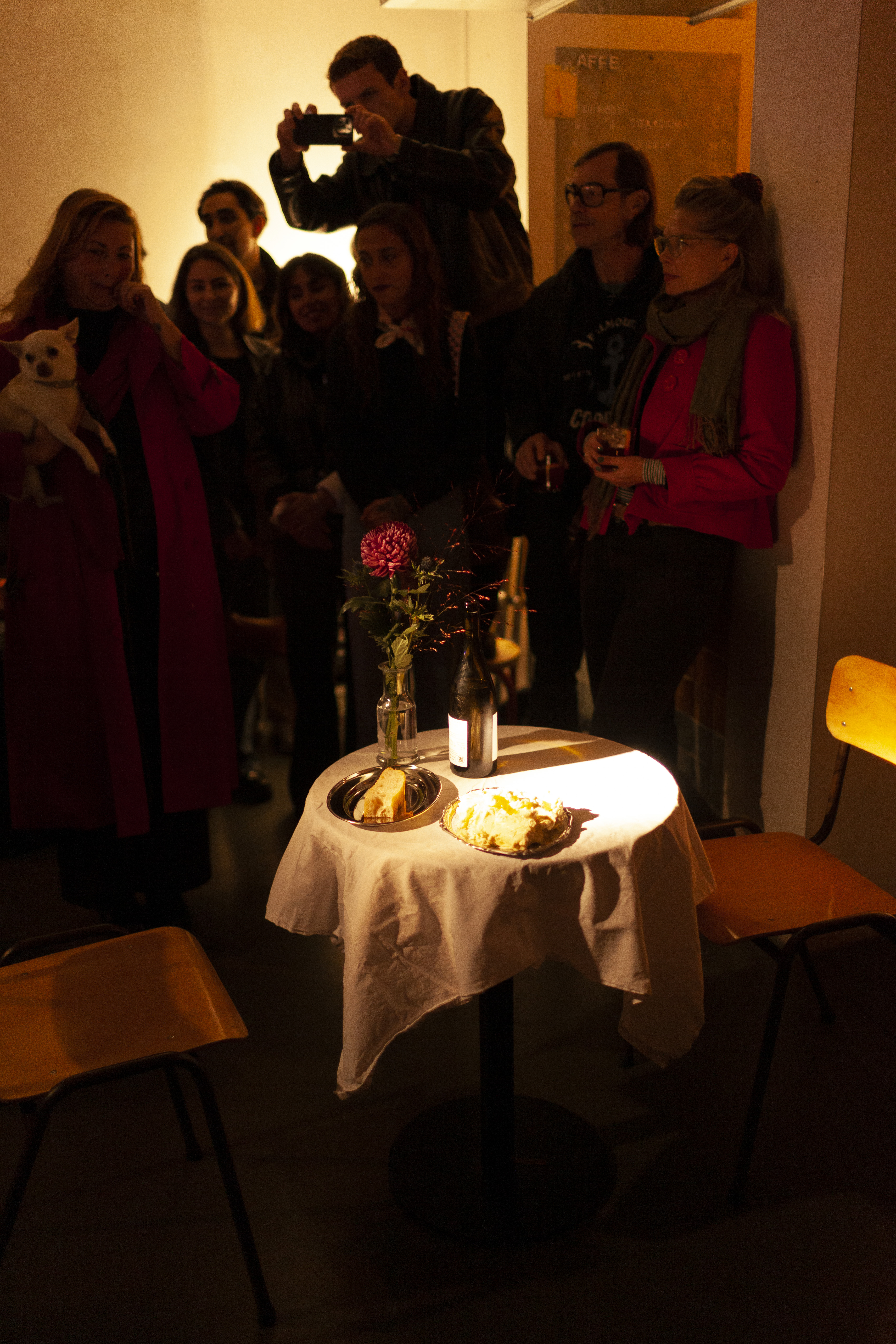
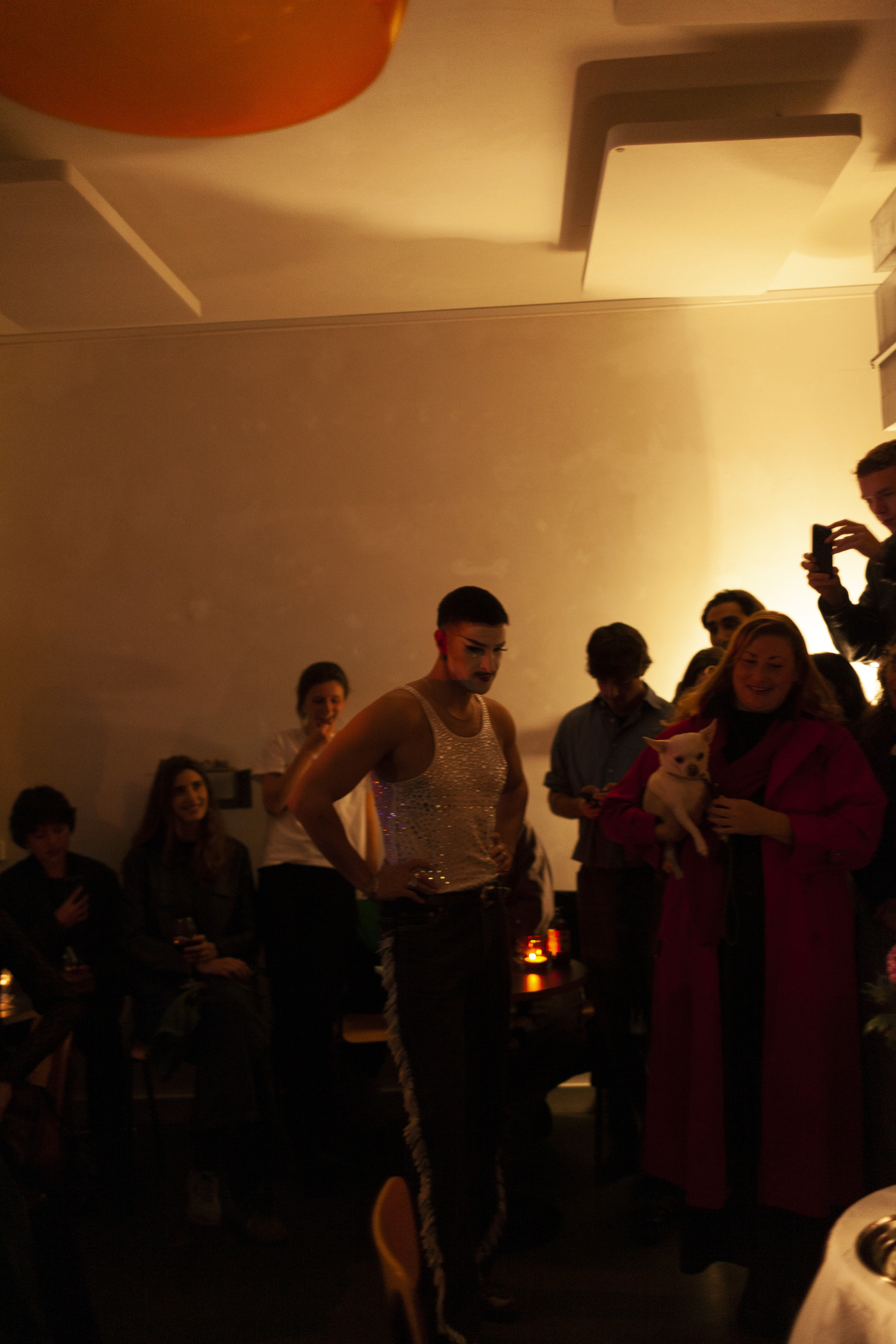
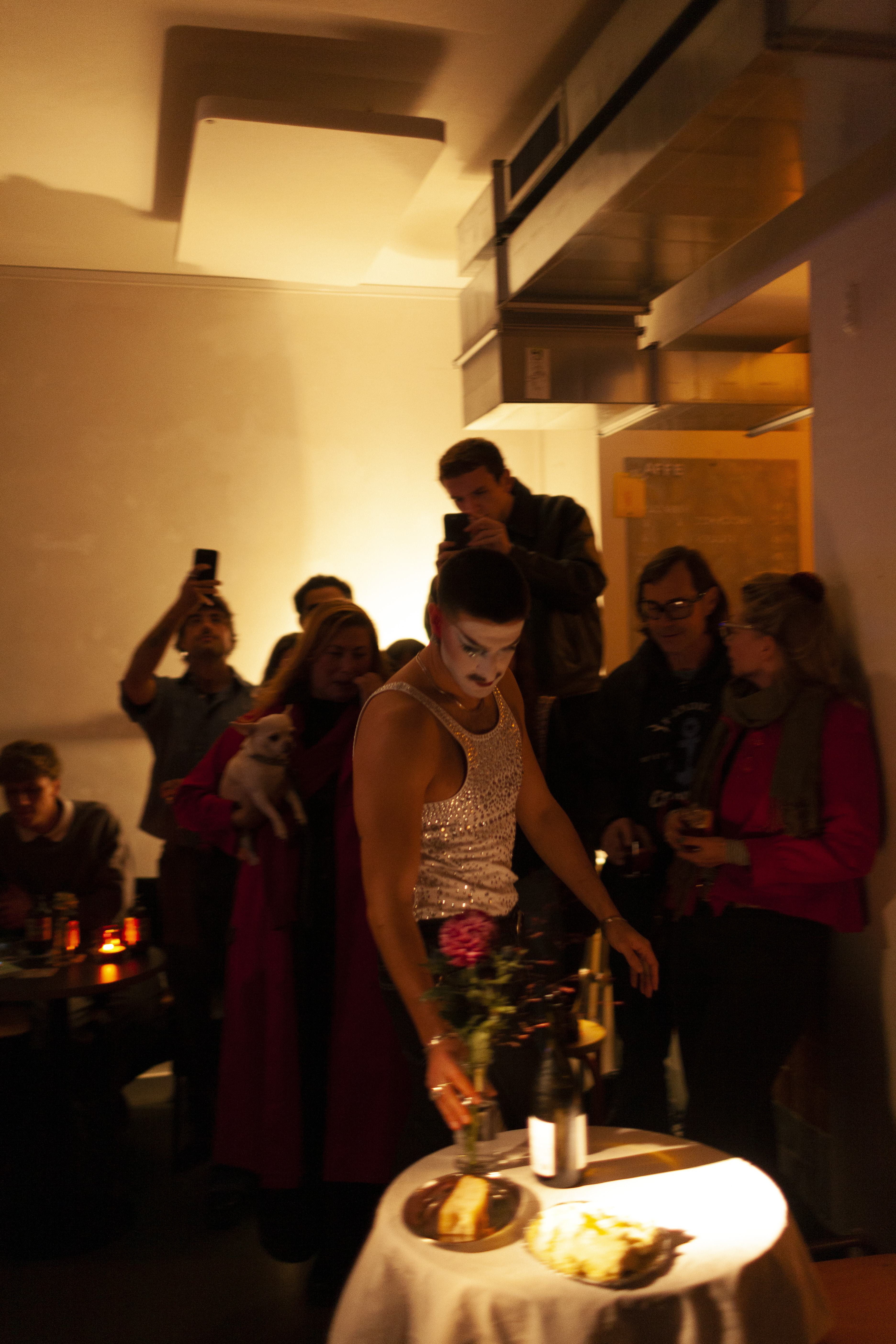
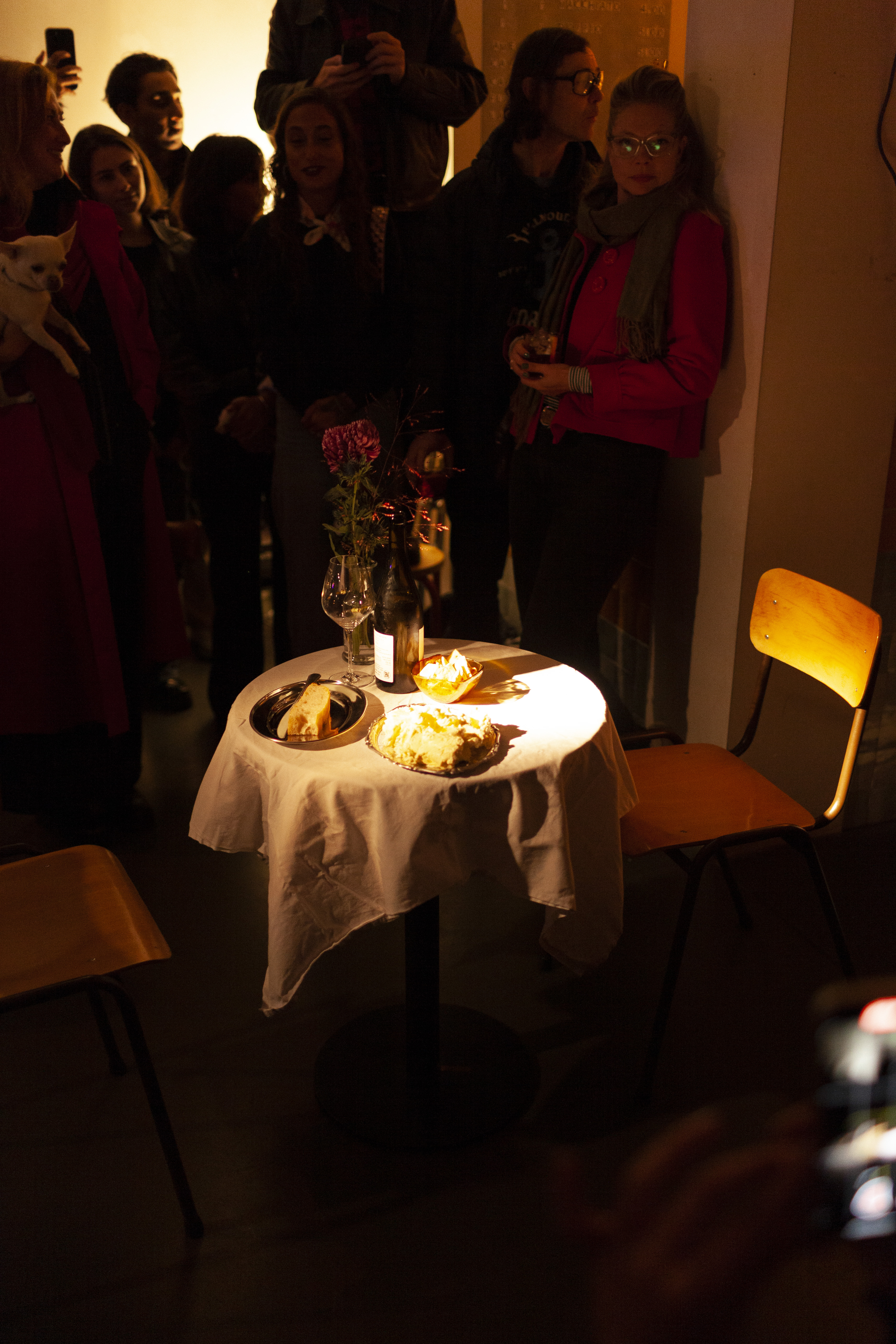
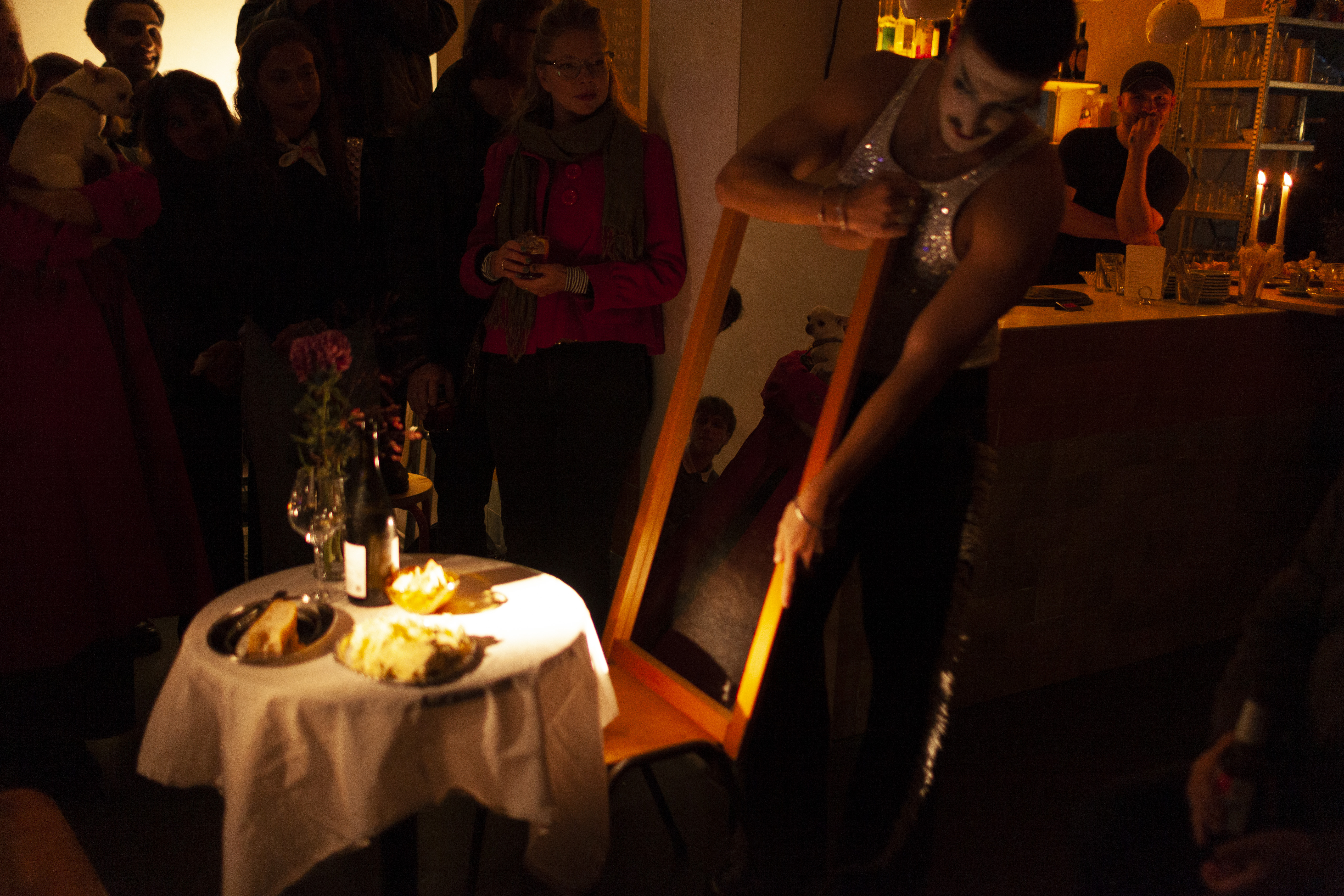
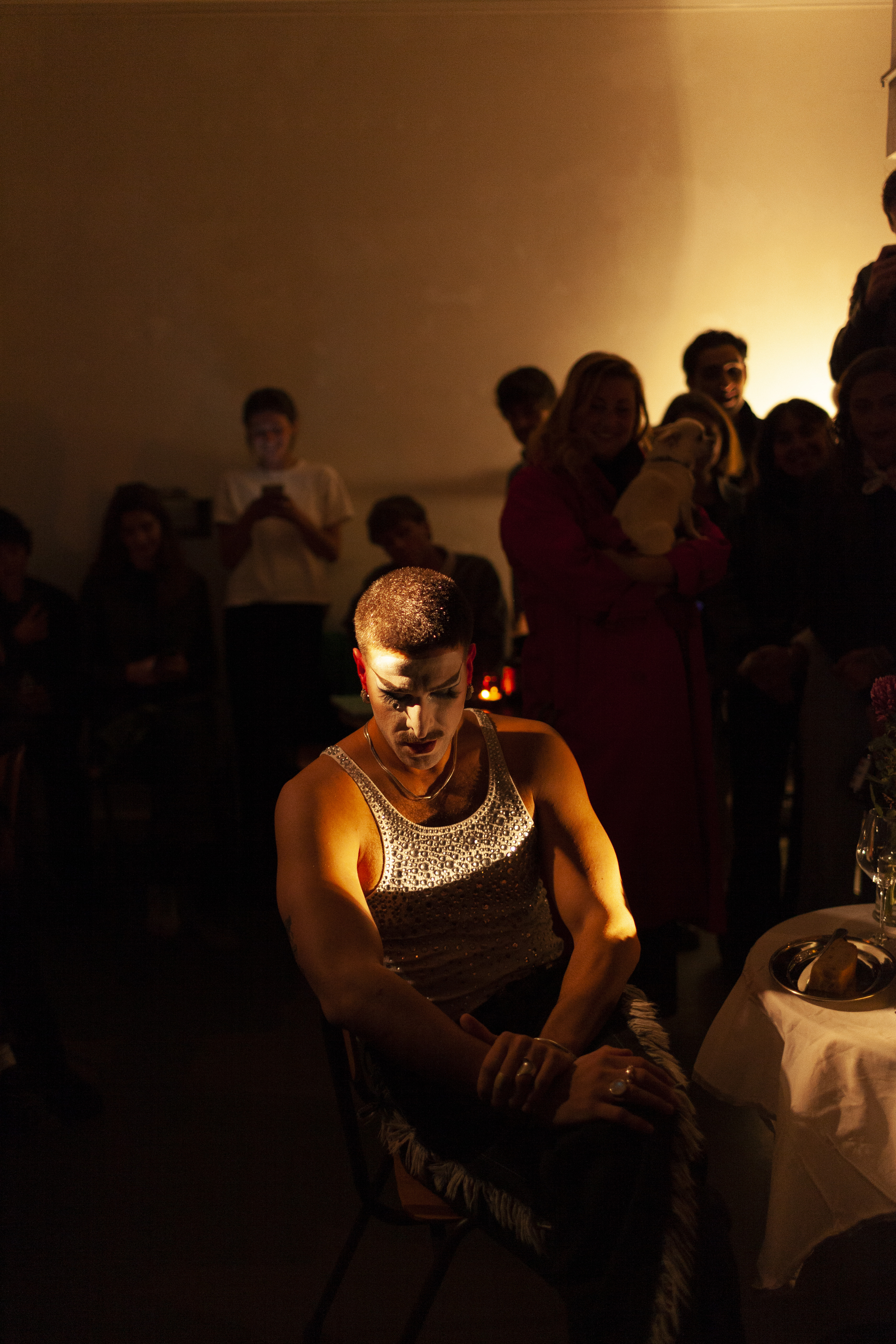
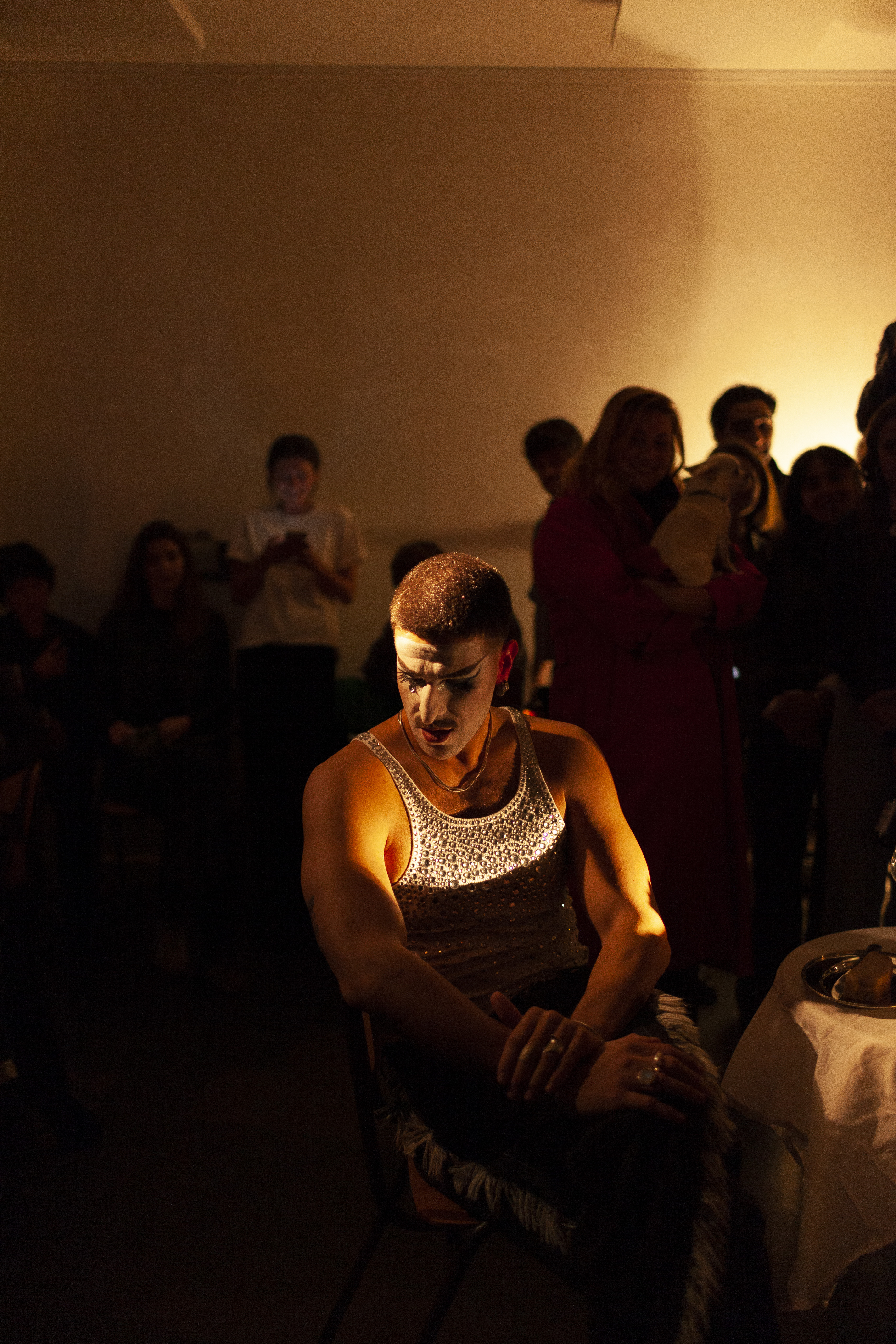
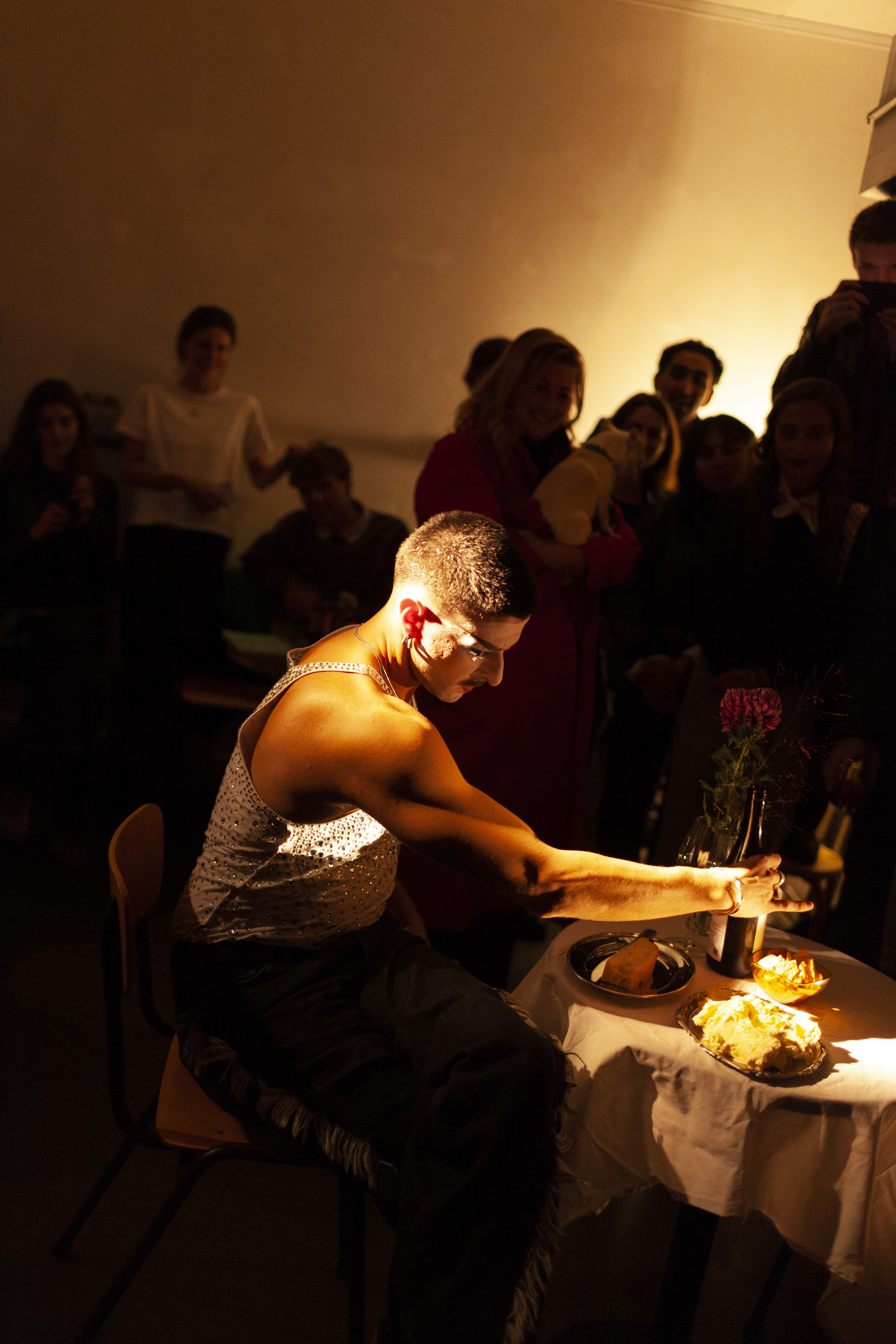
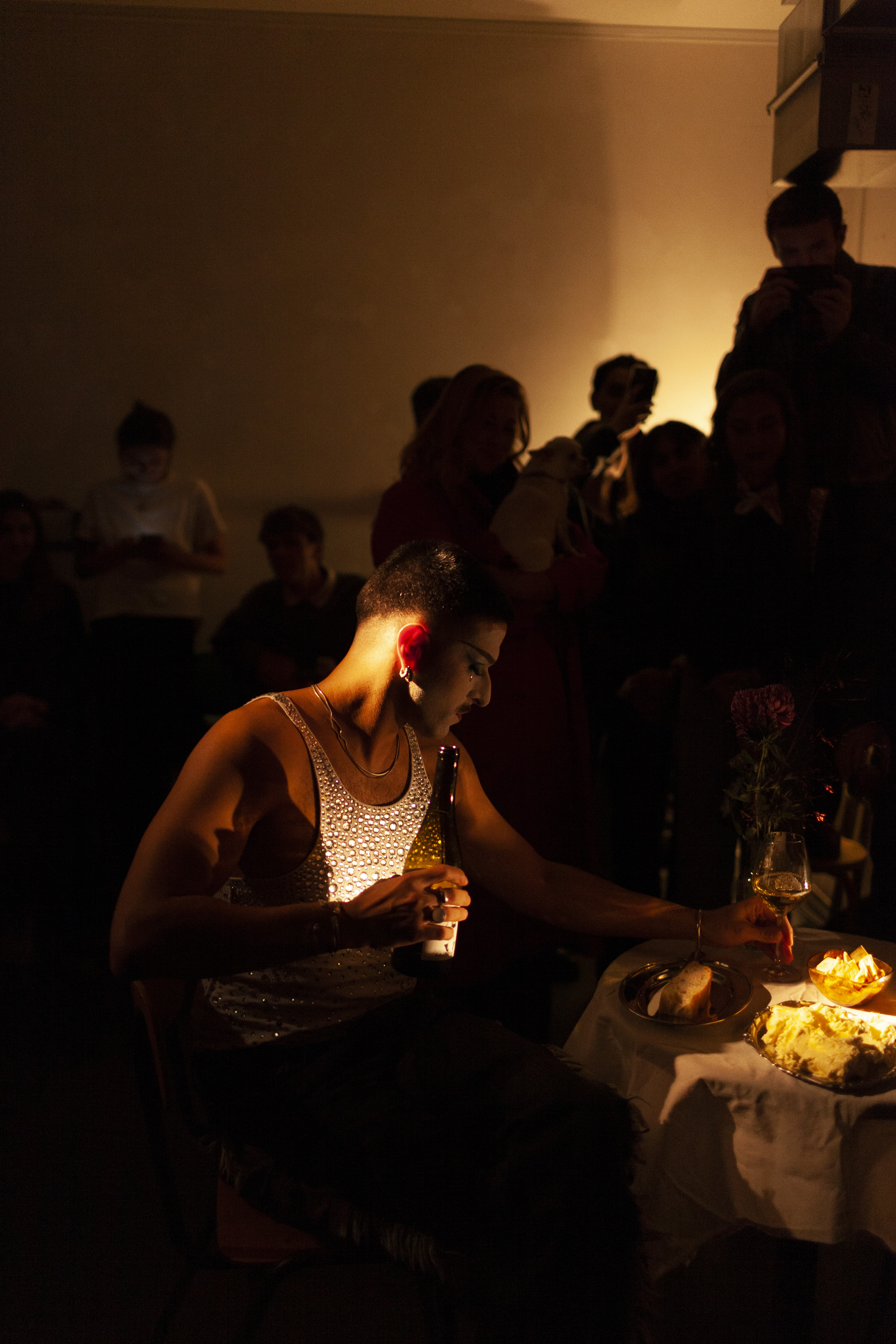
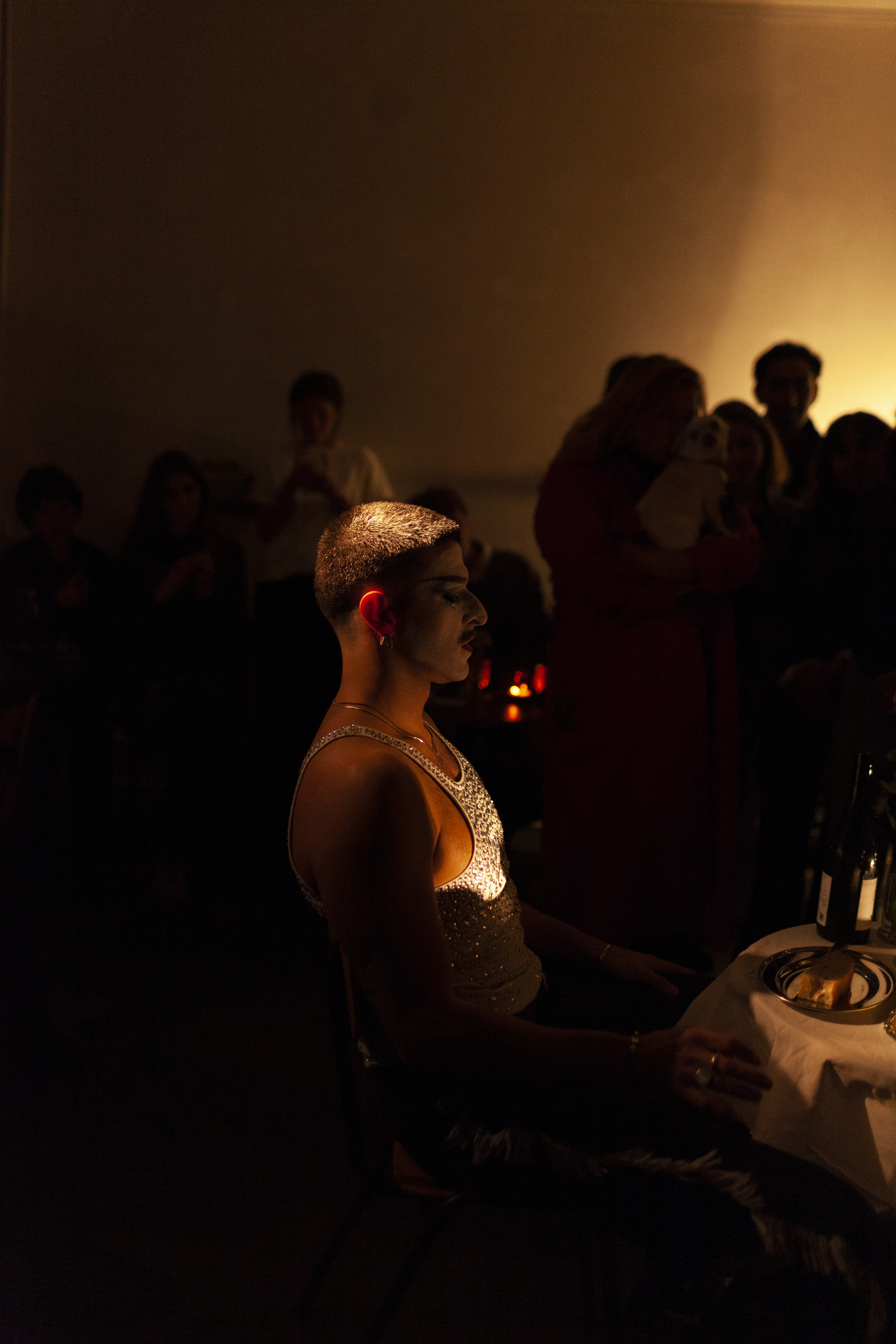
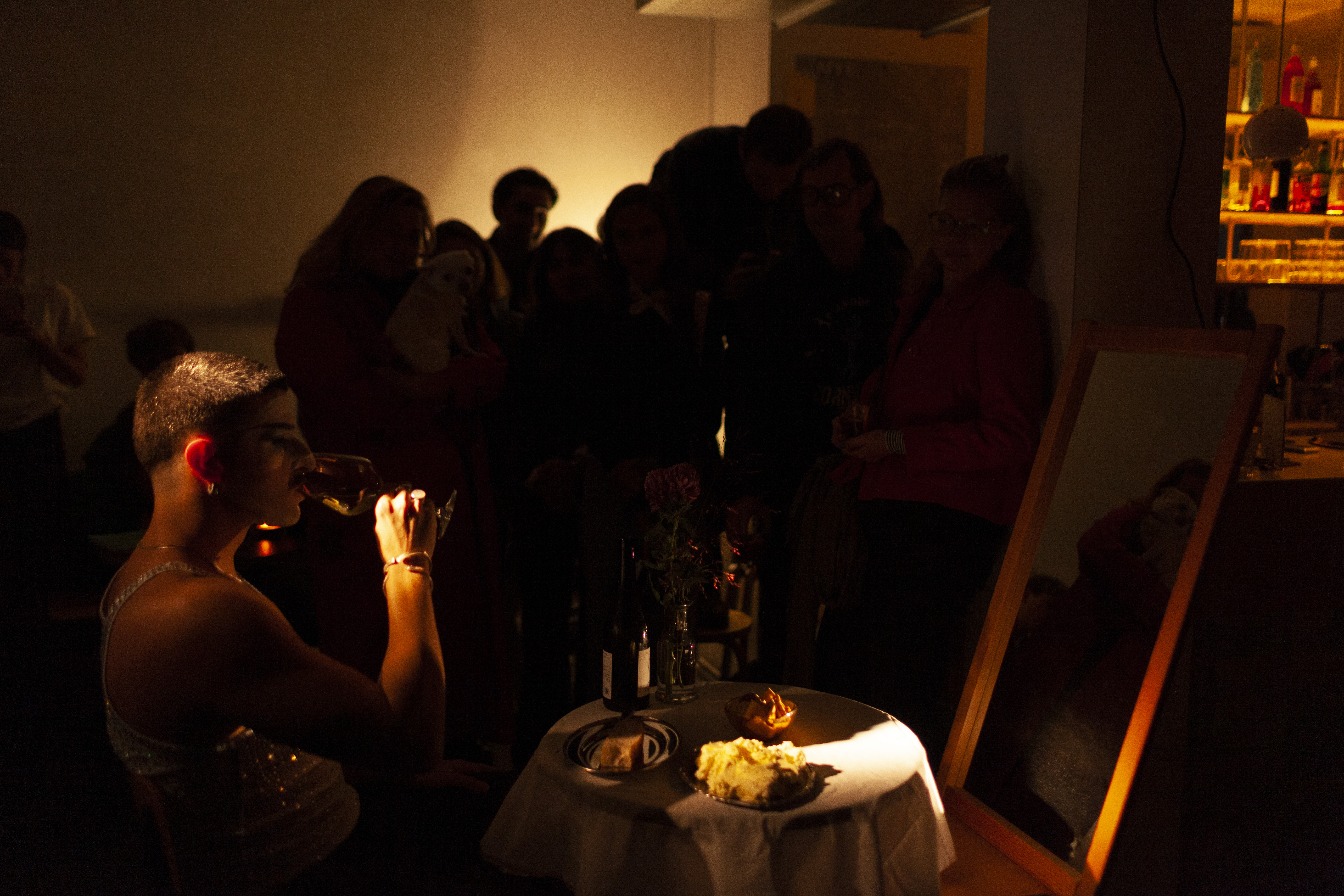
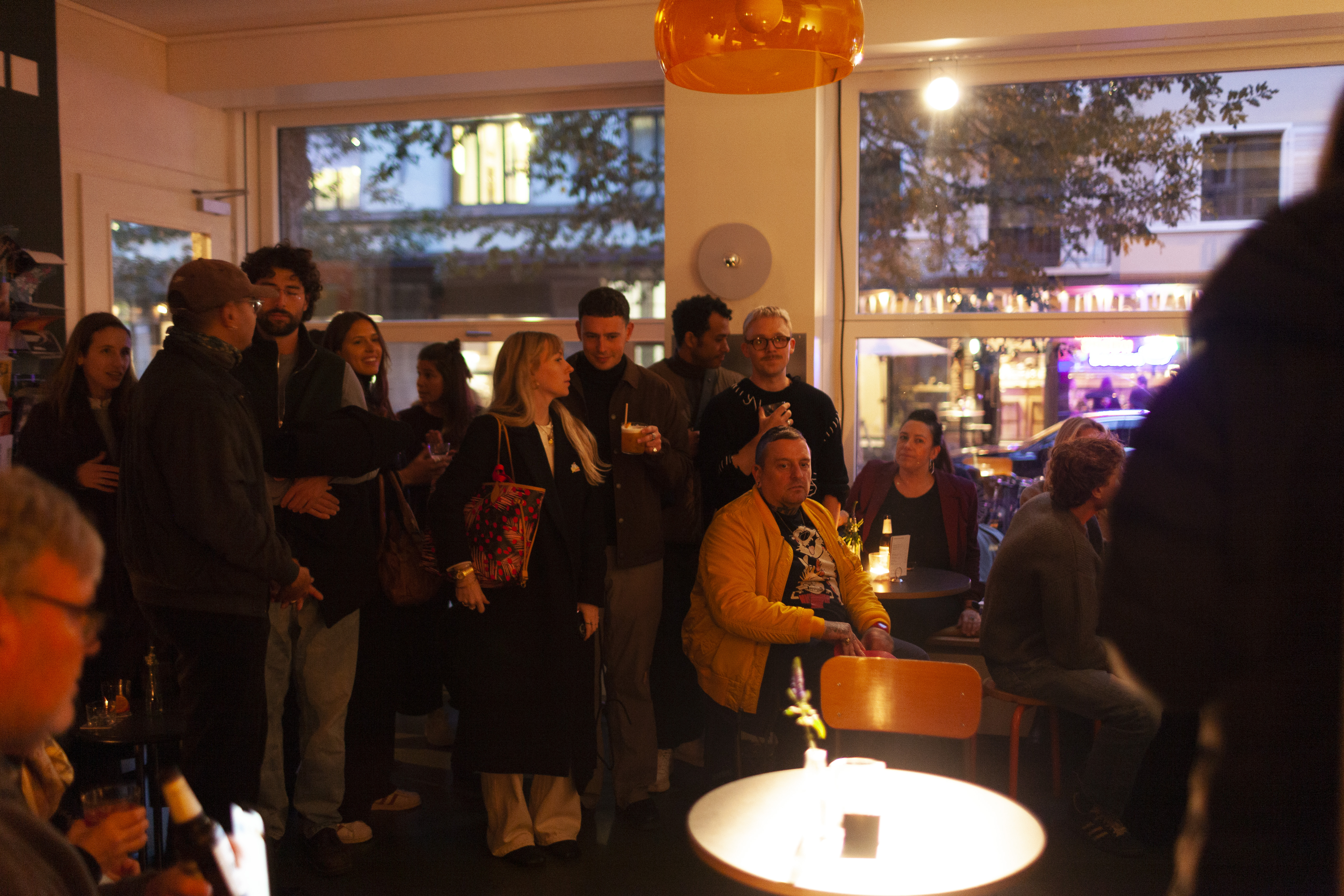
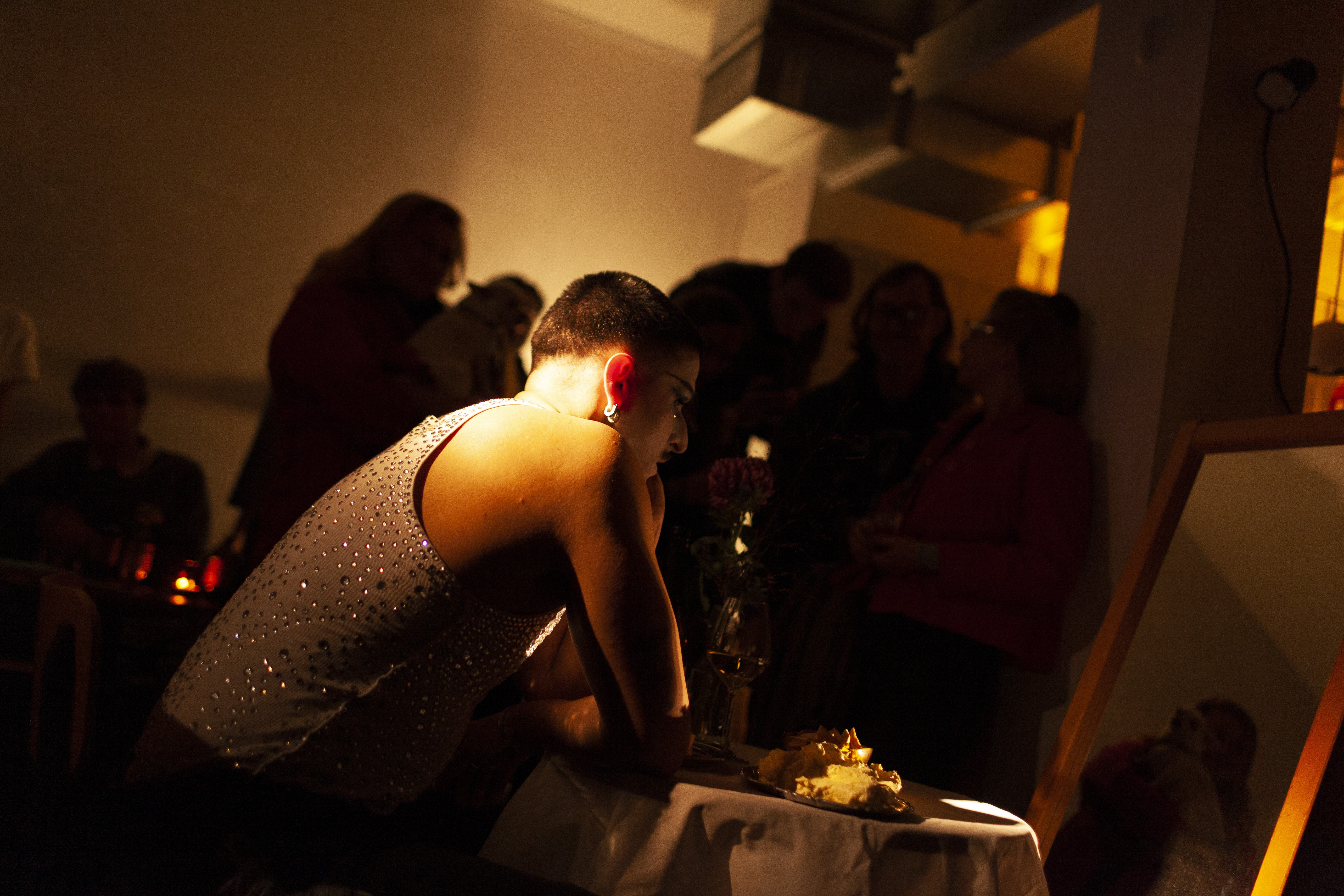
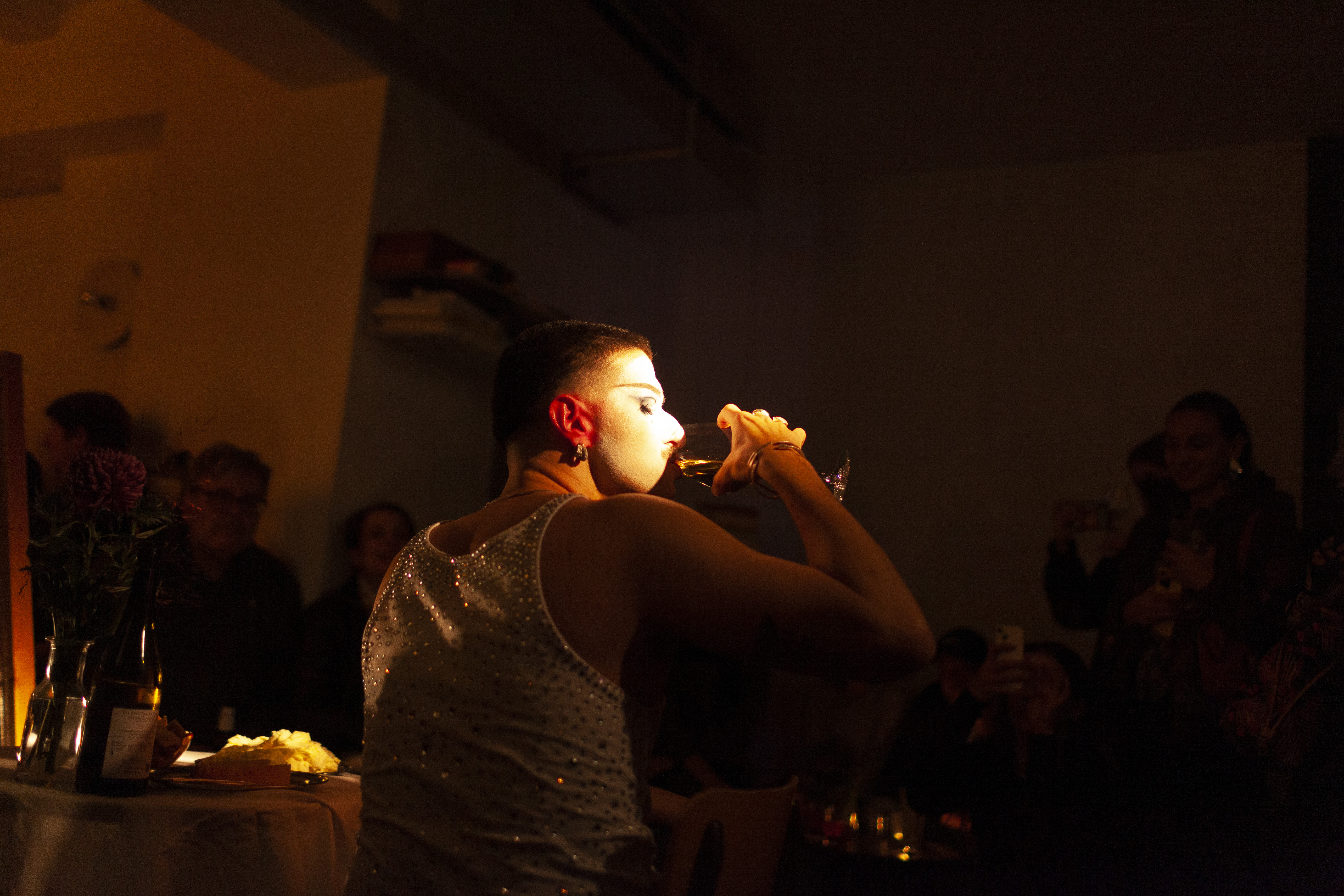
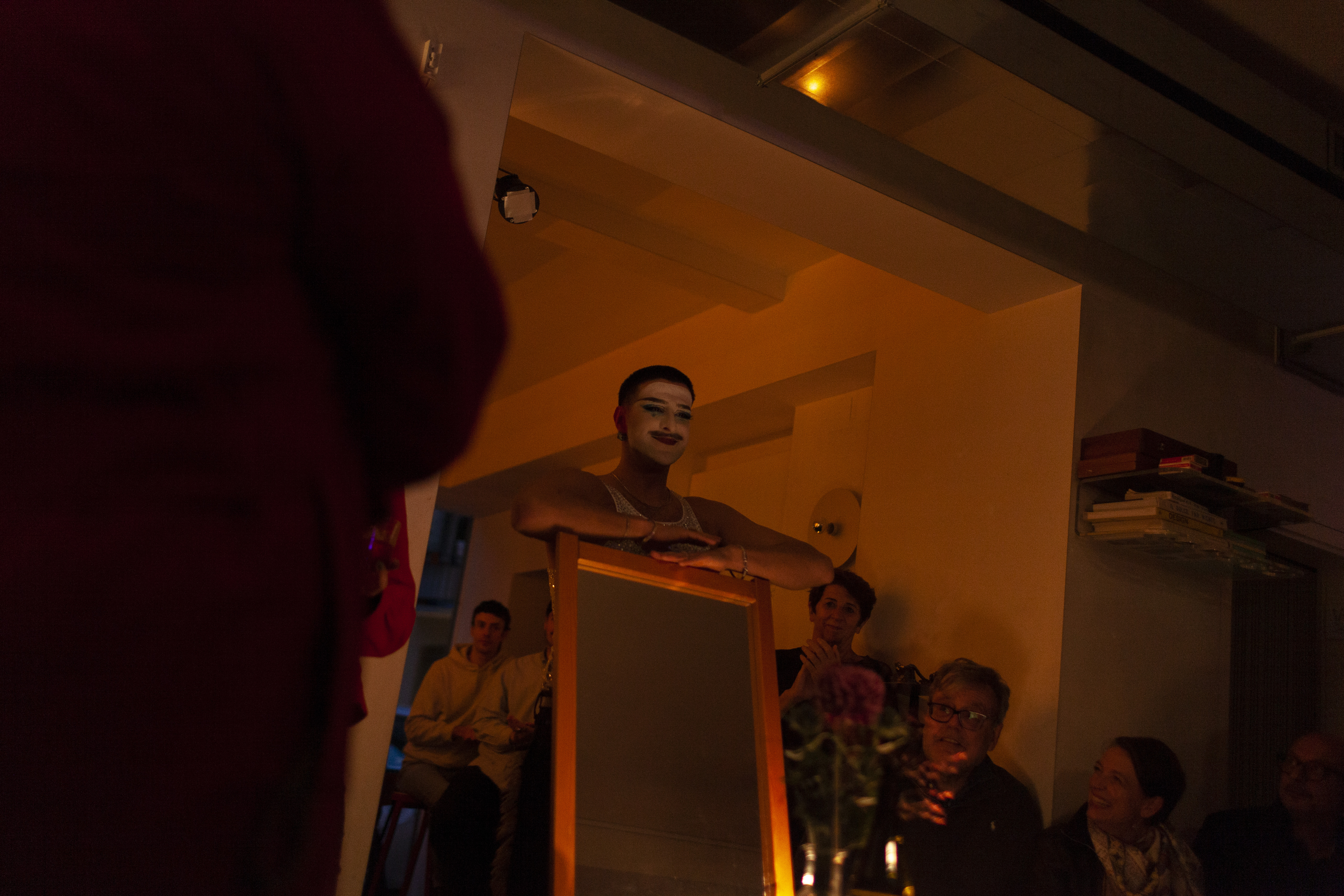
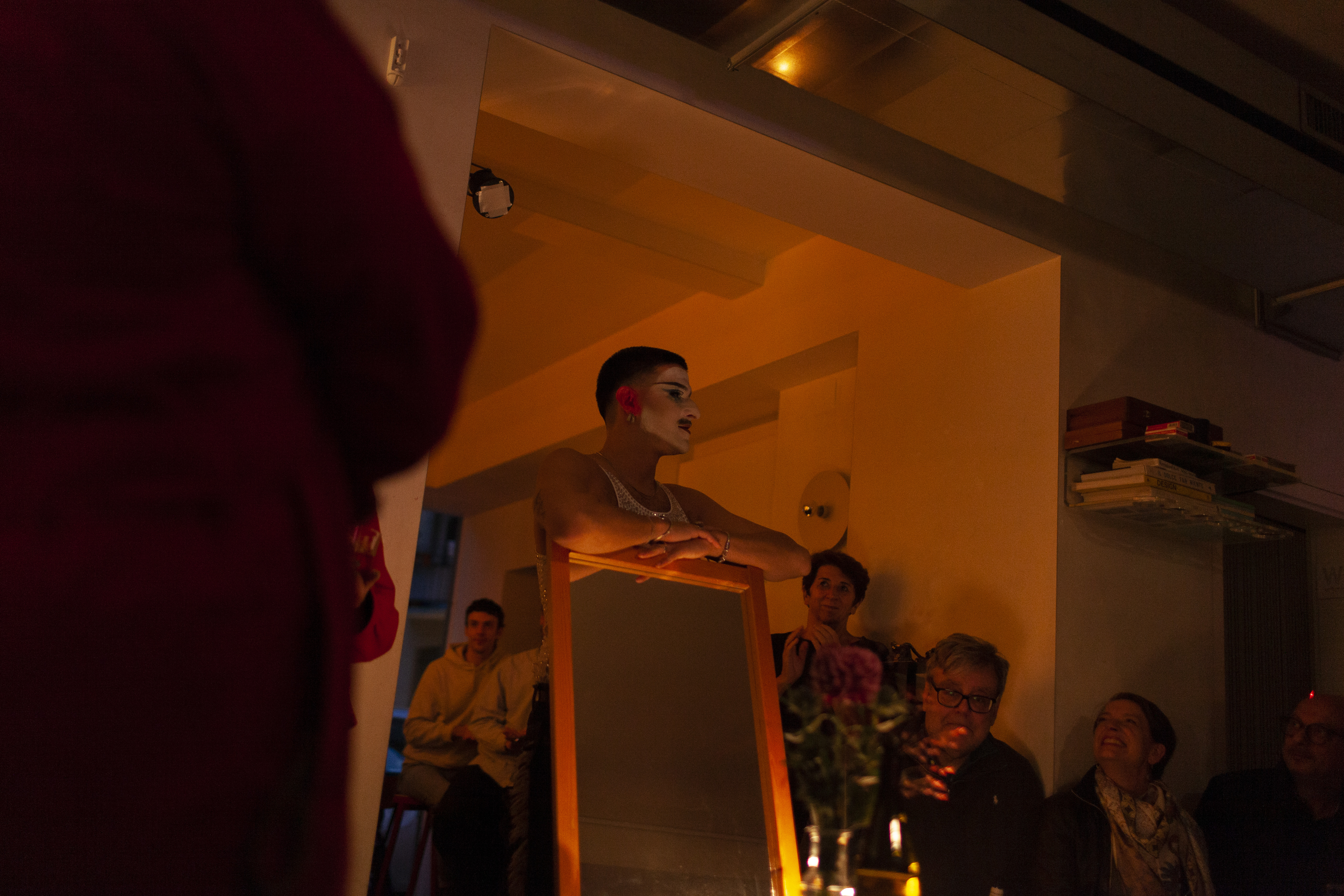
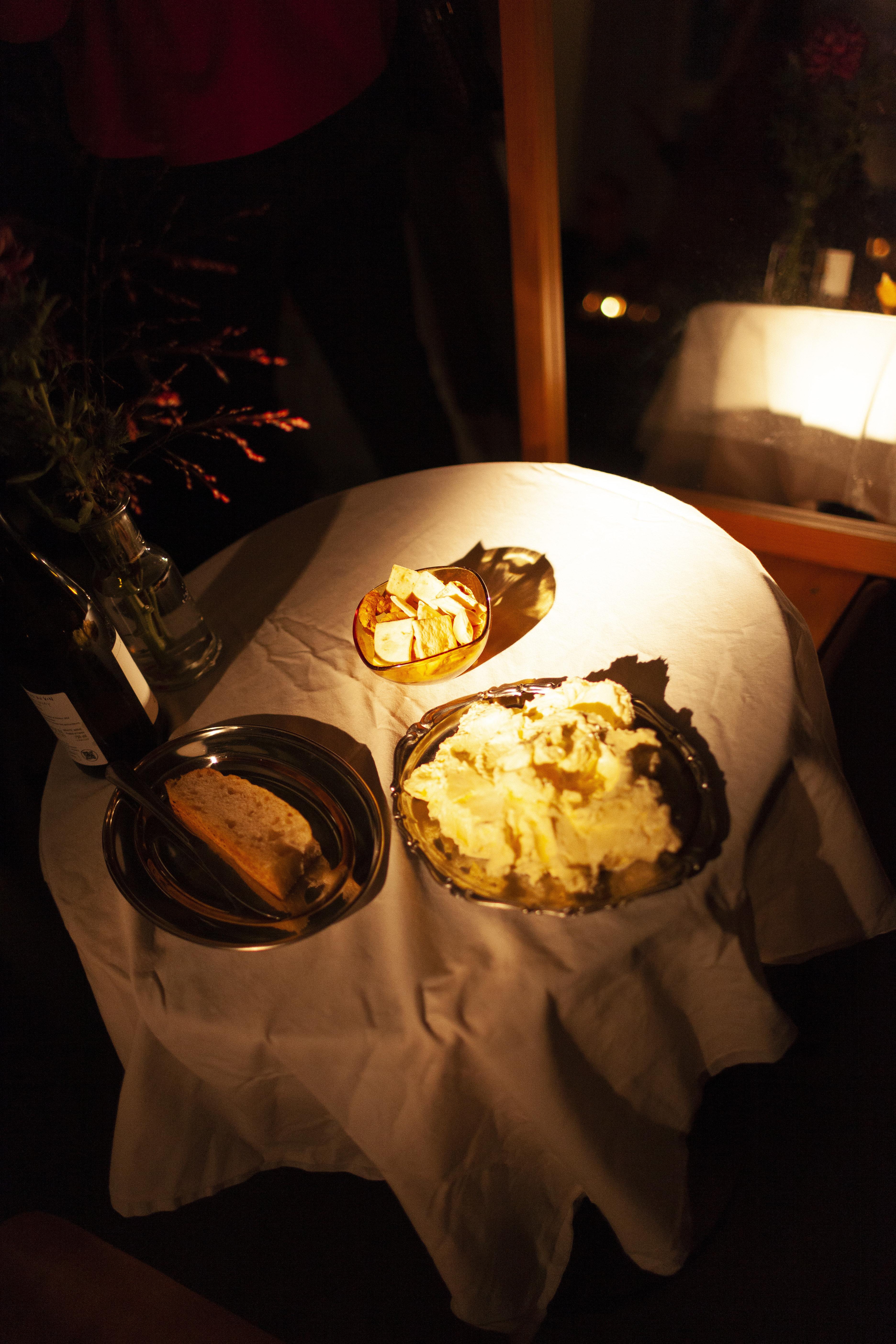
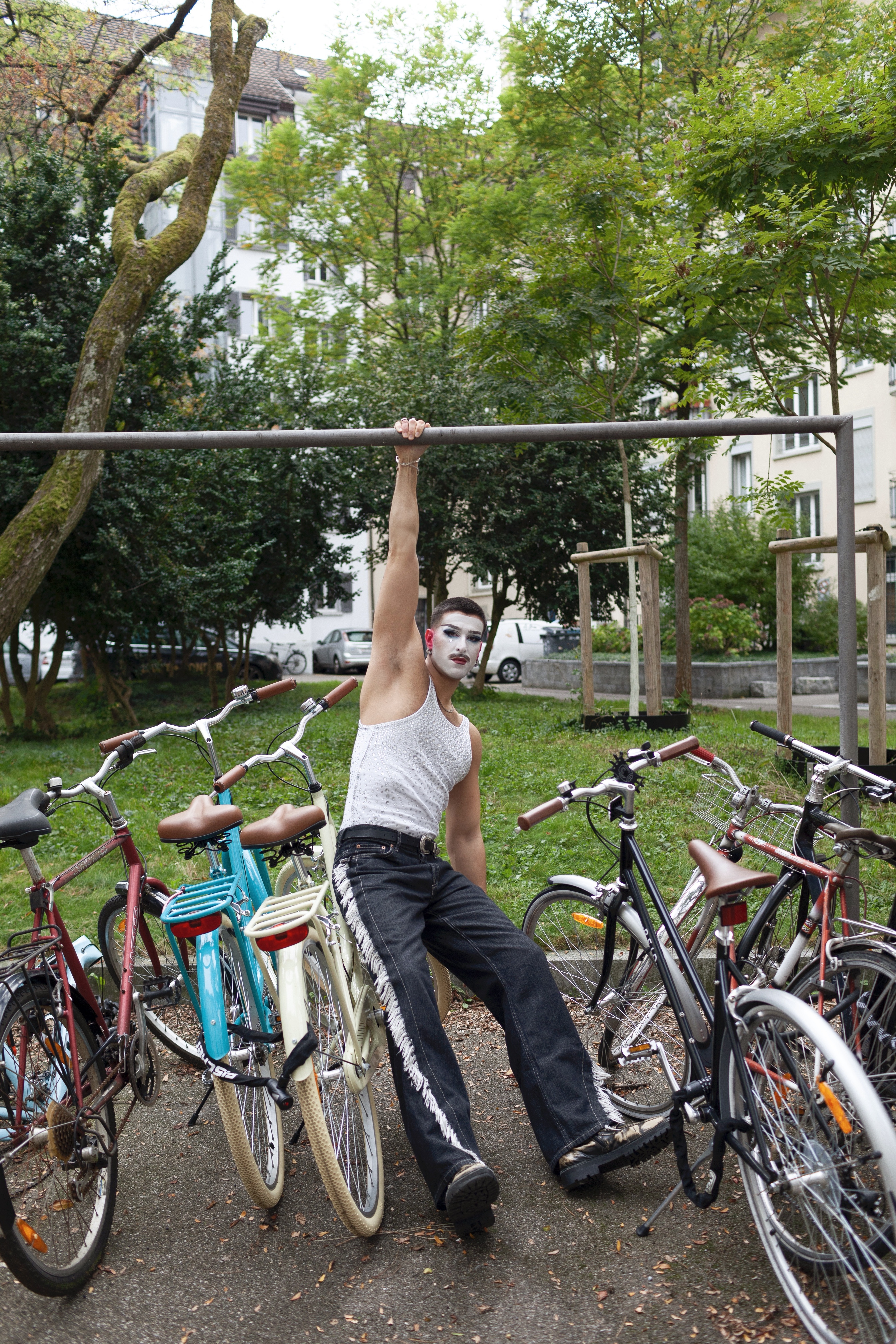
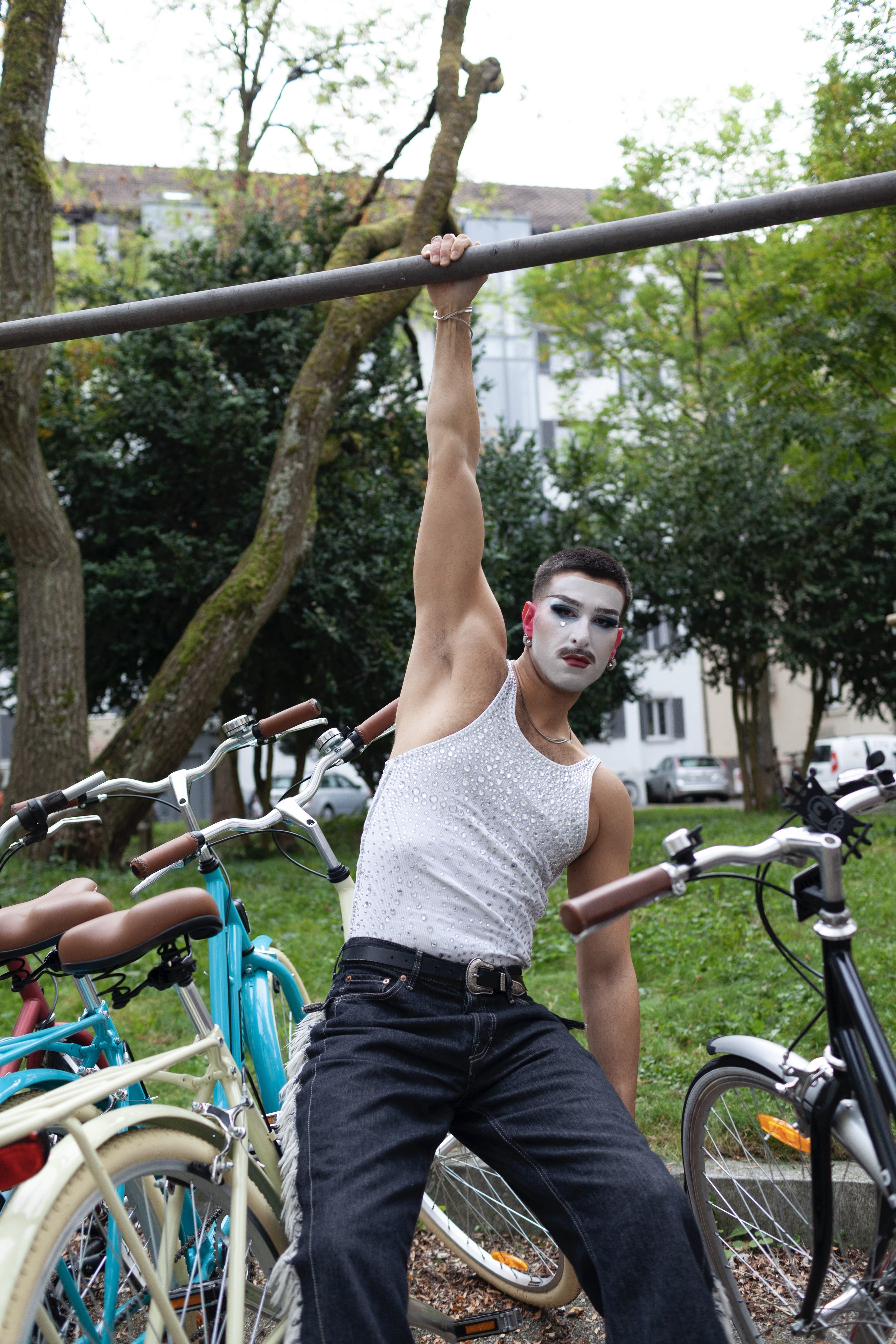
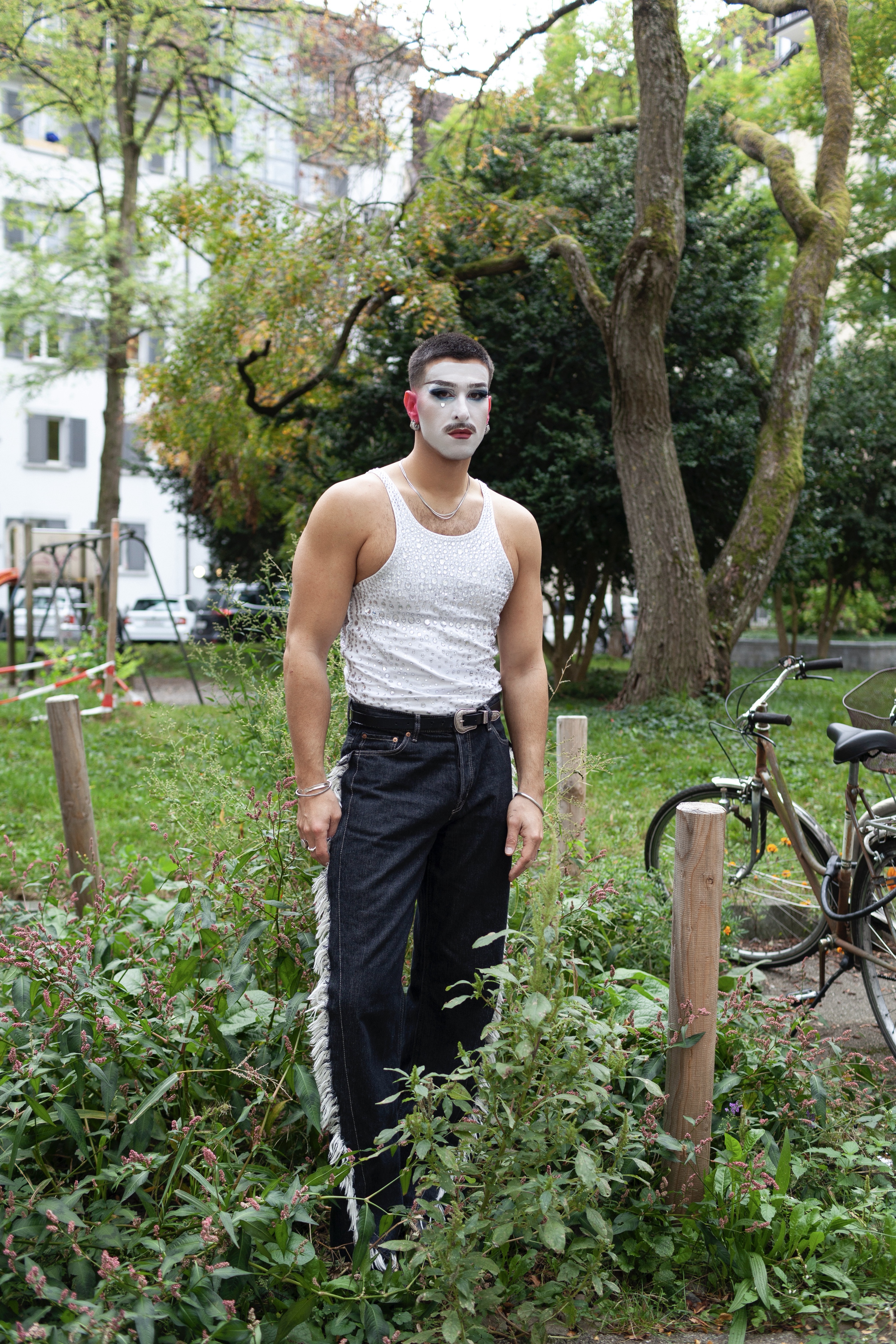
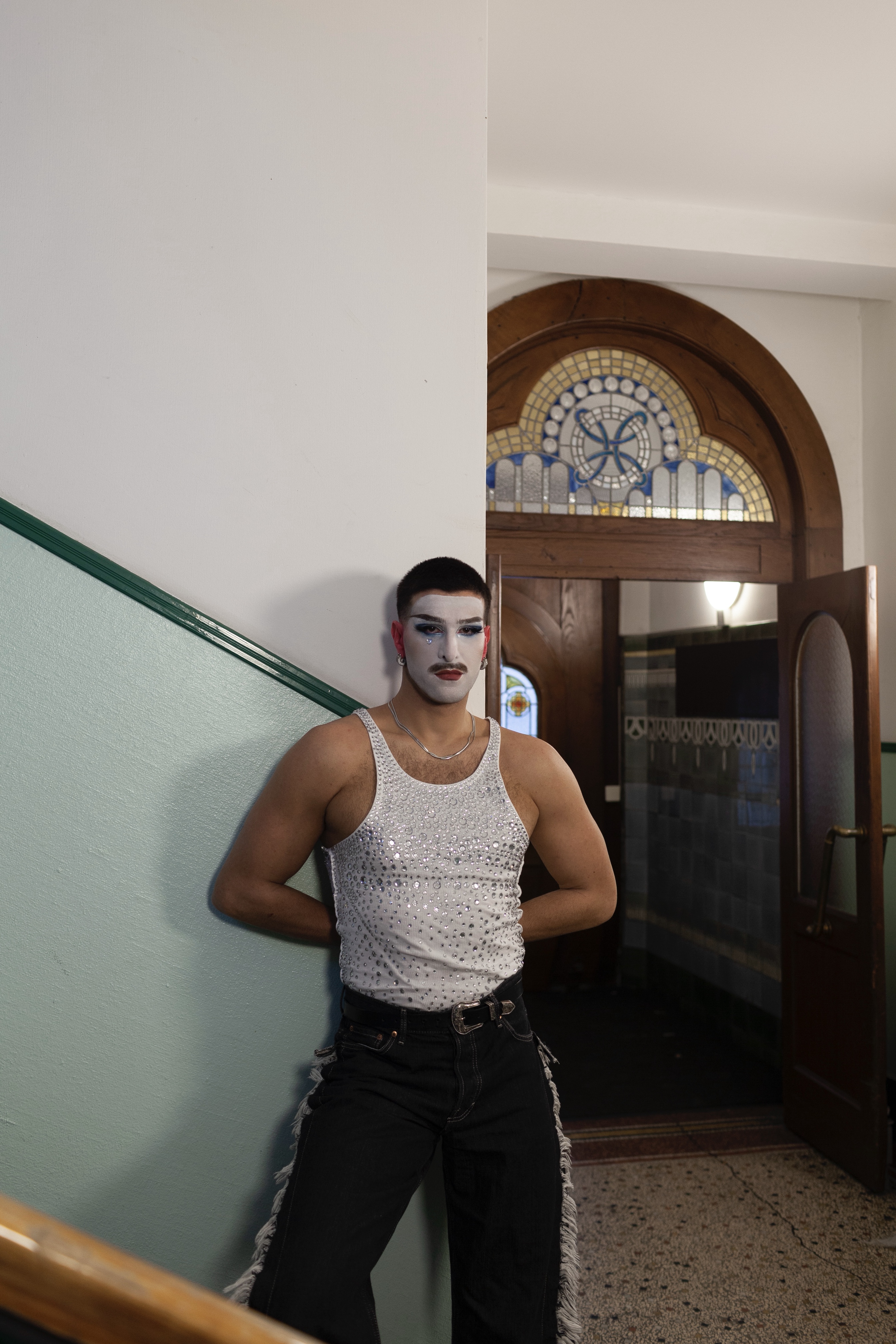
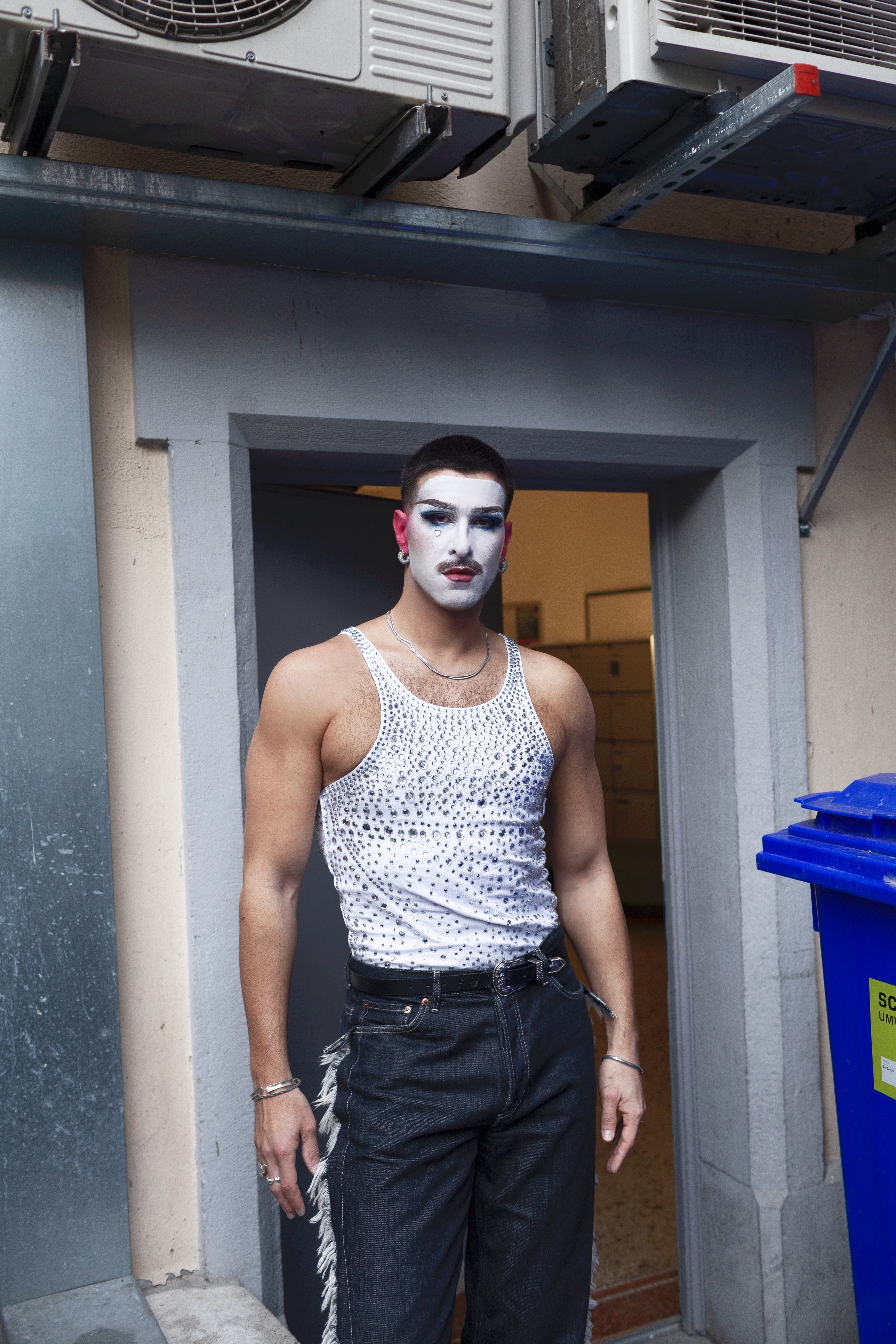
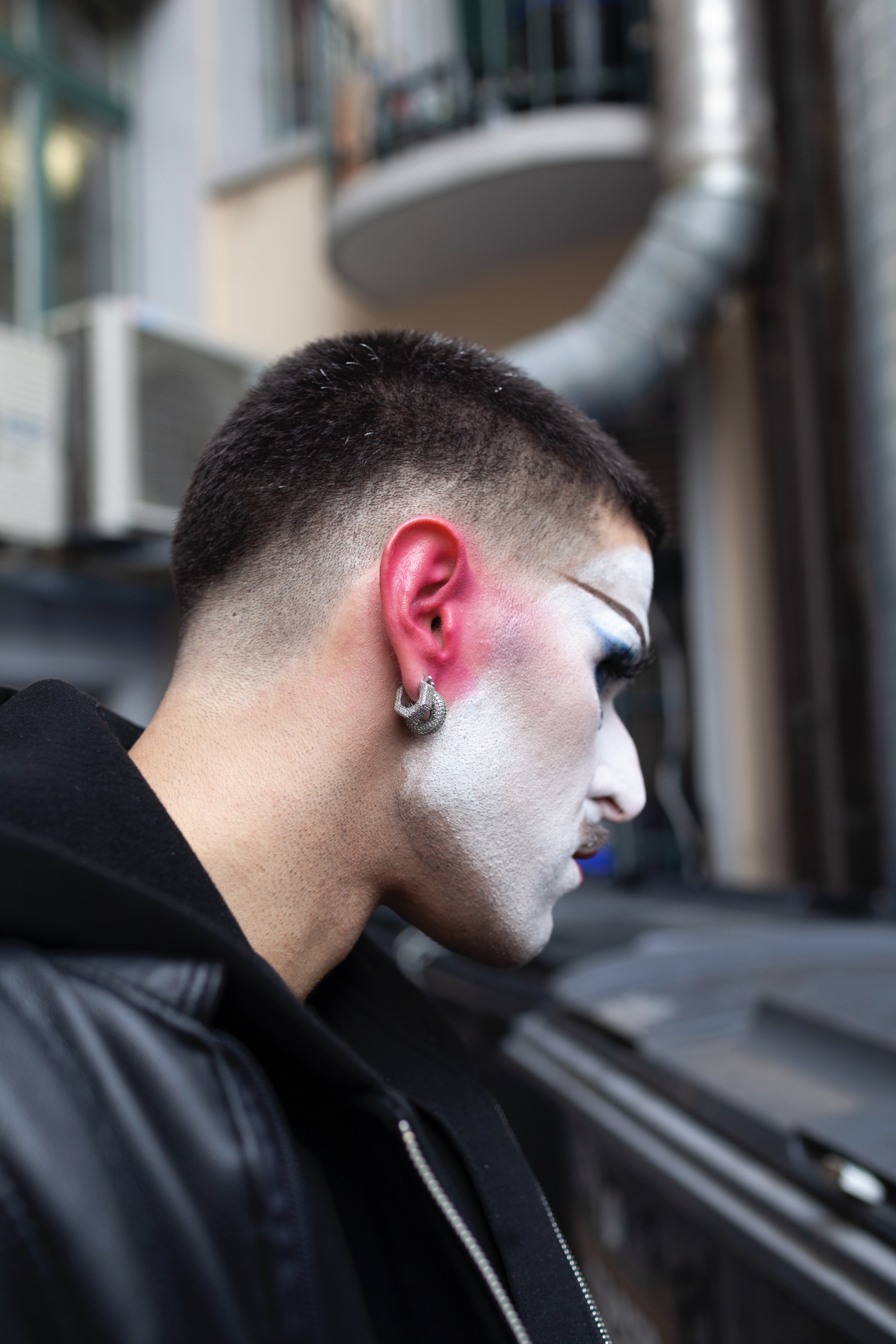
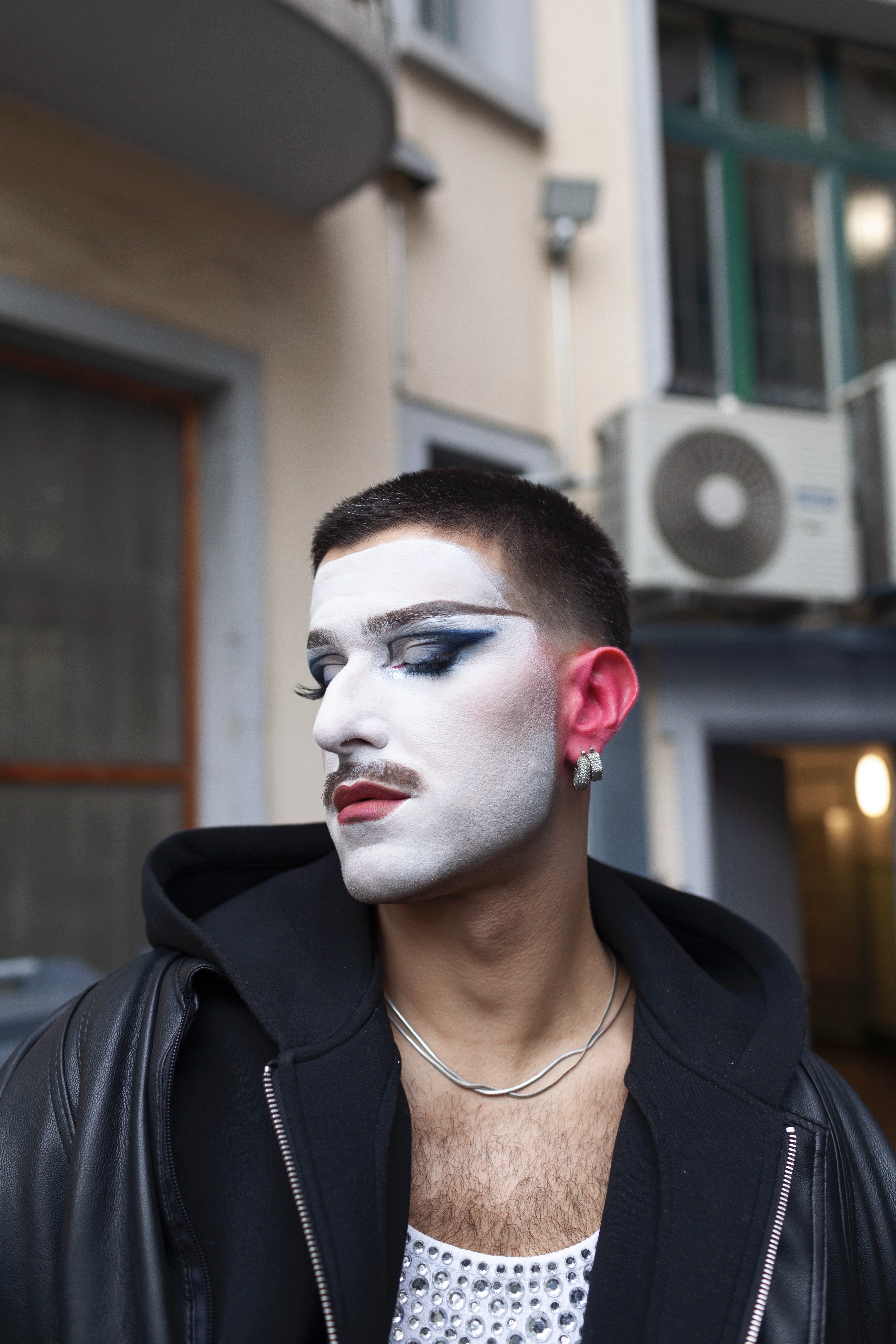
In Sharing the table with someone familiar, Andrea Popovic constructs a quiet yet charged scene of self-encounter. The performance unfolds as a ritual of preparation: a table is set for two, each gesture measured and deliberate, each object placed with the precision of a ceremony. Popovic, dressed in a drag version of a masculine gay man, performs both the anticipation and the labor of intimacy; organizing the space for a meeting that ultimately turns inward. The second guest never arrives; instead, the artist faces their own reflection, seated across the table in a mirror.
This gesture: turning performance into a mirrored duet with the self, anchors much of Popovic’s practice. Here, drag becomes less an act of transformation than of doubling: a method of looking at the self through another lens, embodying desire and distance simultaneously. The artist performs not to seduce an audience but to witness the fragile architecture of self-intimacy. The choreography of gestures (opening doors, paying bills, leaning forward, loosening arms) is repeated, inverted, and ultimately absorbed back into the performer’s body.
The accompanying ceramic sculptures, part of the “Call me when you get home” series, extend this exploration of mirrored intimacy into material form. Each small-scale scene captures a suspended moment between two figures: reclining together, embracing, resting, entangled. Rendered in glazed ceramic and placed on industrial steel shelves, these works merge tenderness and structure, warmth and restraint. Their placement evokes both domestic display and museum taxonomy, situating desire within systems of observation and containment.
Popovic’s training in directing and animation emerges in these pieces as a sensitivity to spatial rhythm and emotional staging. Each sculpture is a miniature stage, a mise-en-scène where intimacy is not only represented but rehearsed. The figures’ imperfect surfaces and visible seams reject the smoothness of idealized bodies; instead, they hold the evidence of touch and process.
Placed on steel shelves, the works exist between warmth and coldness, exposure and protection. Like the table in the performance, these supports create distance while preserving proximity. Together, performance and sculpture trace the choreography of queer self-recognition: the constant oscillation between performing for the gaze and returning to one’s own.
Here, to share the table is to share the stage. To sit across from oneself, to hold one’s own gaze, and to find, in that reflection, someone familiar.
Sharing the table with someone familiar
I open the door, you walk through.
You open the door, I step out of the car.
You order a drink for us, I pay the bill.
You put your hand on my lower back as I make my way forward.
I hold your head, guiding you into rest.
I tighten my arms so you can feel the tension.
You slowly part your lips, waiting for mine to find yours.
You slowly part your lips, waiting for mine to find yours.
I loosen my arms, releasing the tension you can feel.
I let go of your head, letting you rest on your own.
You step back, your hand leaving my lower back.
I pay the bill, while you order a drink for us.
I step back into the car, you open the door.
You walk back through the door, and I close it behind you.
I raise the glass to my lips, and my own movements return to me, tracing each gesture, folding into my own presence, sharing the table with someone familiar.




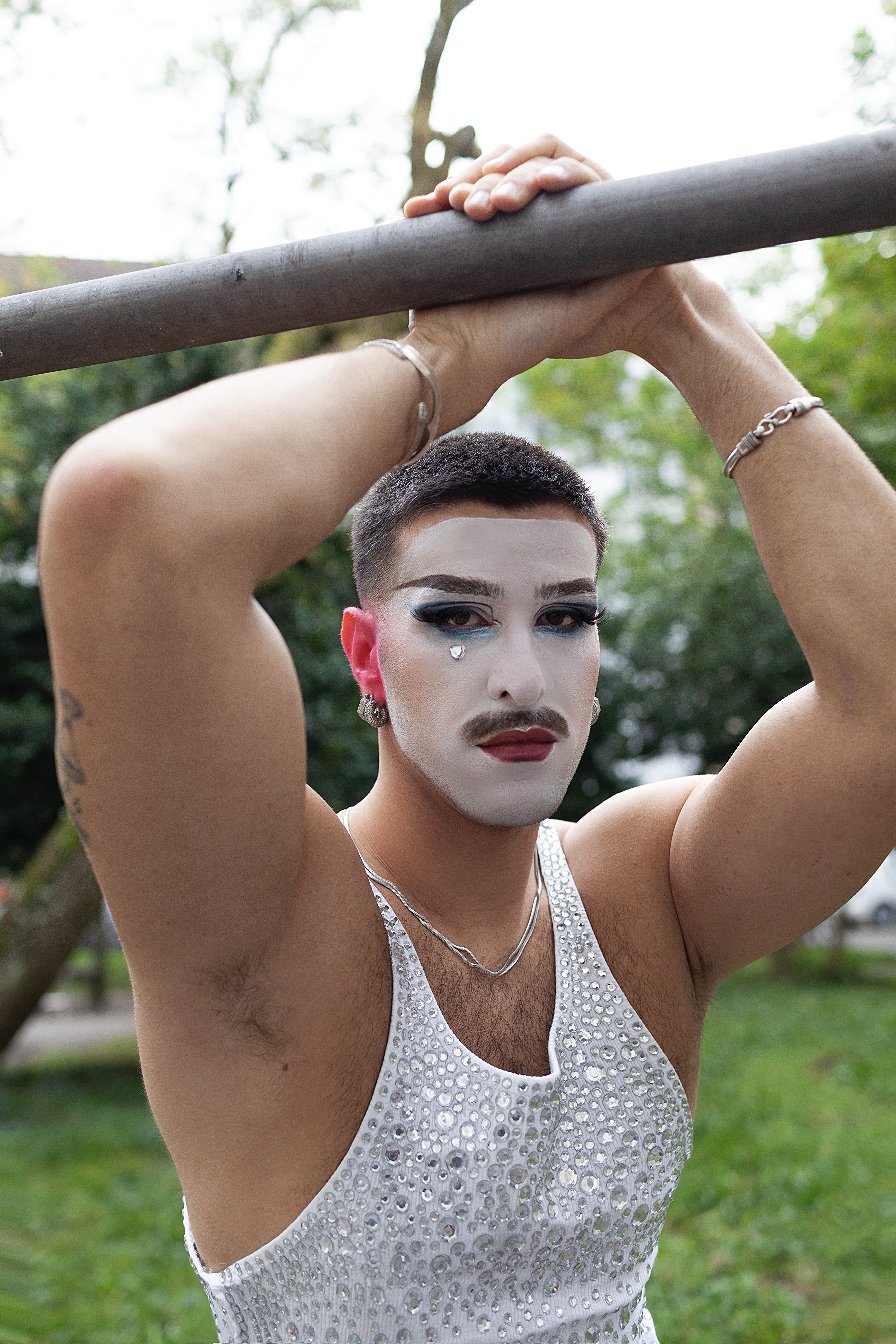
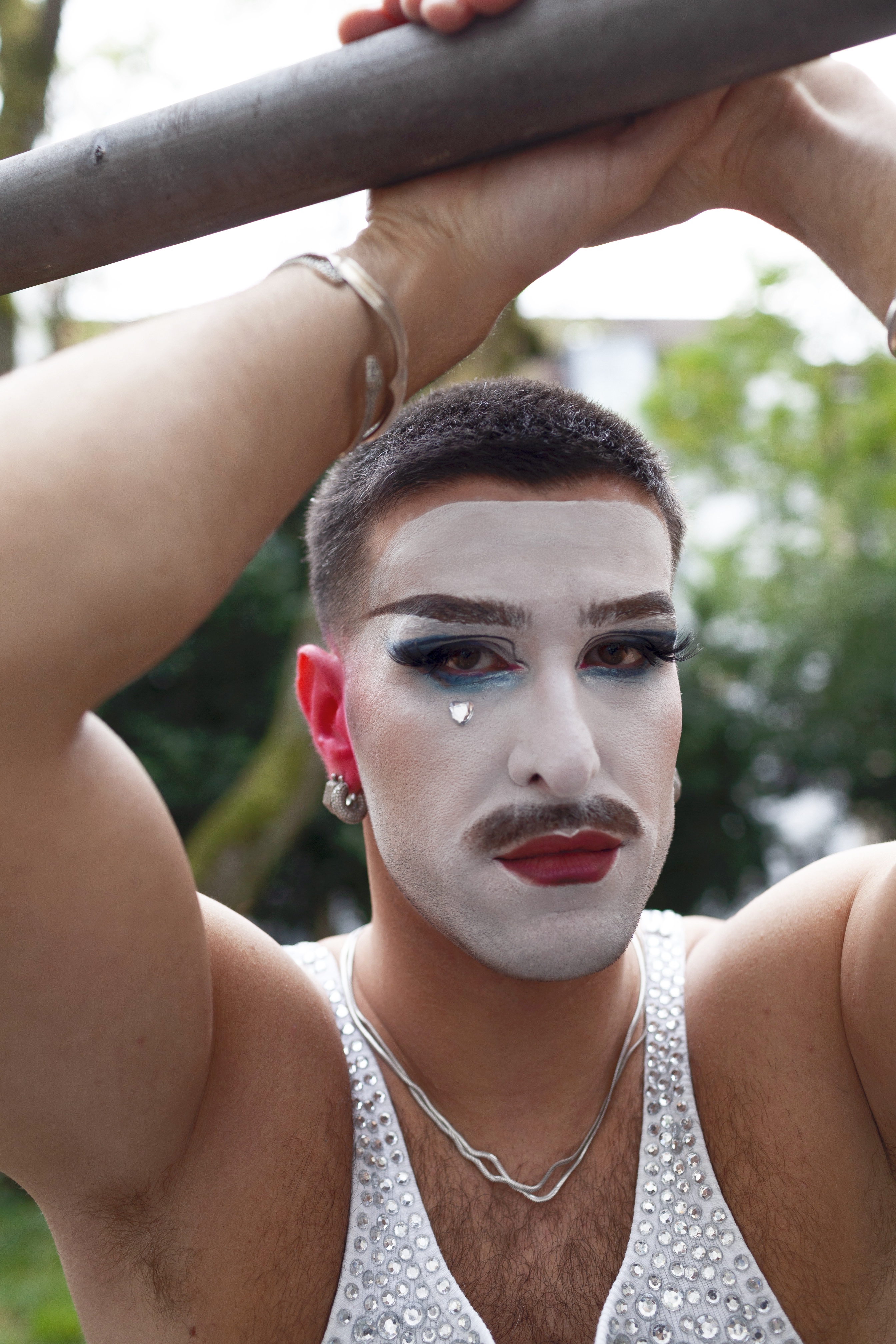
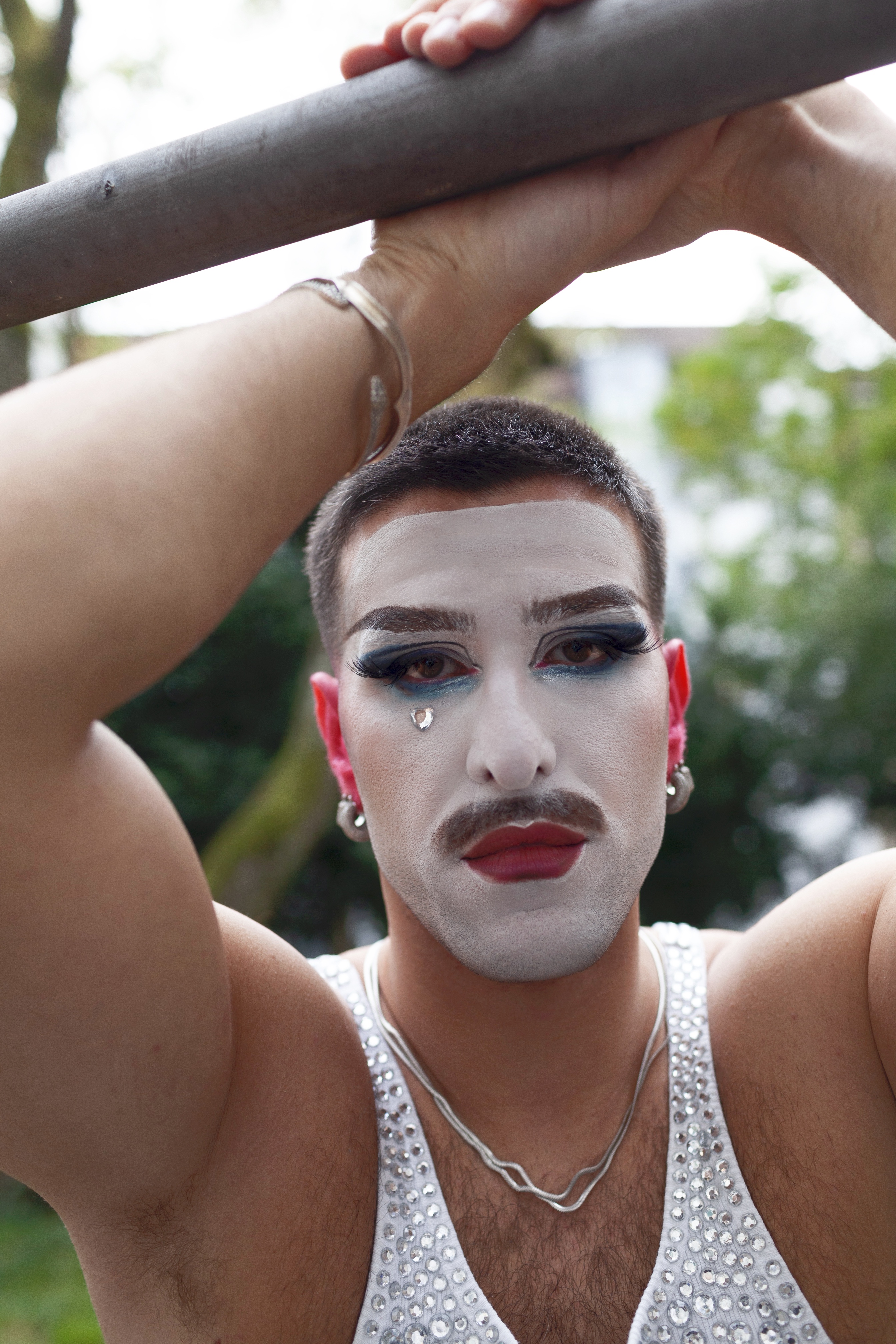
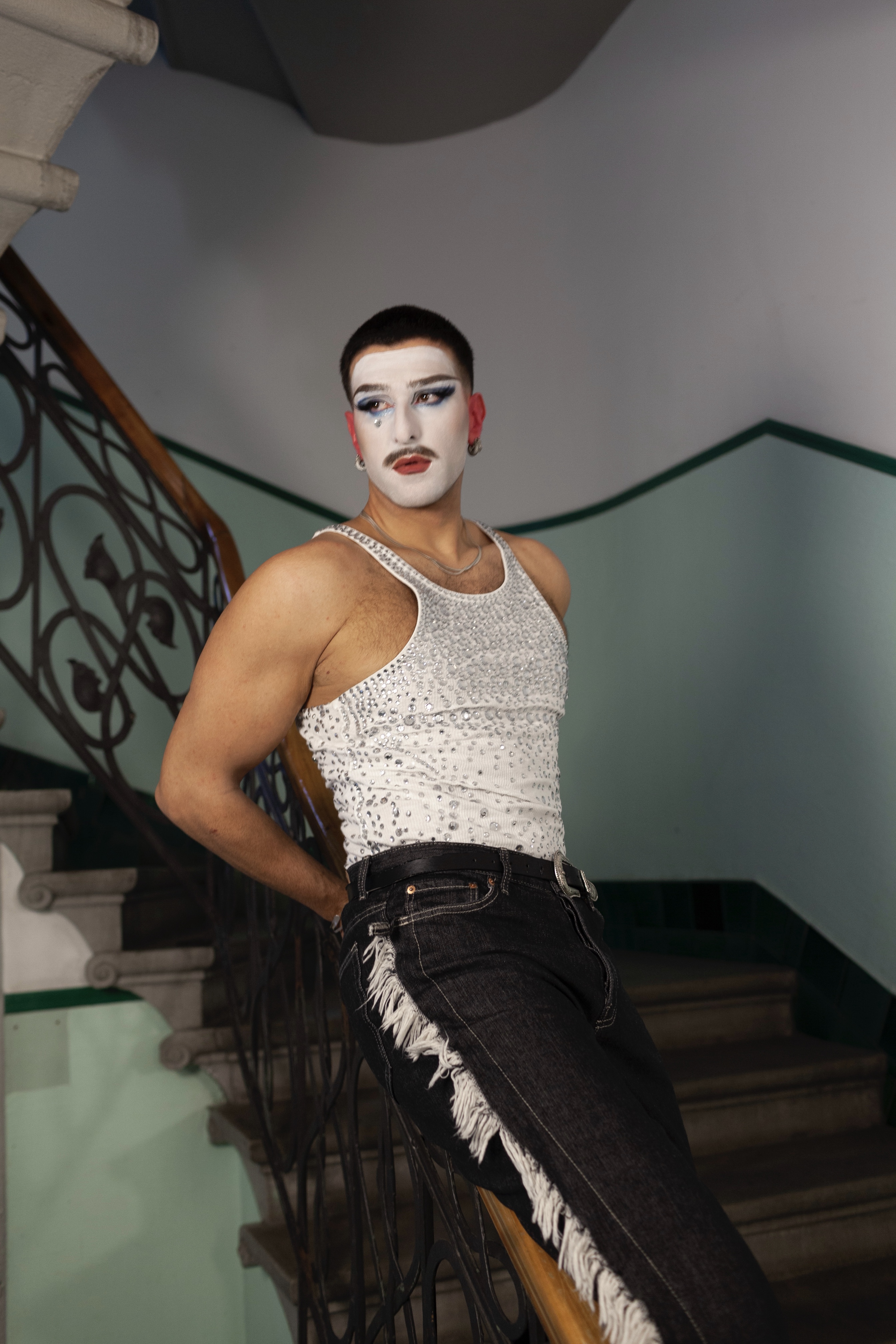
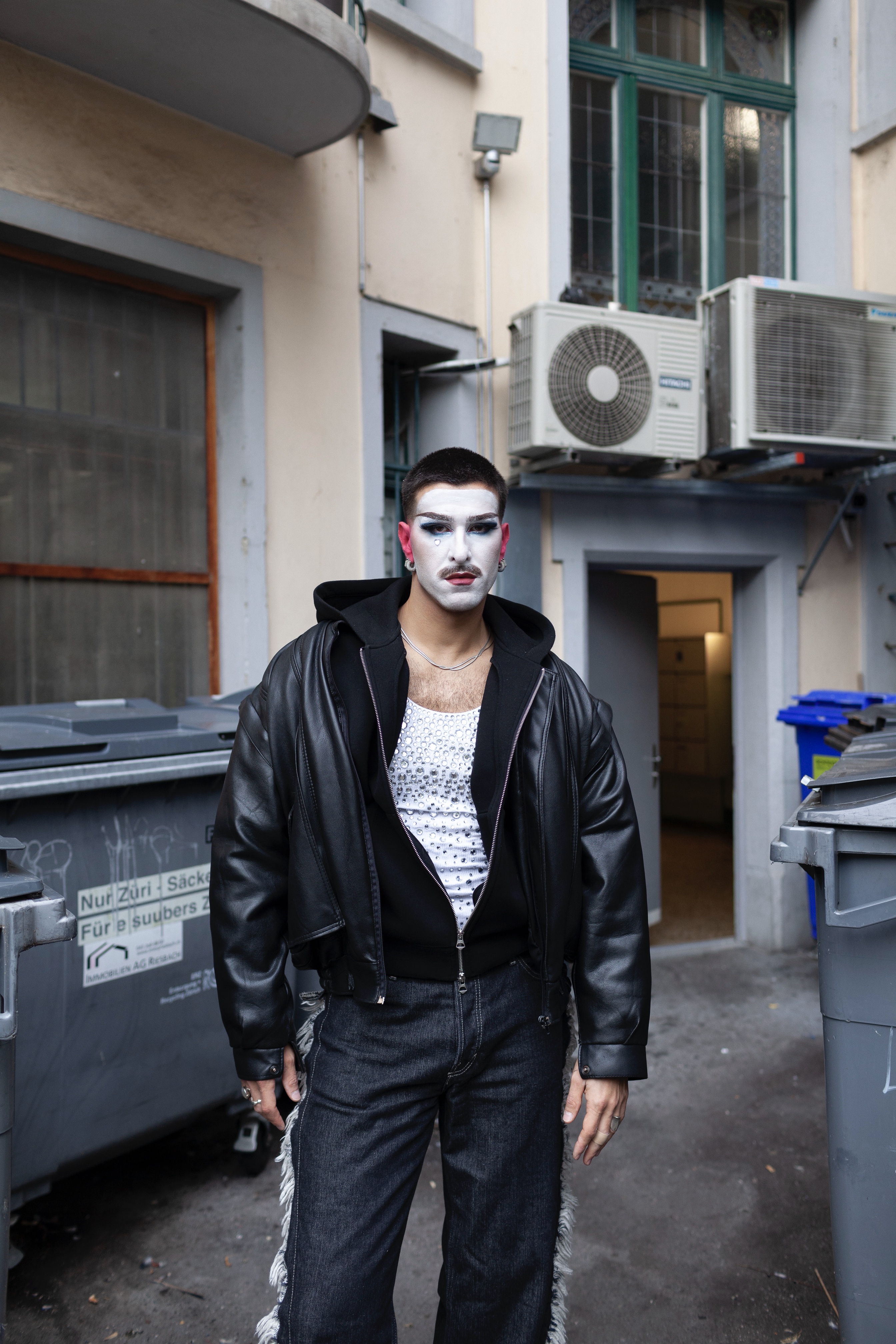
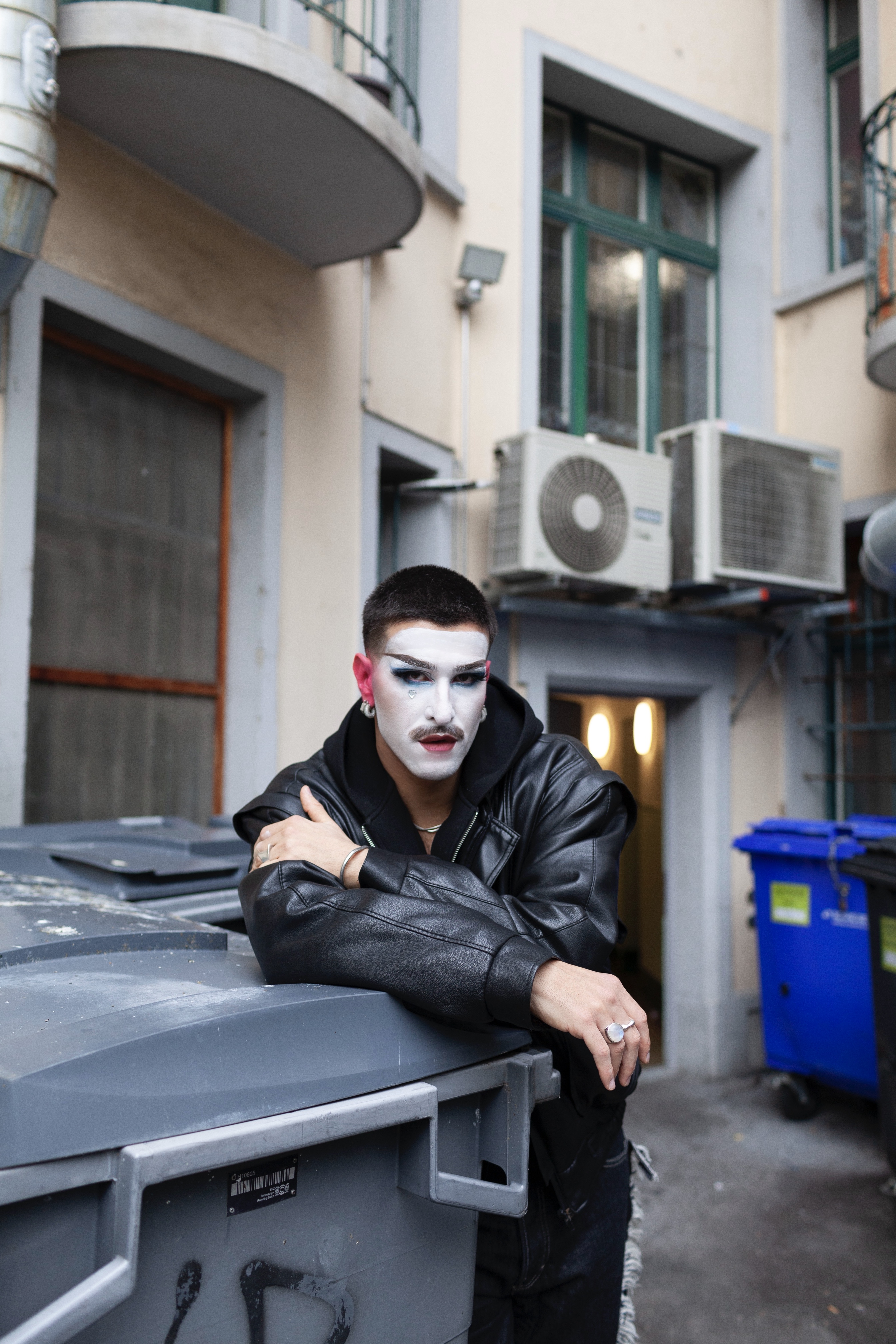
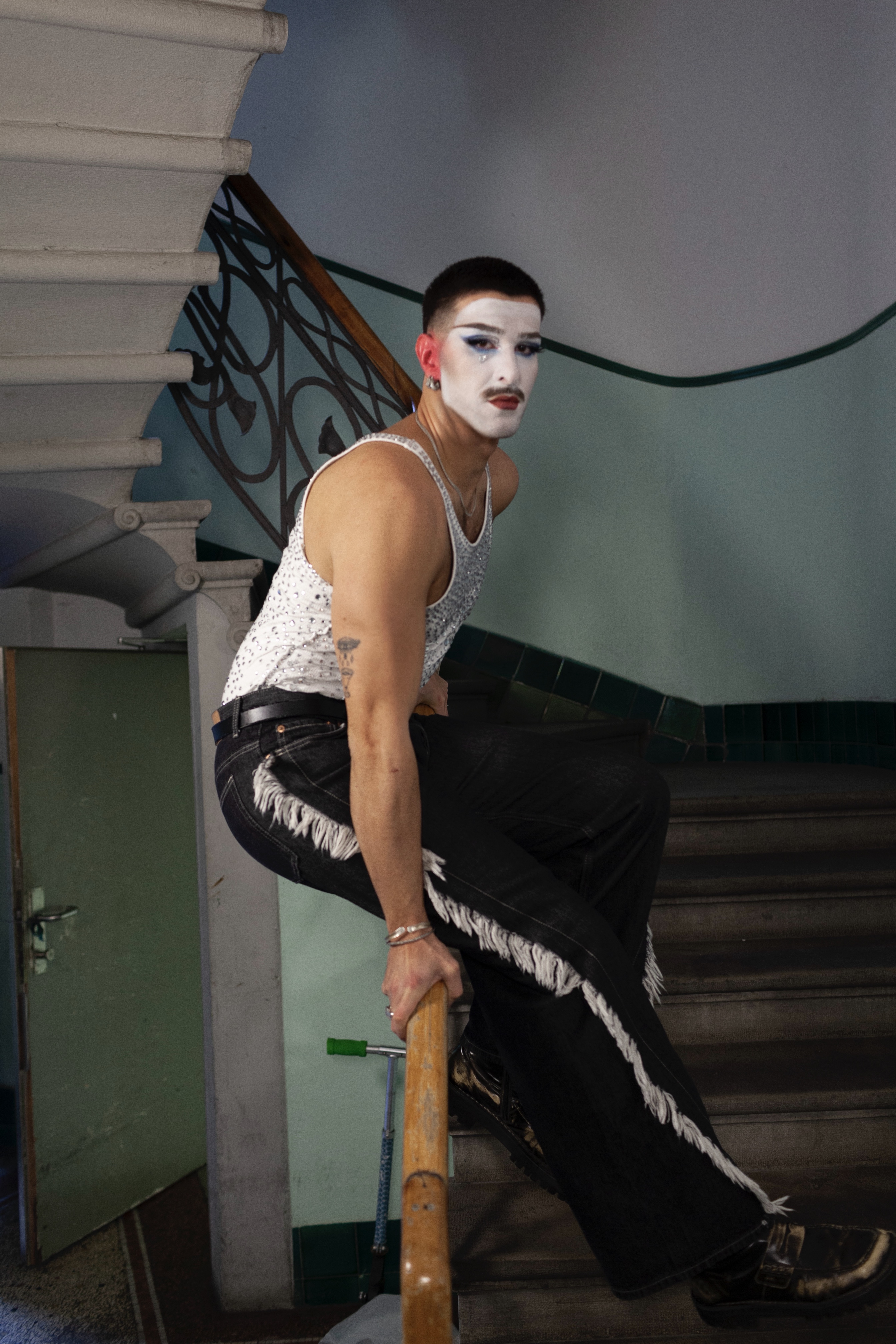
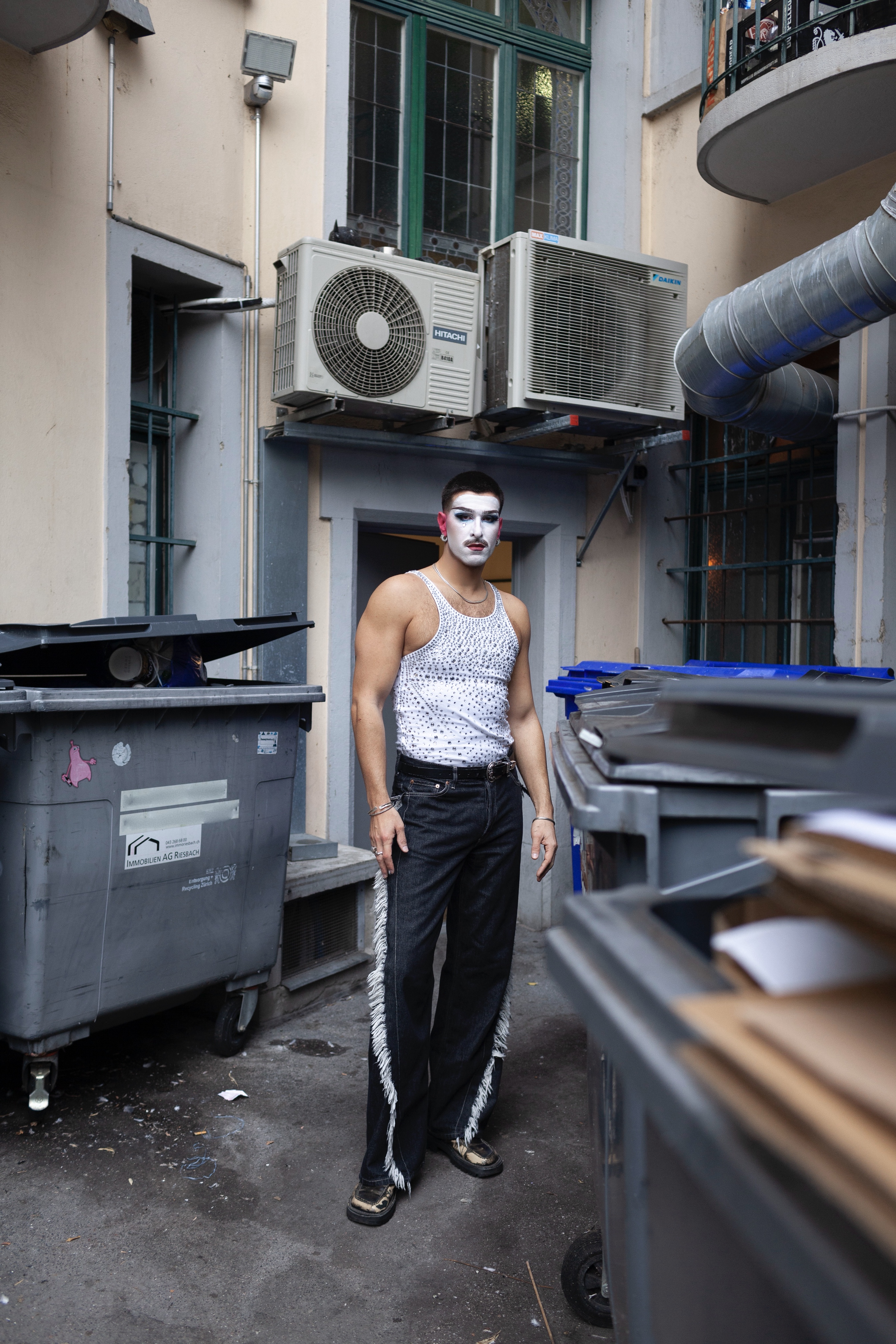
“Go upstairs, guests are going to be here any minute.”Behind a closed door; four walls, two windows, a bed and a carpet.
up I fly over the fields, change shape and touch the sun with my feet.
up
up
Who will be who,
who will do what,
maybe I will be the who and do the what.
In the freedom of play lost is the sense of time.
until the next
interruption.
Behind a closed door / a scar,
behind a mask / a heightened truth,
On the floor
I try to find
a way.
To walk through rough words,
I go back to where I come from.
No address.
“Could you please turn around? I can’t fall asleep if I don’t see your face.” So I turn.


photographs and video by Tihana Vukić
C O D E
By Andrea Popović14 - 15 August, 2025
Vernissage: 14 August, 16:00 - 19:30
Performance: 15 August, 21:00 - 21:30
Spazio Elle, Piazza G. Pedrazzini 12,
6600 Locarno
CODE is an installation that examines the fluid dynamics of identity. Andrea Popović examines how identity is constructed, adapted, and performed through the lens of play and imagination.
This exhibition draws on the artist's experience of code-switching, the subtle changes in language, behaviour, and culture across different contexts, to explore how childhood experiences of staging become formative arenas for self-discovery and transformation.
Code-switching is an integral part of Popovic’ growing up. A child of immigrant parents, raised in a small town, cultural and linguistic shifts became second nature.
At school, being “othered”, triggered an instinct to shape-shift, to appeal to whichever group Popovic was navigating. The artist reflects on this ingrained reflex, born of both exploration and survival, that has followed him into adulthood. This ability to shape-shift, to wear different identities, resurfaces in the artist’s professional life, personal life and artistic life, reactivating the performance of belonging.
As children, we explored our identities through dolls, dress-up, and make-believe, testing boundaries and stepping into alter-egos with curiosity and freedom.
The artist suggests that for him, these early forms of play are a kind of staging, of preparing roles for the real world. As adults, this act of “trying on” identities continues through the daily performances of code-switching. Much like actors stepping into characters on stage, we shift between roles depending on the spaces we inhabit. In CODE, the artist draws a parallel between these early imaginative acts and the shifting performances of identity in contemporary life.
Central to CODE is the dialogue between private and public spaces: the childhood bedroom, a site of make-believe and unfiltered identity, and the exhibition space, a performative stage that offers freedom through its theatrical nature. Through this parallel, the artist suggests that both spaces, though seemingly opposite, allow for experimentation and reinvention.
This private space is a safe space to experiment and prepare the face which one will even present to the world in the public space.
This installation includes 8 ceramic sculptures, each representing an identity or character, and a custom-designed rug by Bianca Luna Franzoni reminiscent of childhood play mats.
Much like a child would play with dolls on a rug, these elements are then activated through a live¨
performance by the artist on the stage, in costume. The sound of the performance was produced by Theodor Vasiljevic.
This inclusion of collaborators is a purposeful act, an invitation into a shared world of play, memory, and transformation. This reflects the ongoing process of self-construction, shaped by both concealment and performance. By merging the intimate world of childhood with the performative nature of the stage, CODE invites viewers to consider how play unlocks new ways of being, revealing authentic selves between all the characters performed on the imaginary stage.
Andrea Popović (b. 1993): Is a Swiss artist with balkan roots based in Zurich, specializing in
storytelling. His practice spans a wide breadth of media, from painting to sculpture to moving images.
Instagram: @popartovic
Website: https://andreapopovic.com/


Refusés
presents
I shut my eyes and all the world drops dead.
16 - 20 October, 2024
Vernissage: 16 October, 18:00-21:00
2 rue Commines
75003 Paris
Mad Girl's Love Song, Sylvia Plath
I shut my eyes and all the world drops dead;
I lift my lids and all is born again.
(I think I made you up inside my head.)
The stars go waltzing out in blue and red,
And arbitrary blackness gallops in:
I shut my eyes and all the world drops dead.
I dreamed that you bewitched me into bed
And sung me moon-struck,
kissed me quite insane.
(I think I made you up inside my head.)
God topples from the sky, hell's fires fade:
Exit seraphim and Satan's men:
I shut my eyes and all the world drops dead.
I fancied you'd return the way you said,
But I grow old and I forget your name.
(I think I made you up inside my head.)
I should have loved a thunderbird instead;
At least when spring comes they roar back again.
I shut my eyes and all the world drops dead.
(I think I made you up inside my head.)
Refusés is pleased to present I shut my eyes and all the world drops dead, a group show presenting Andrea Popović, Giulio Gamba and Lucia Martinez Garcia. A reference to Sylvia Plath’s poem ‘Mad Girl’s Love Song’, this exhibition suggests the arts provide a space to take profoundly inner experiences into the public forum, allowing individuals to share, reflect on, and process private realities within a communal, safe space. As part of Refusés’ inaugural programming, each exhibition offers one answer to the cardinal question of what is the purpose of art? The first exhibition explored art as community building. I shut my eyes and all the world drops dead, aligns itself with Aristotle’s Poetics, which argues that art serves as catharsis, a vehicle for an emotional response from the viewer which allows us to learn more about human nature. Through painting, writing and video, this exhibition illustrates how private emotions and personal narratives shared publicly in the form of art, can transition from being confined to the artist’s subjective experience and become part of a broader dialogue.
The portraiture began as a way to share time with people, a moment of dialogue. A room holds no inherent value at first; it can feel intimidating. On the first night in a new apartment, it’s hard to imagine ever feeling attached to the space, yet over time, a connection inevitably forms. As life flows through the walls, and the space becomes filled with shared thoughts and energy, it starts to take on a different shape. A certain energy lingers.
There’s an urgency to leave an imprint on paper, an almost frantic need to capture a moment. Time often feels scarce, a recurring theme over the past decade. There’s a sense that time is limited, even as it continually stretches forward. An urgency to witness what lies ahead remains constant. The paint needs to dry quickly, the image must come through. Yet, despite all efforts, limitations persist.
The friendships passing through this studio leave traces of these intertwined lives, enriching each other’s existence. They reveal each day how vital it is to create space for things to evolve and take shape.
Show text by Juliette
Andrea Popović’s gripping portraits transform private moments into shared experiences, inviting the viewer to engage with the intimacy of his encounters. His close-cropped paintings, rendered in a quick and gestural style, feel like windows into his studio—a space where the sitters reveal themselves not only to the artist but also to the audience. Painting his friends, family and partner, the artist leans on these portraits as a way to literally slow down time and study his relationships with the person in front of him. By bringing these personal exchanges into the public realm, Popović’s work creates a communal space for reflection, where even something as personal as a portrait of a loved one becomes open to interpretation. The painter’s use of a traditional medium imbues permanence into fleeting encounters, yet his stylized approach makes these moments feel both deeply specific and universally accessible. As a result, each portrait exists in a liminal space, where it is simultaneously private and public, individual yet relatable, inviting viewers to project their own narratives and emotions onto the work. The safety of his studio as the connecting thread, each individual painting invites open communal reflection.


Campagn for Chiara Davanzo Jewellery
www.chiaradavanzo.com
DropsCollection is a handmade small-scale series of liquid sensual jewellery for everyBODY.
Director Andrea Popović
DOP Massimiliano Rossetto
Editor Andrea Popović & Massimiliano Rossetto
Costumes Lisa Preissle
Make Up Andrea Popović
Prod Eastblokfilm
Music Serafin Aebli
Graphi Design Pascal Arnet
Cast Bianca Luna Franzoni
DOP Massimiliano Rossetto
Editor Andrea Popović & Massimiliano Rossetto
Costumes Lisa Preissle
Make Up Andrea Popović
Prod Eastblokfilm
Music Serafin Aebli
Graphi Design Pascal Arnet
Cast Bianca Luna Franzoni