Sharing the Table with Someone Familiar
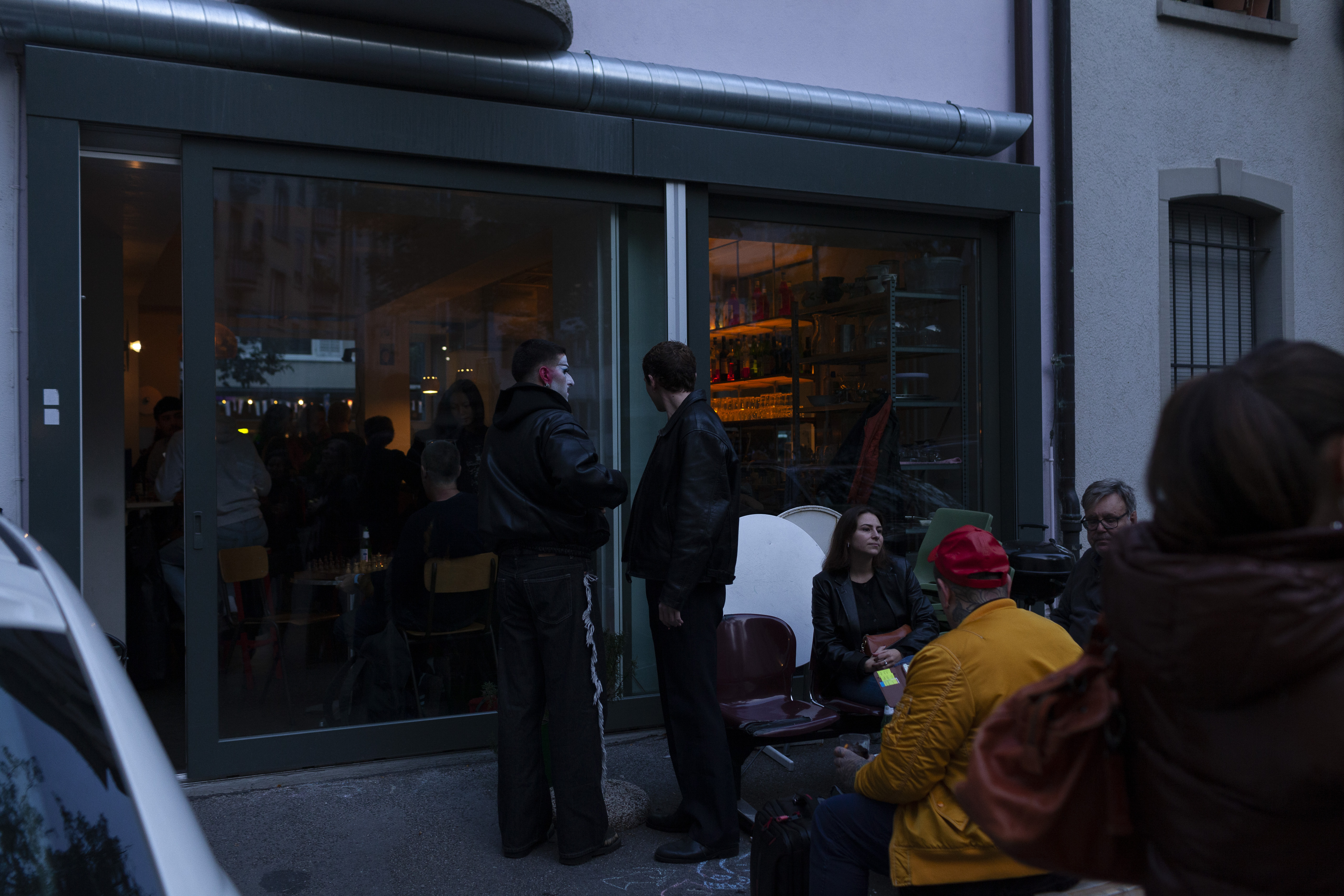
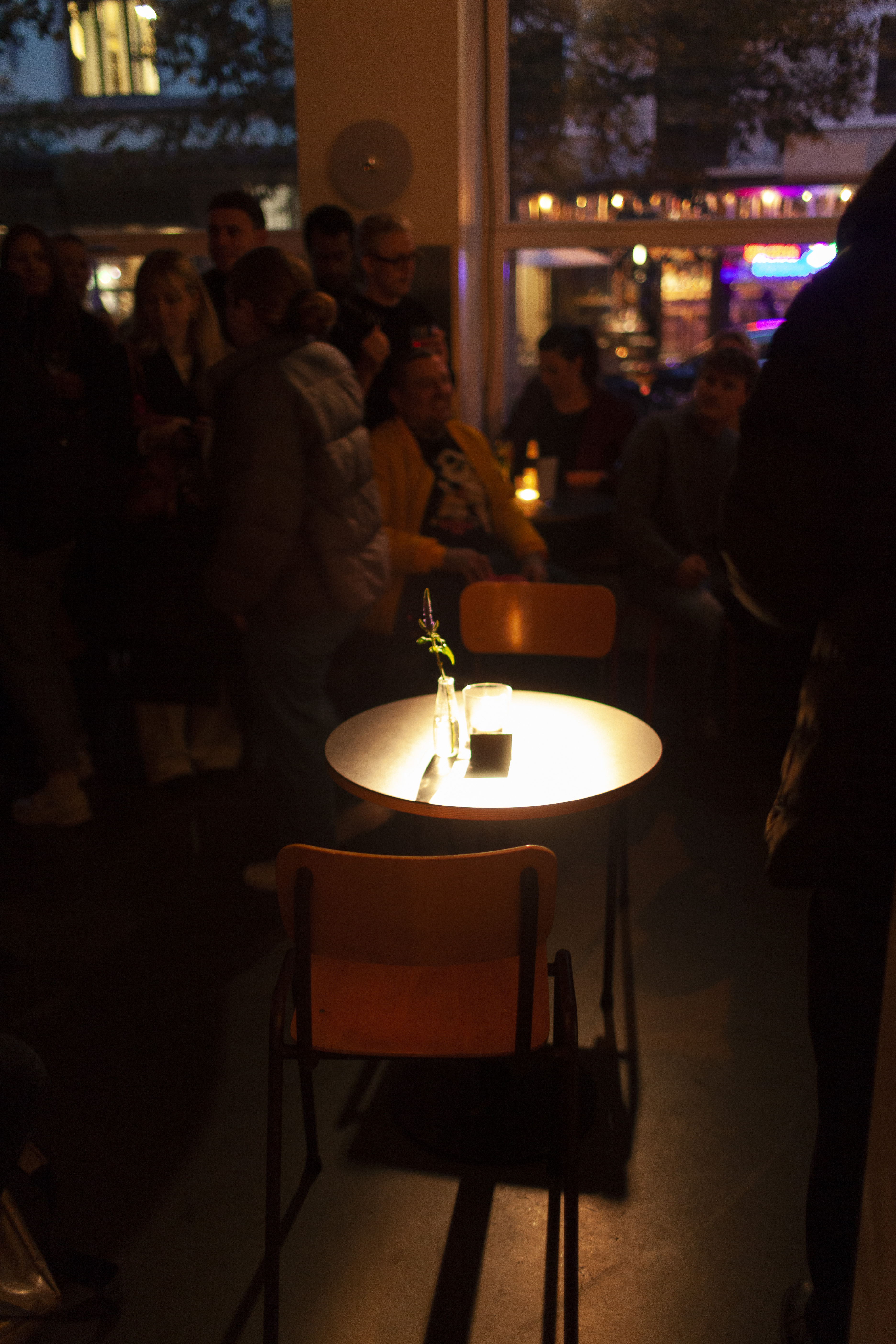
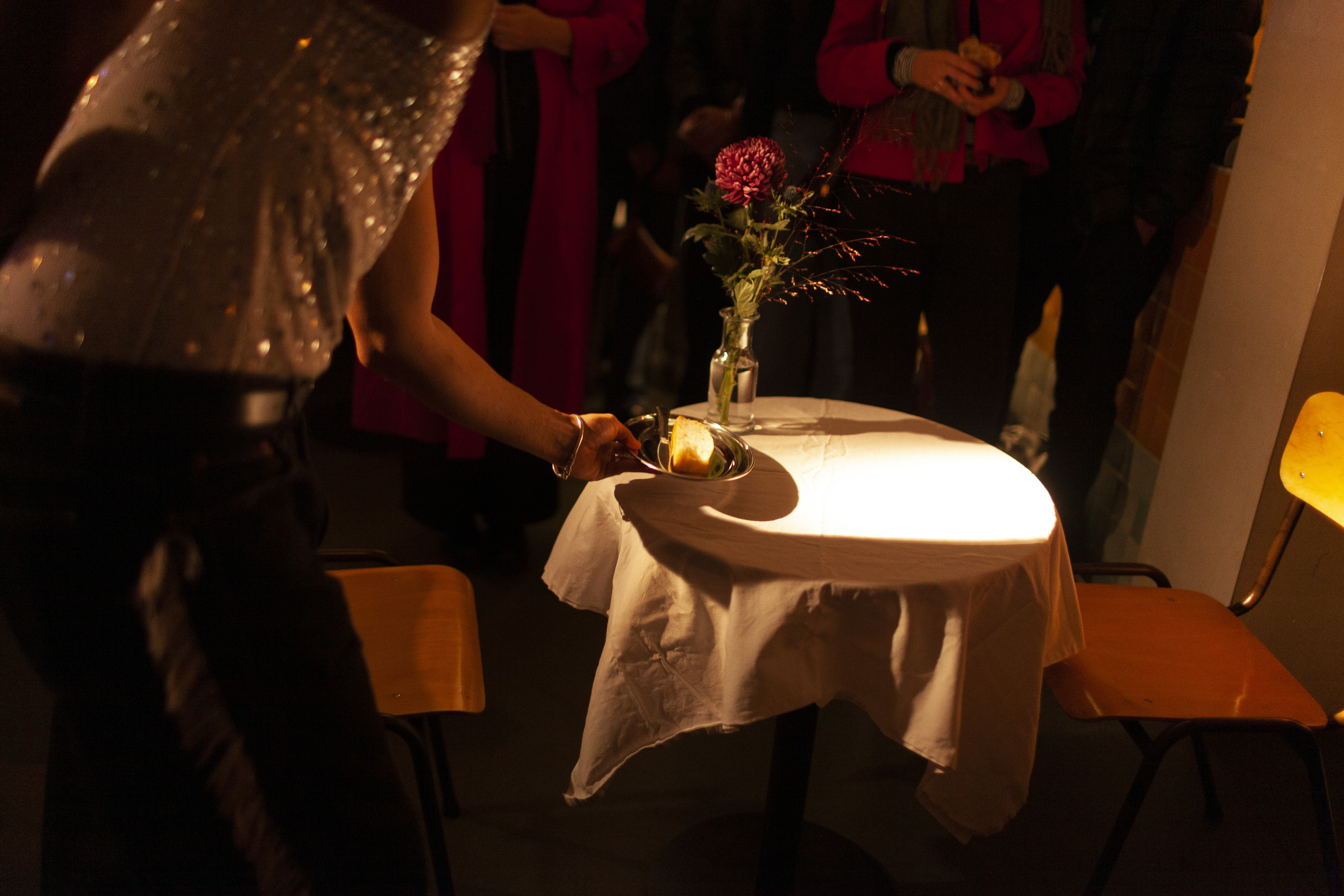
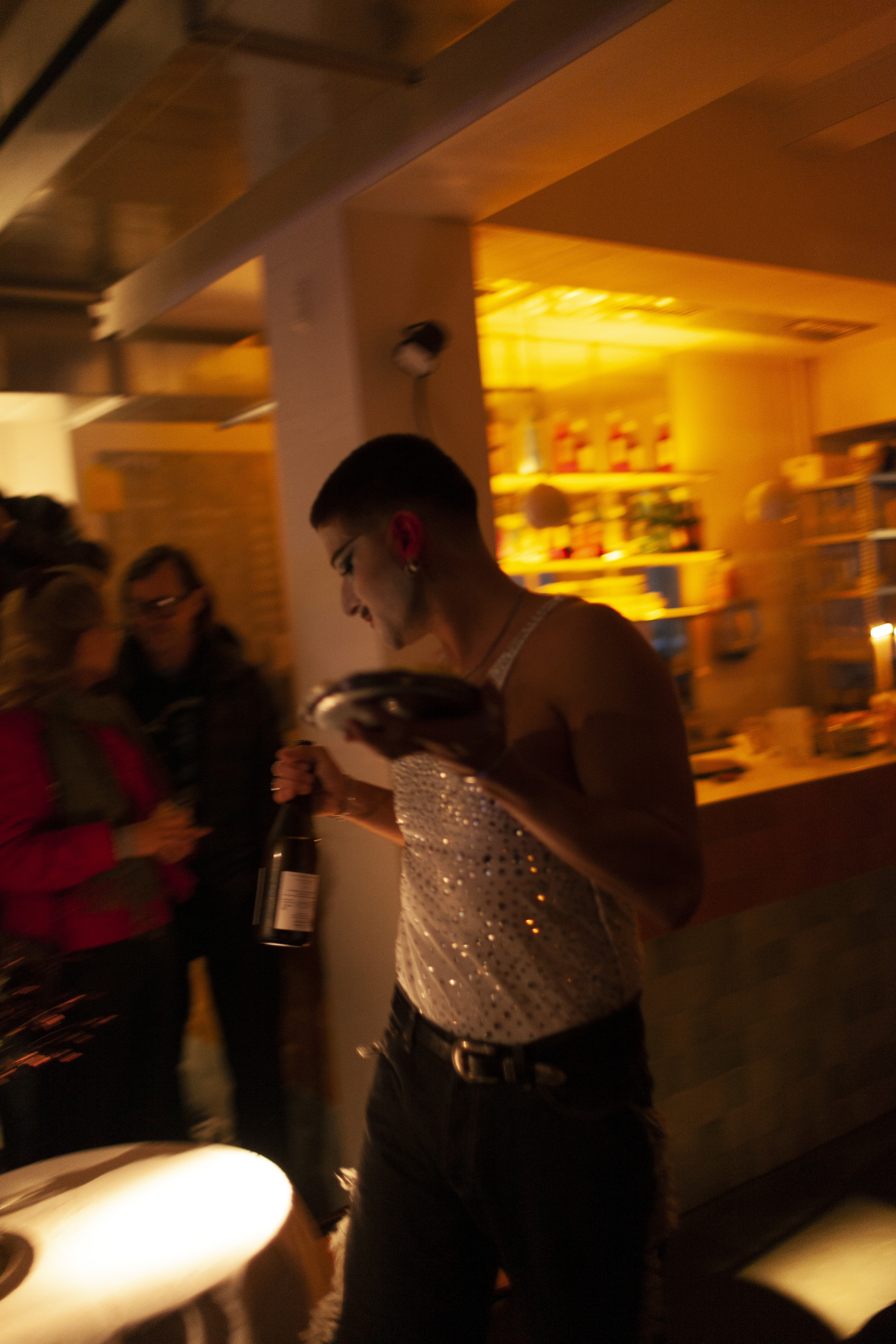
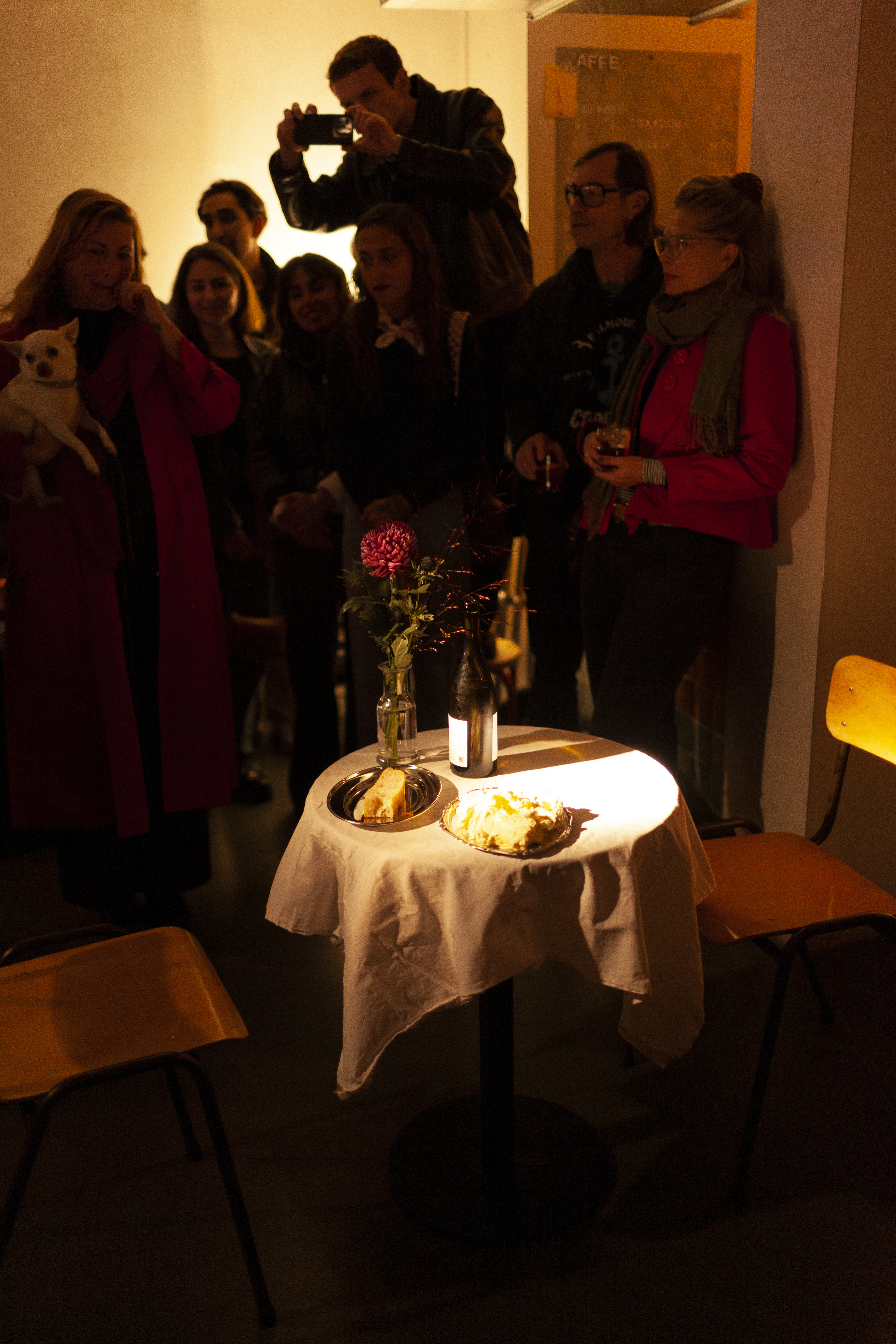
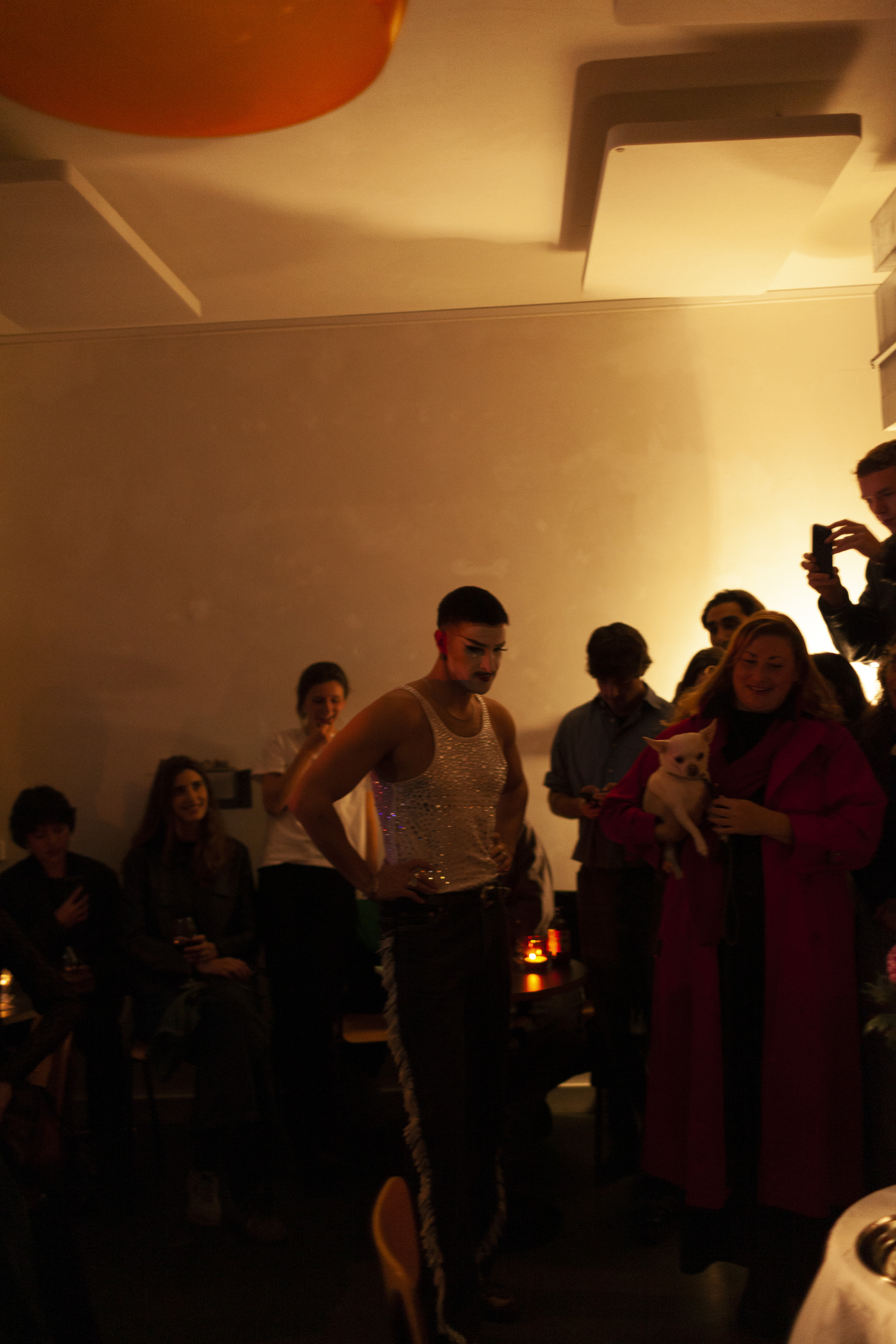
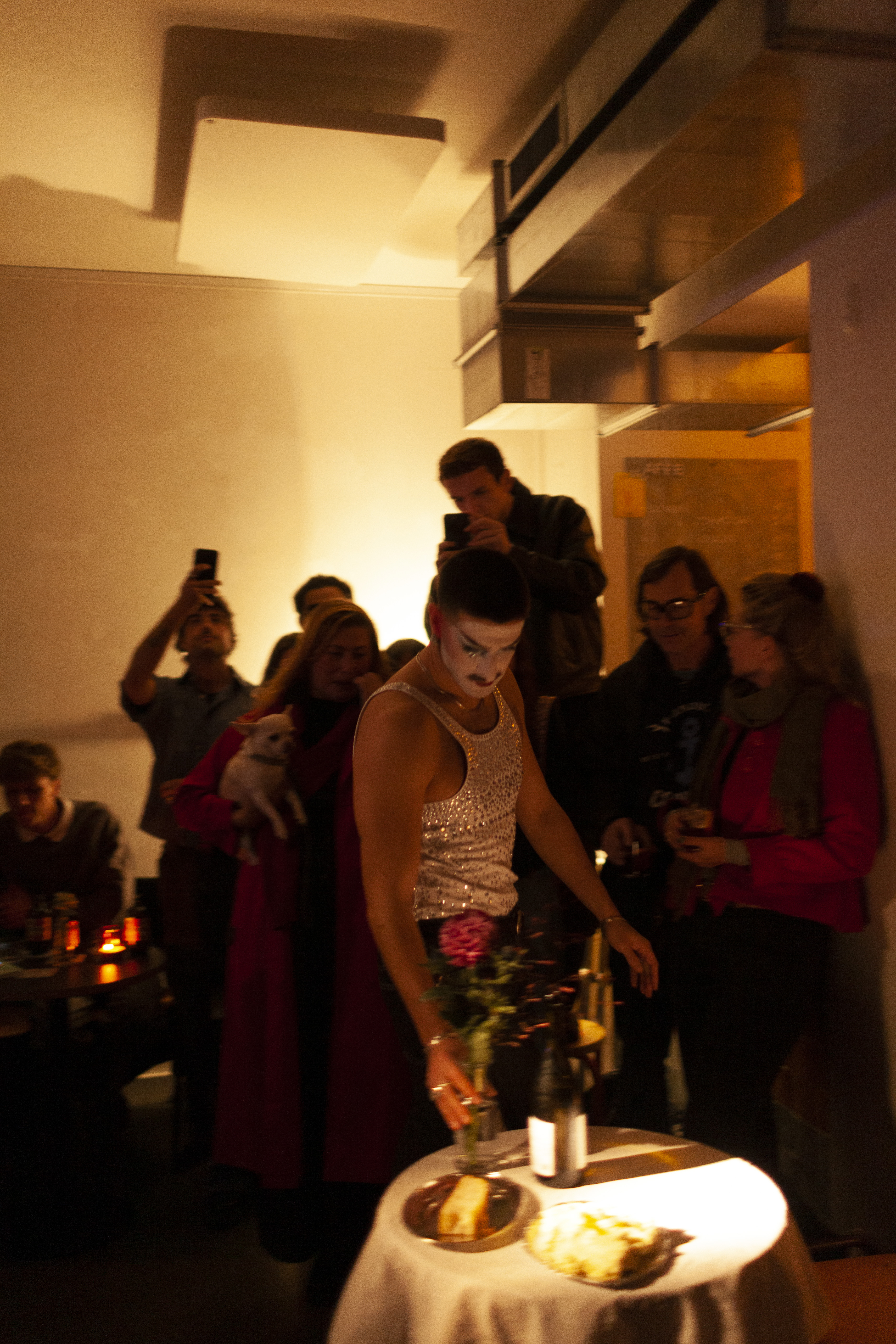
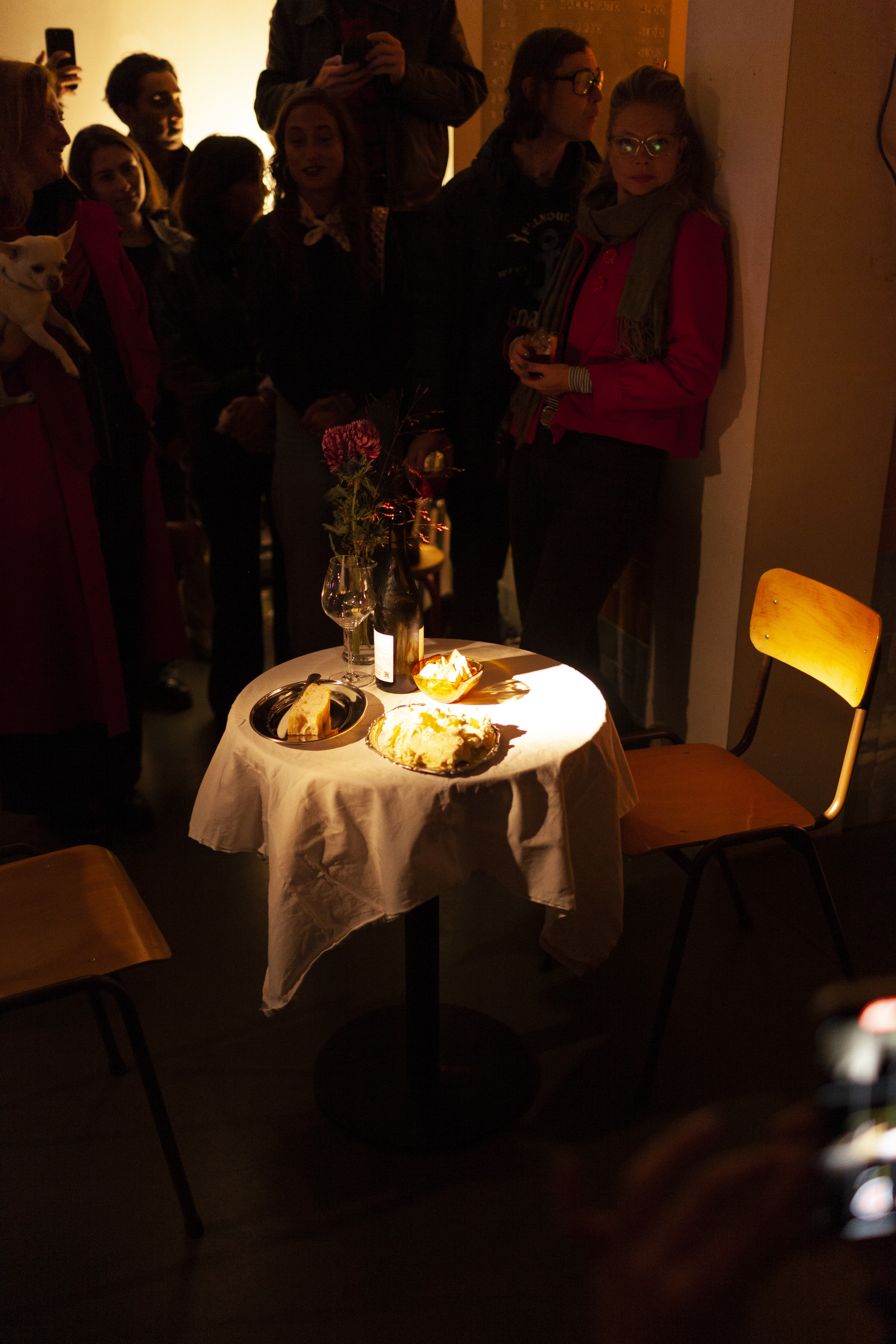
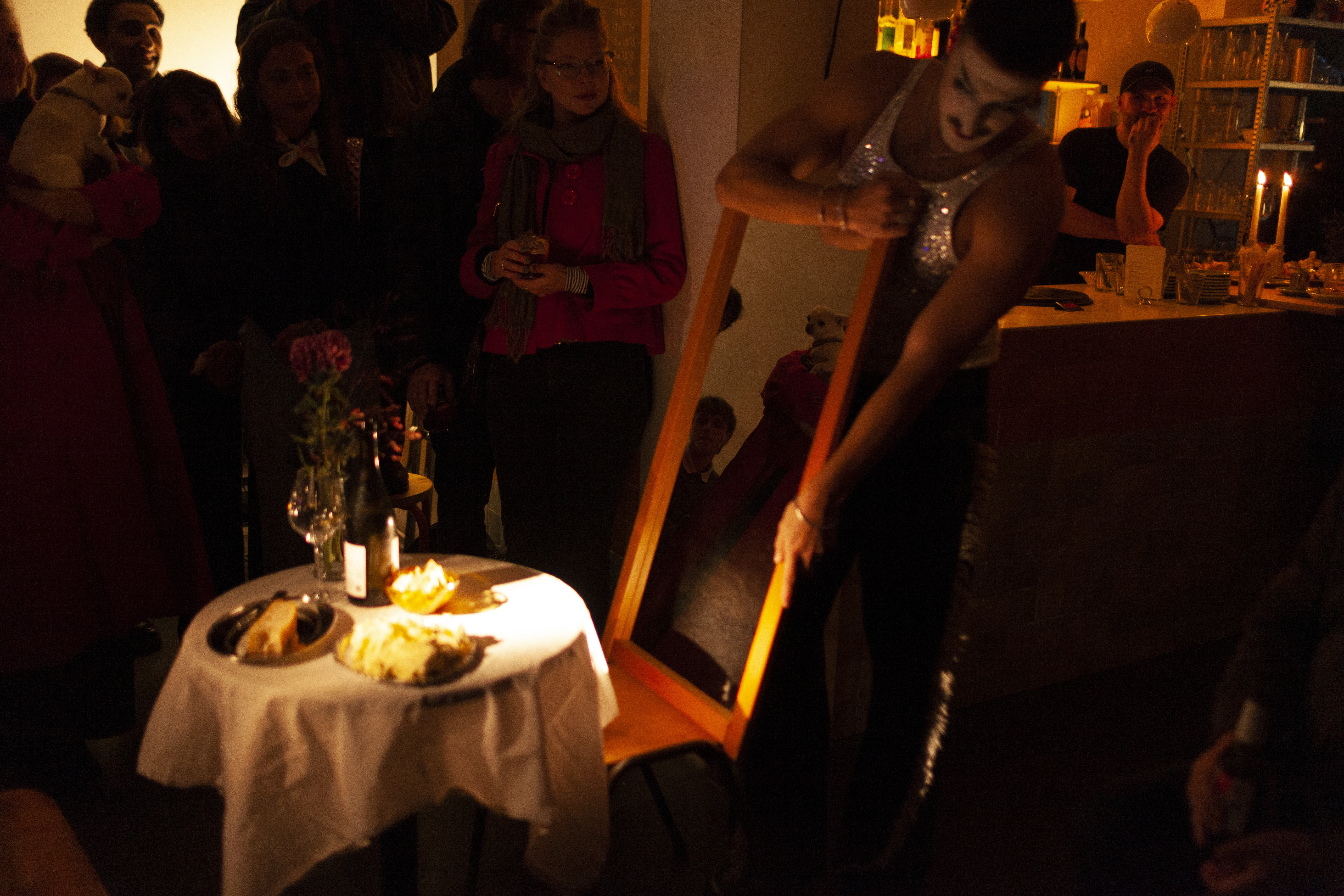
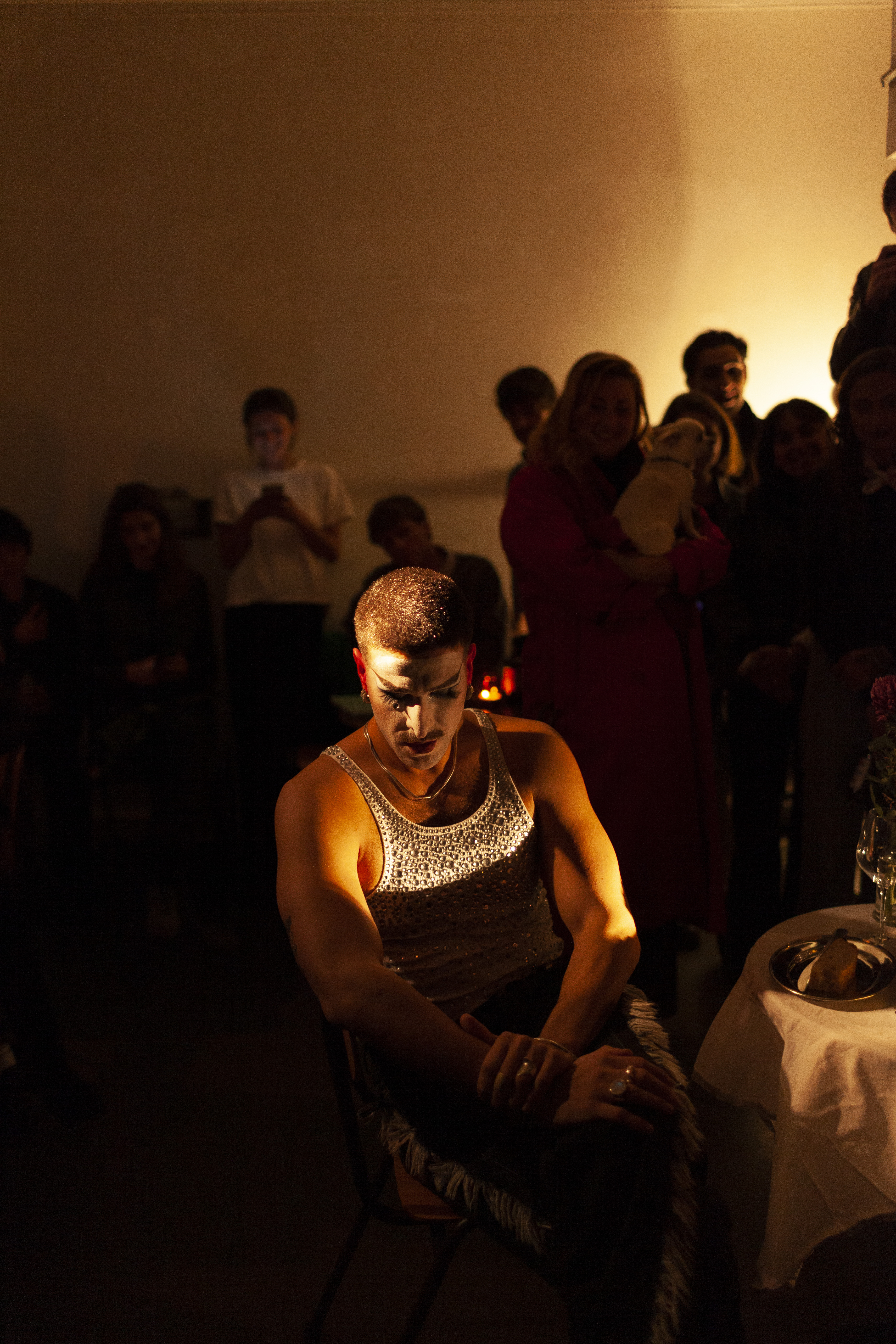
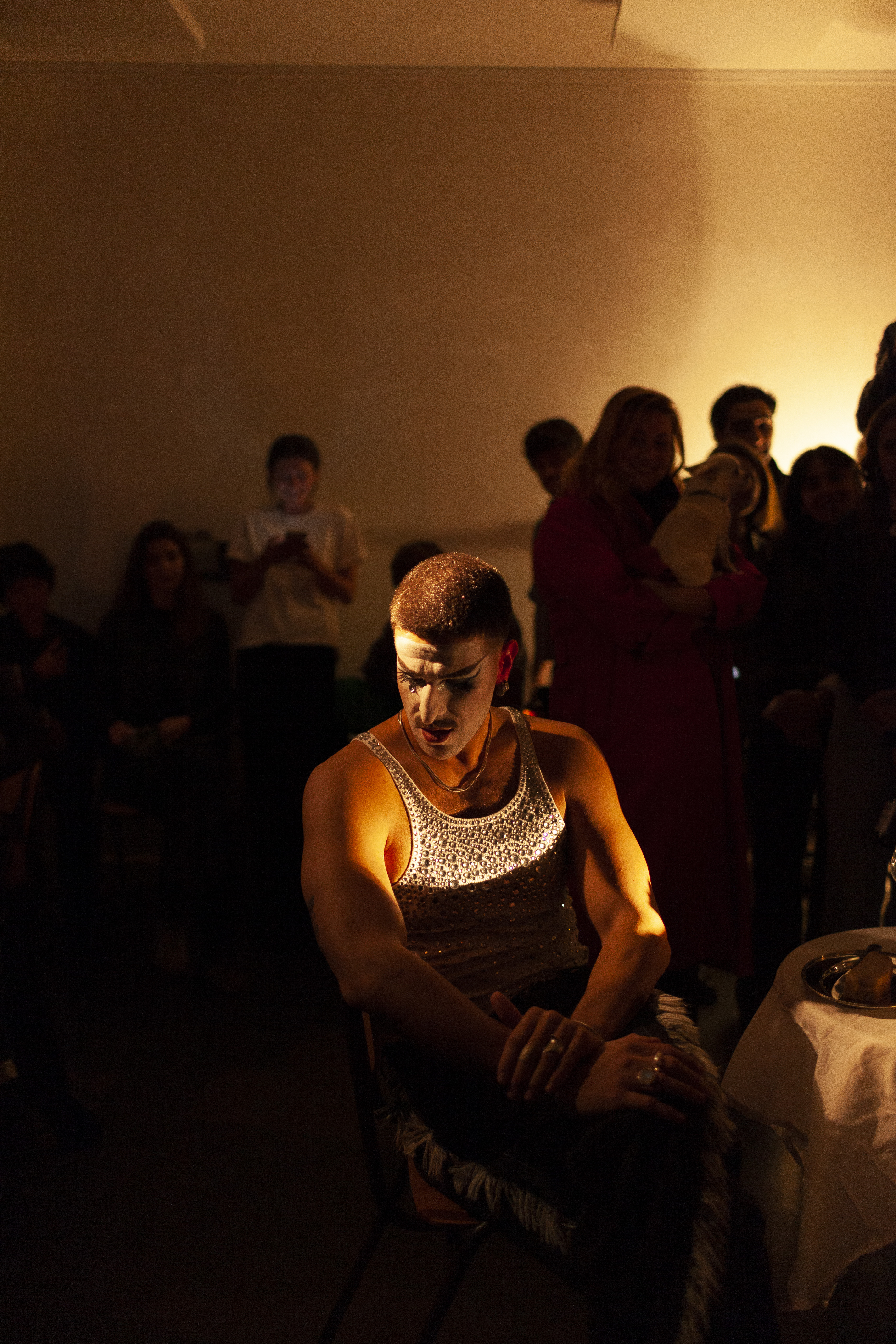
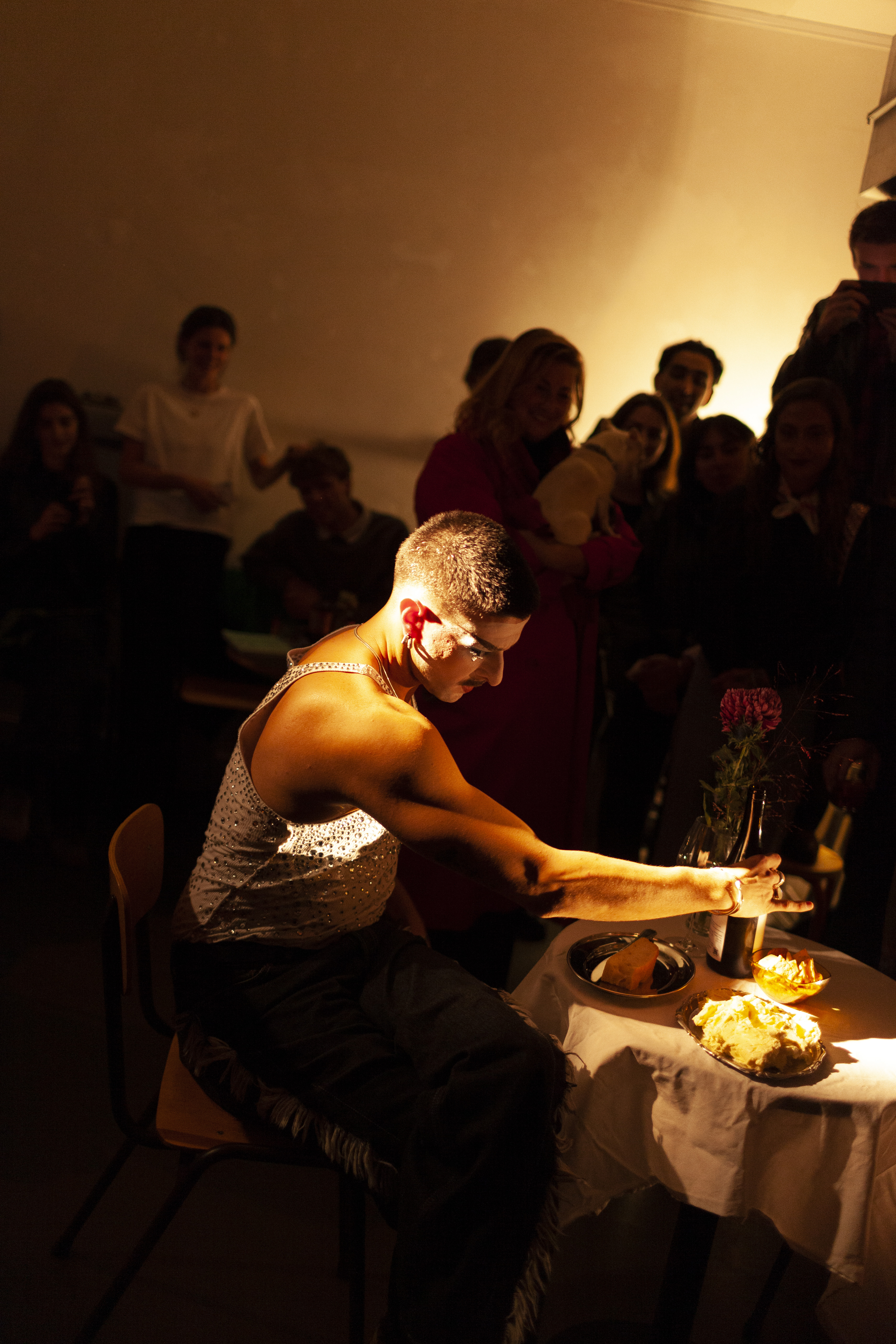
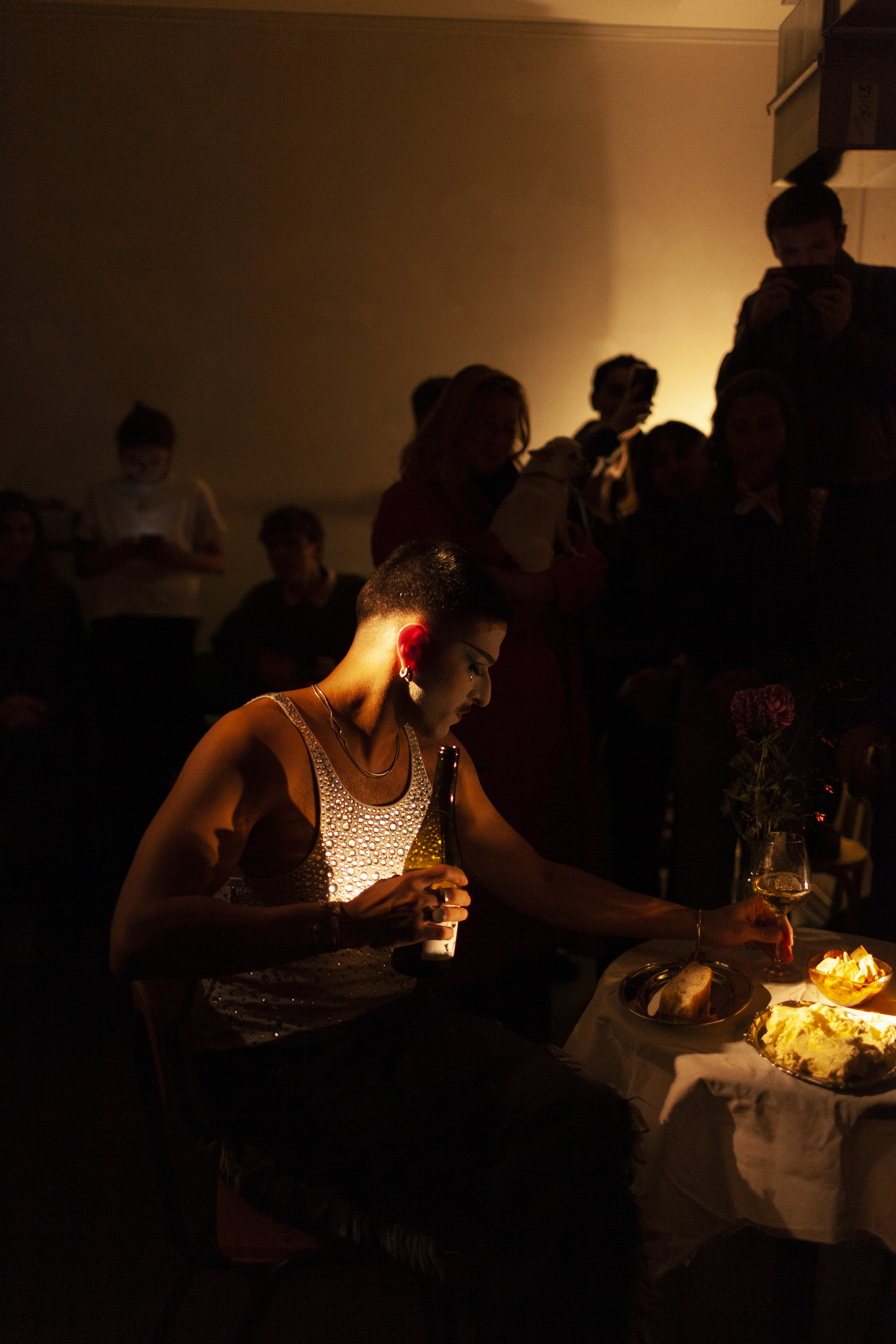
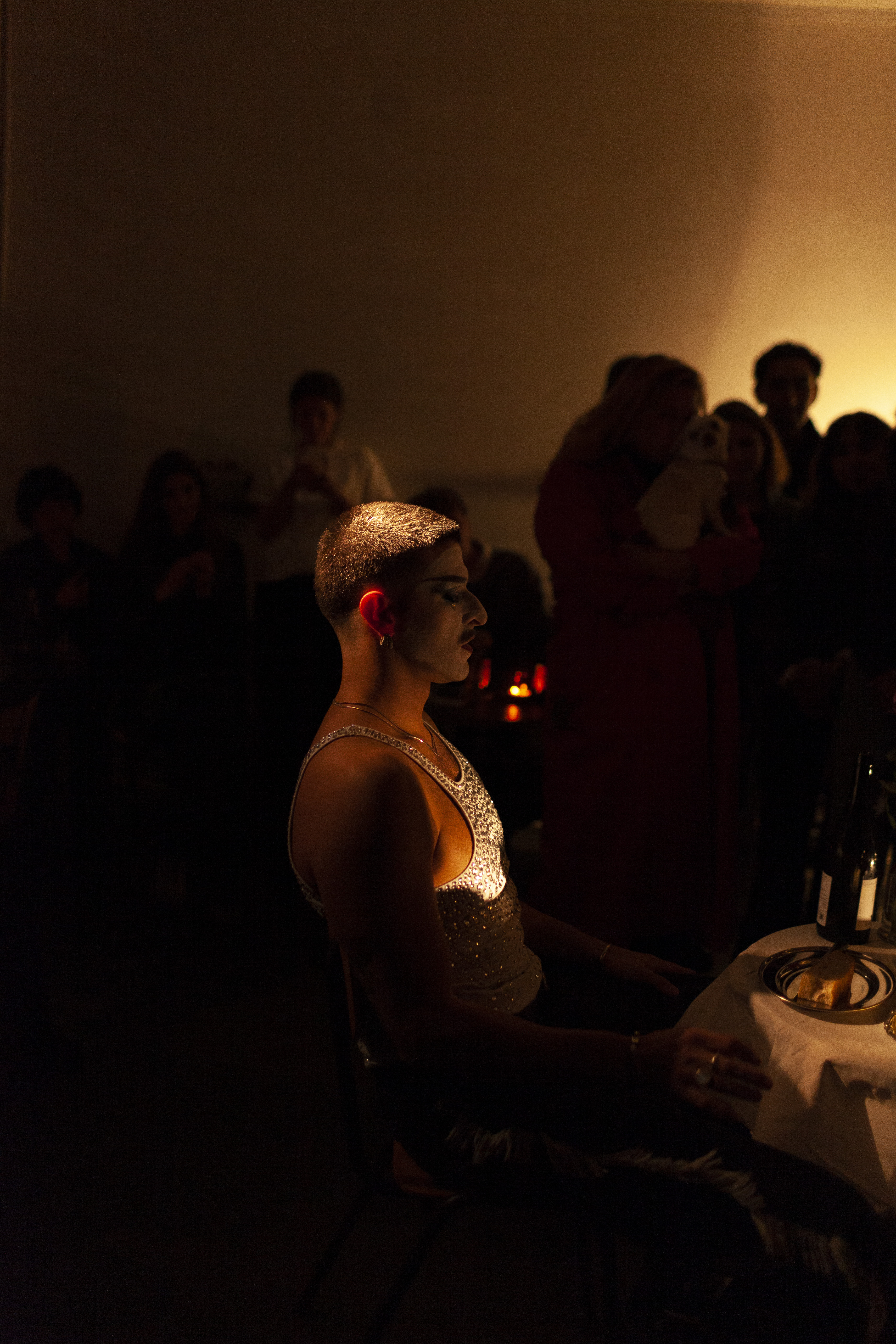
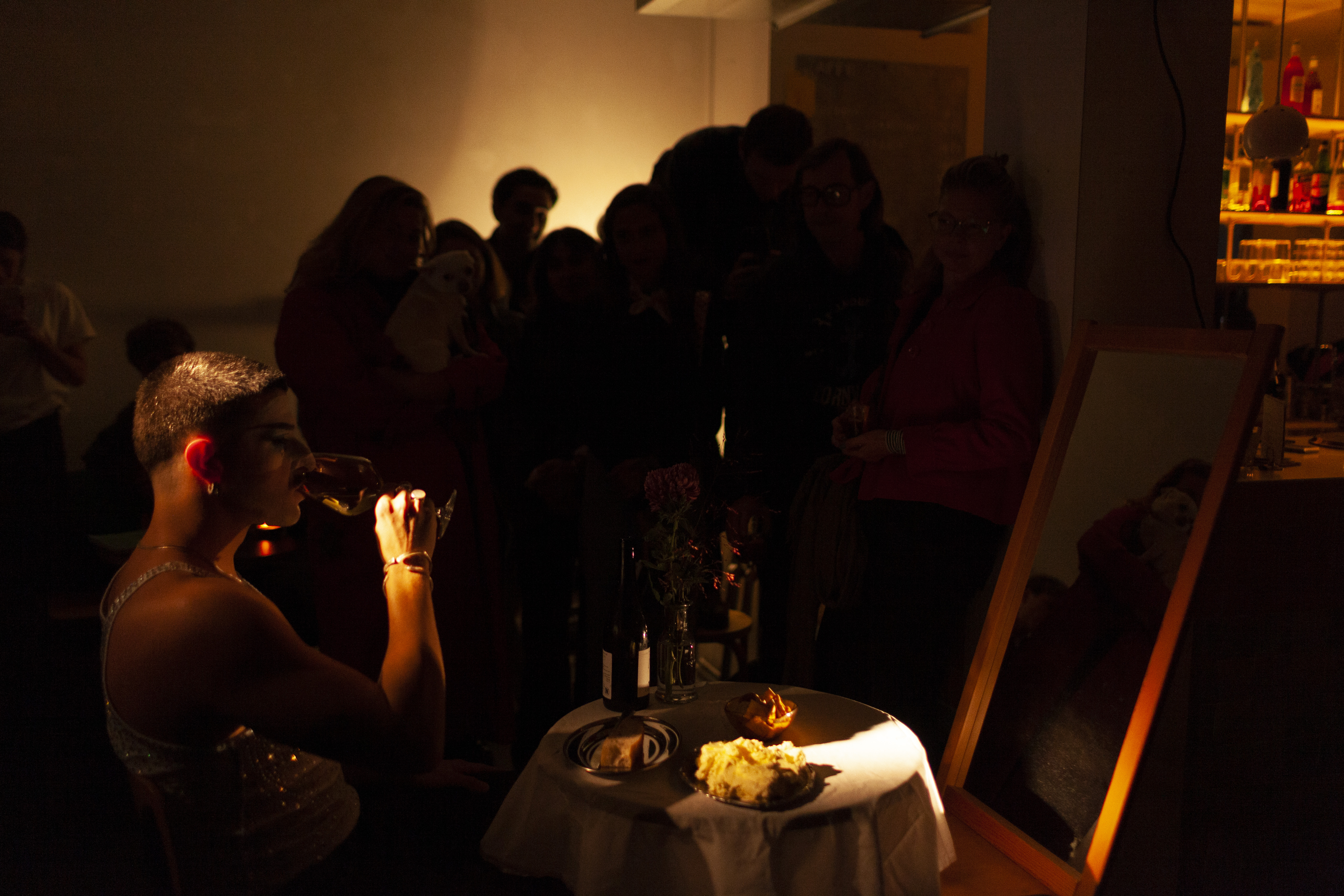
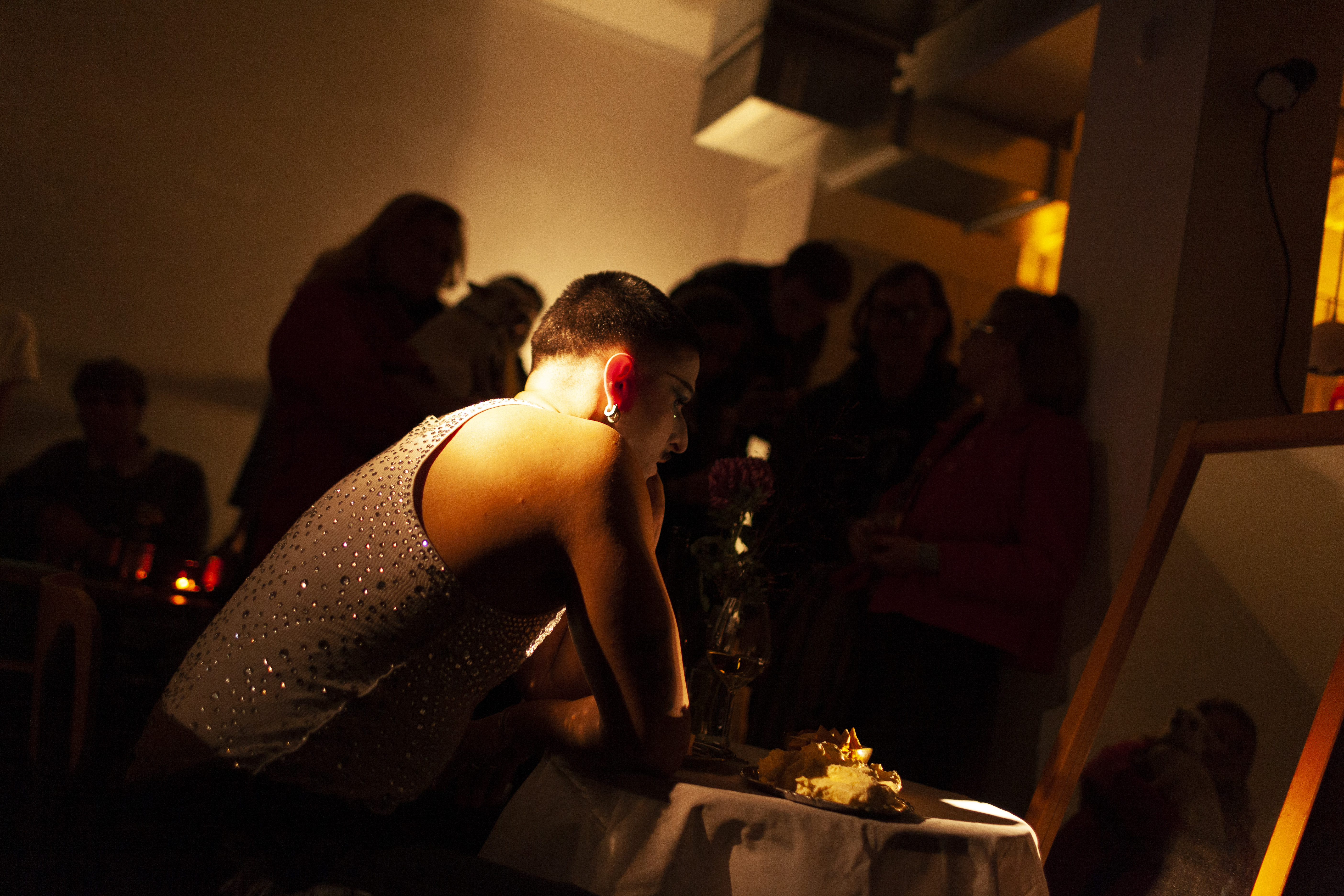
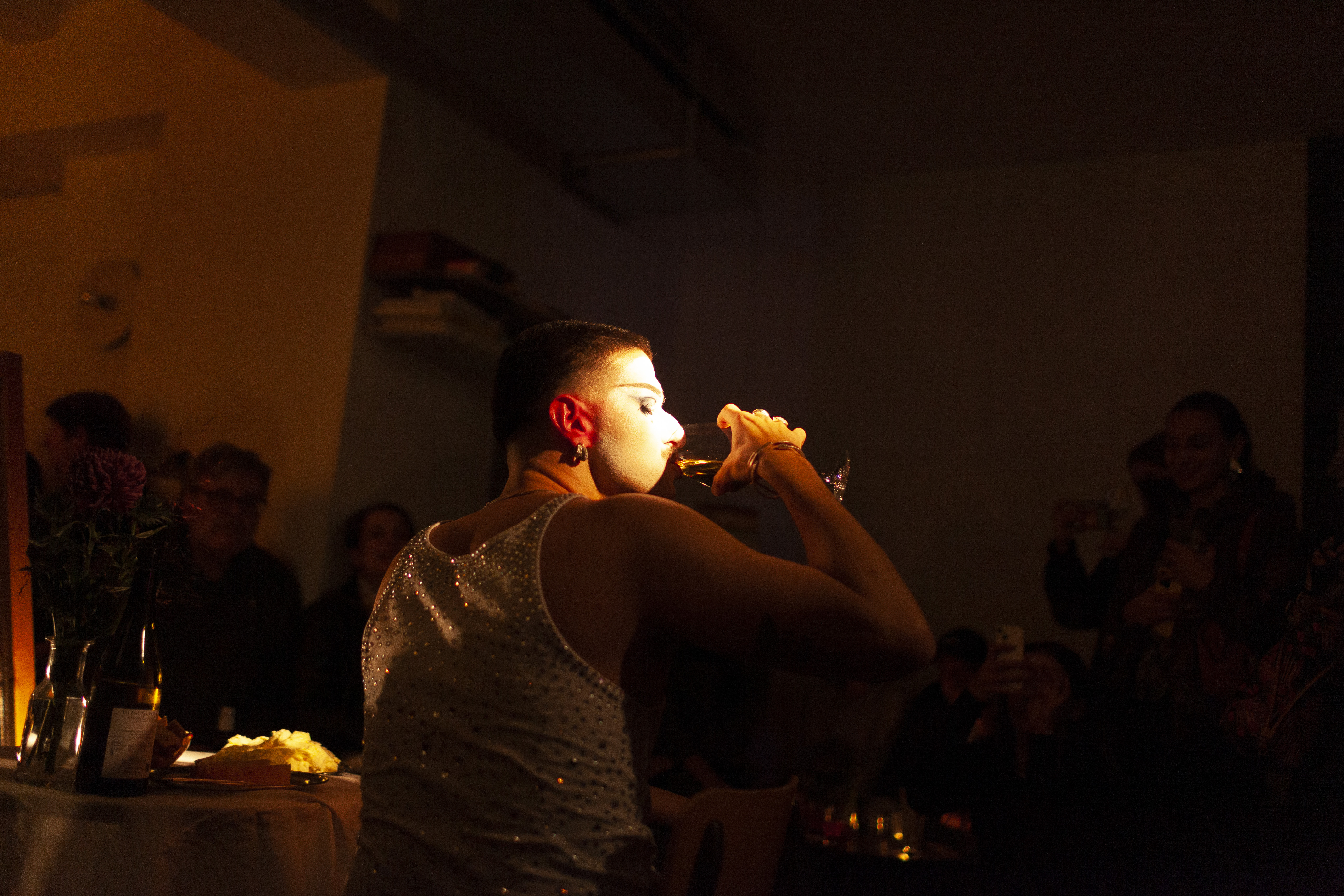
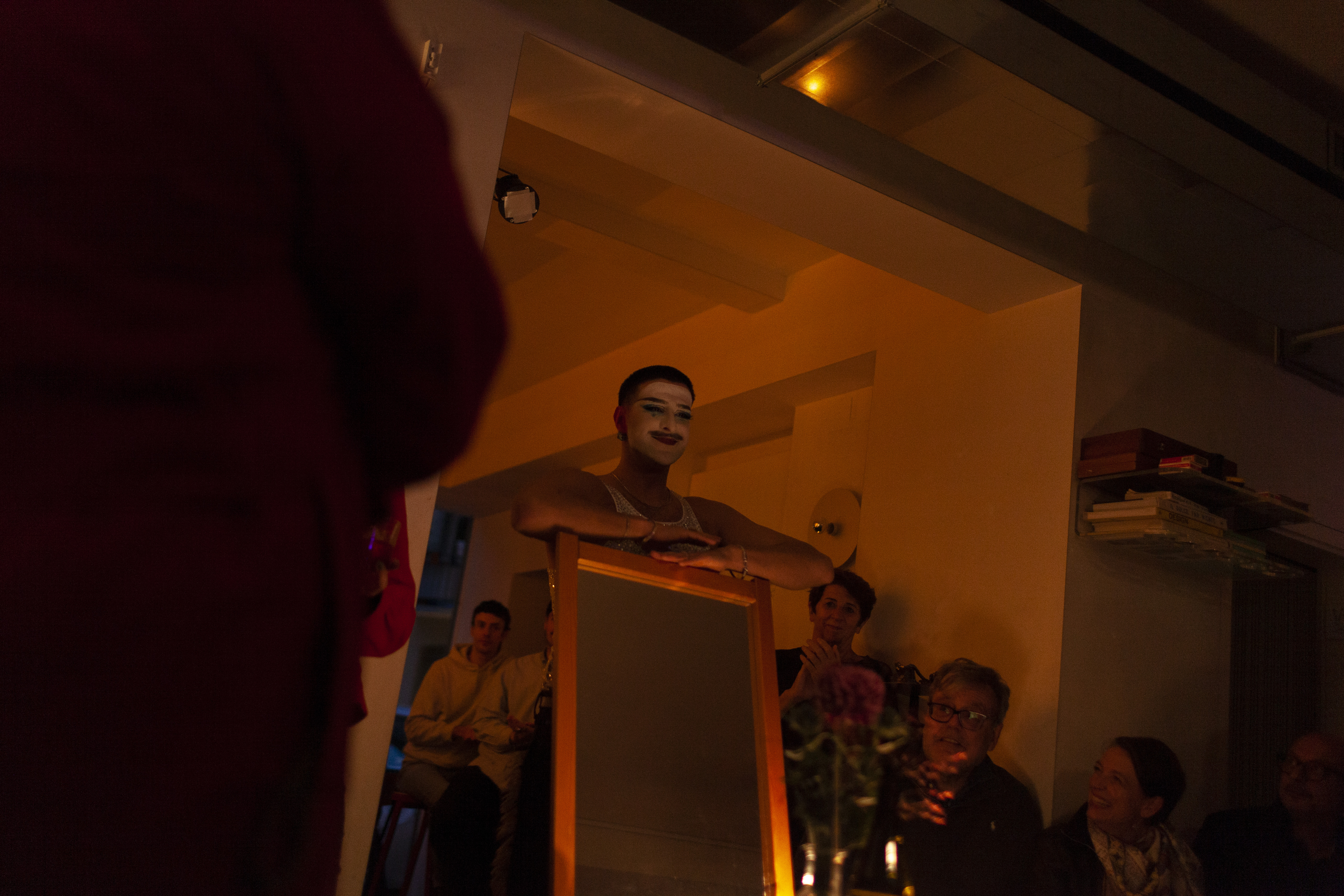
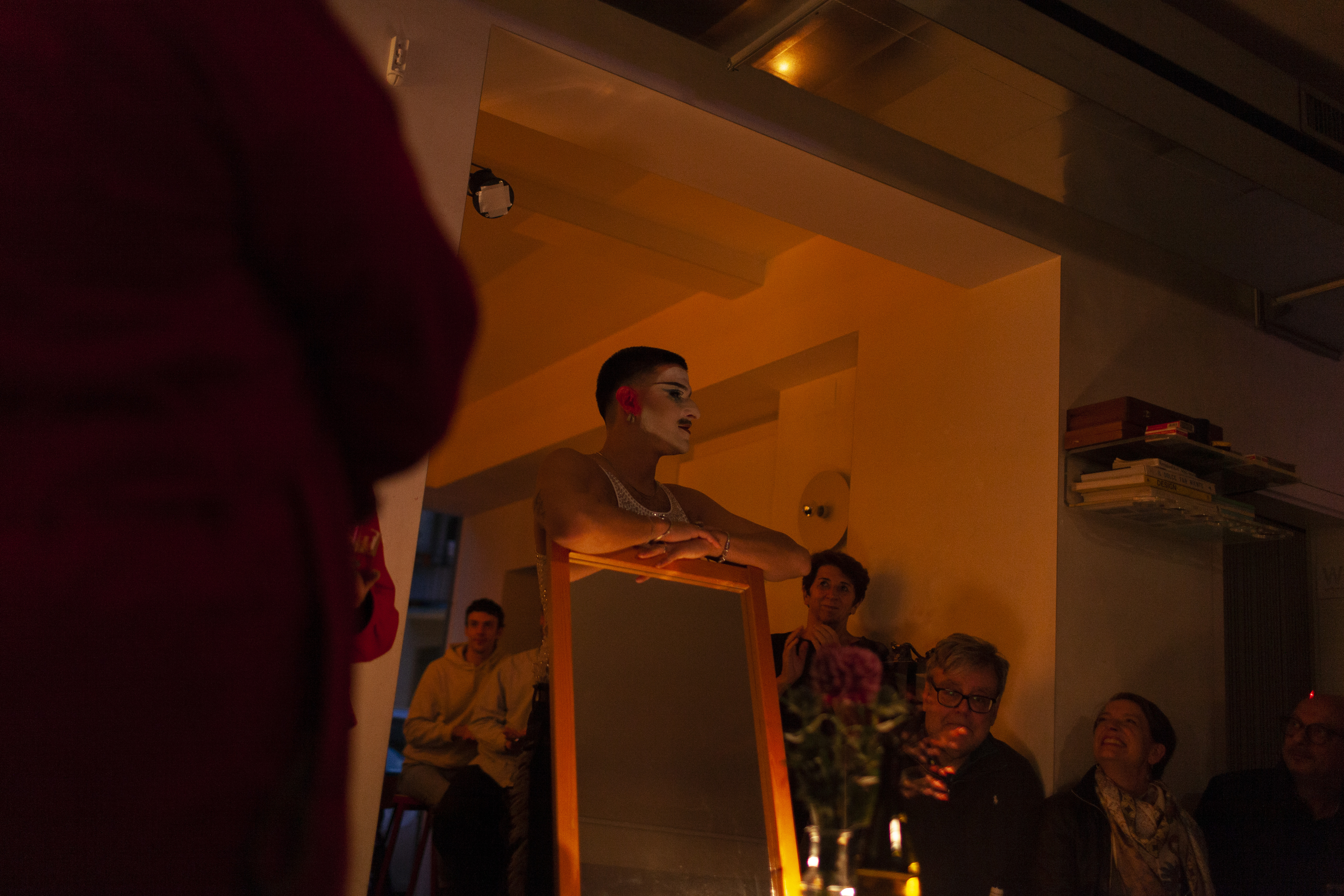
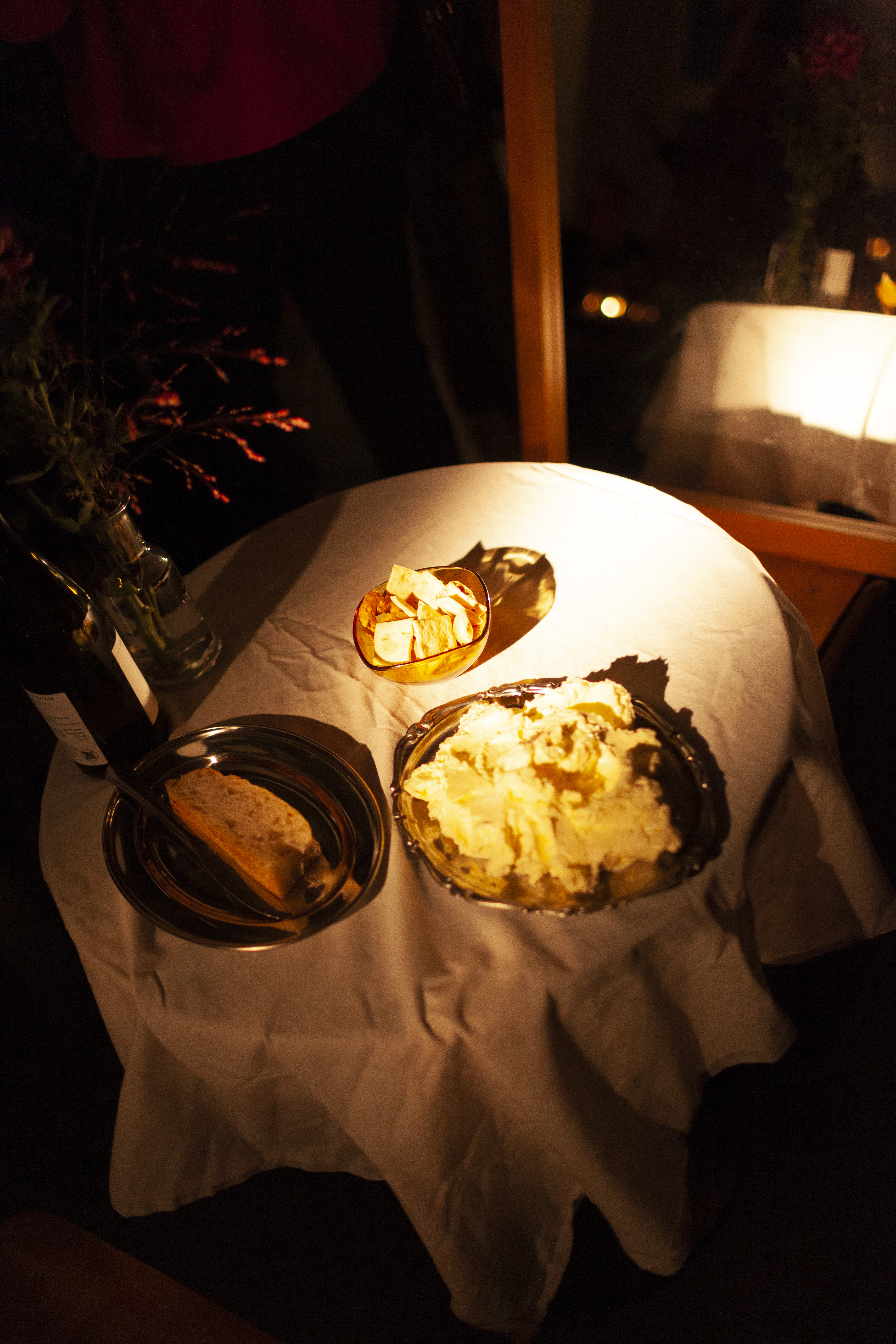
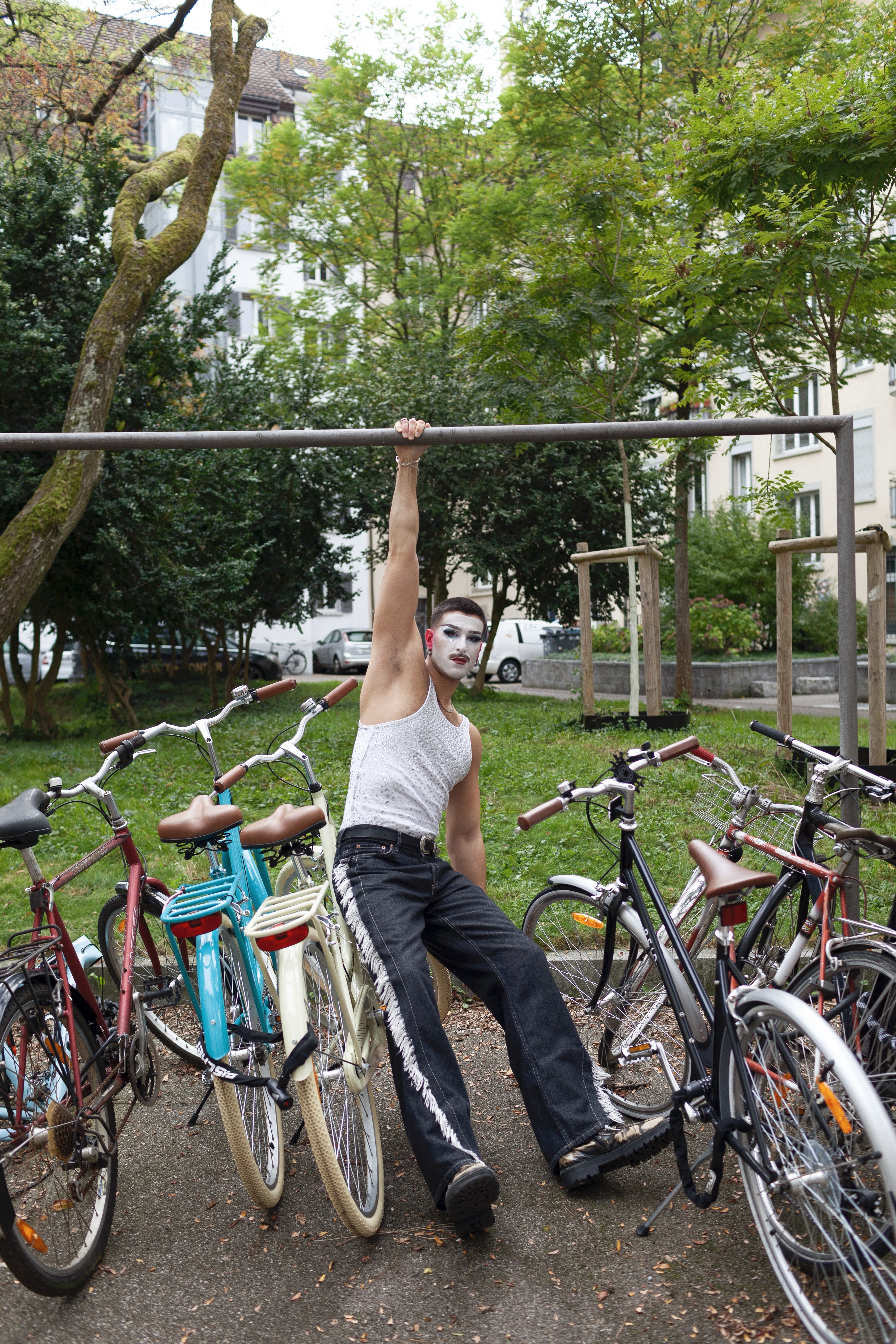
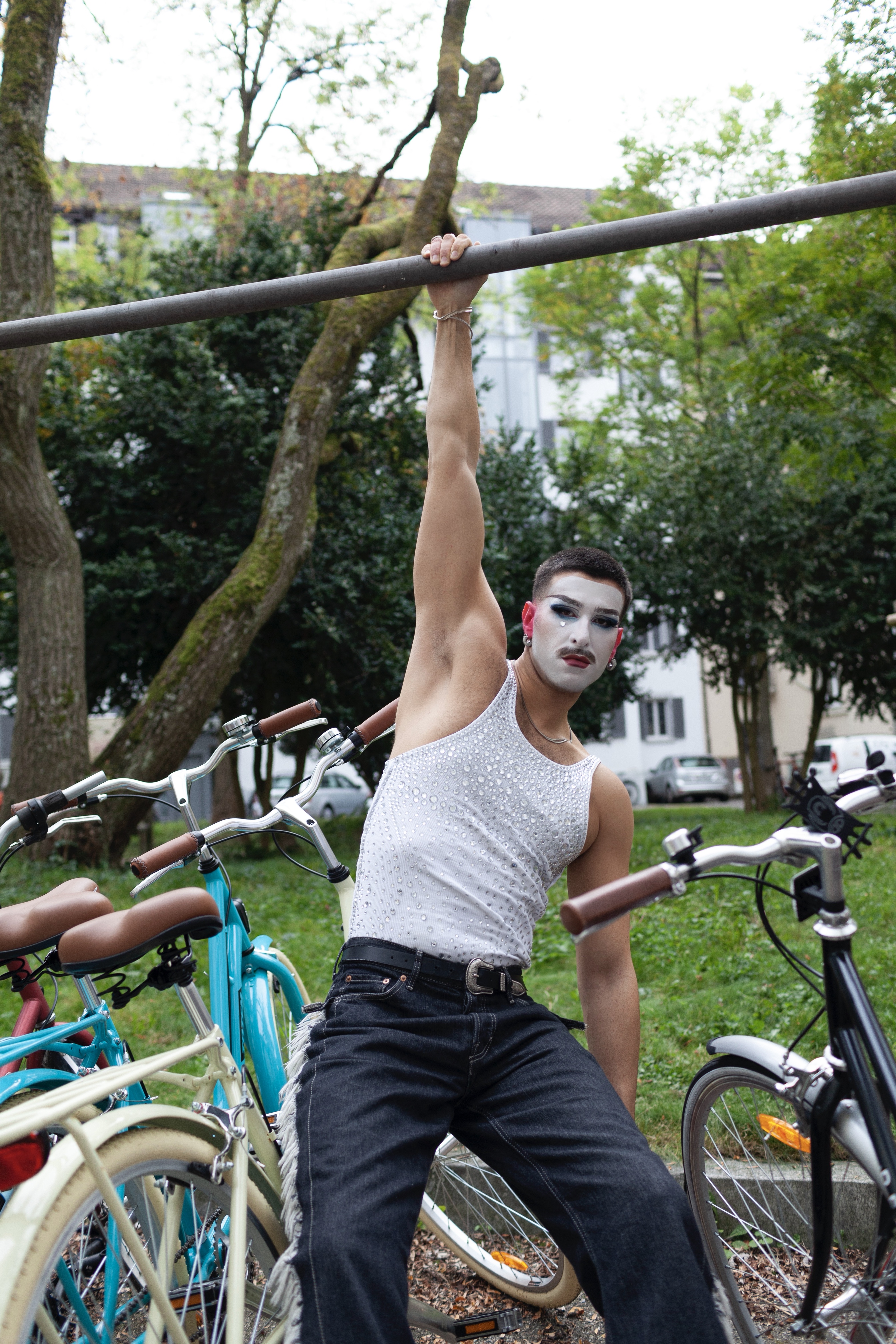
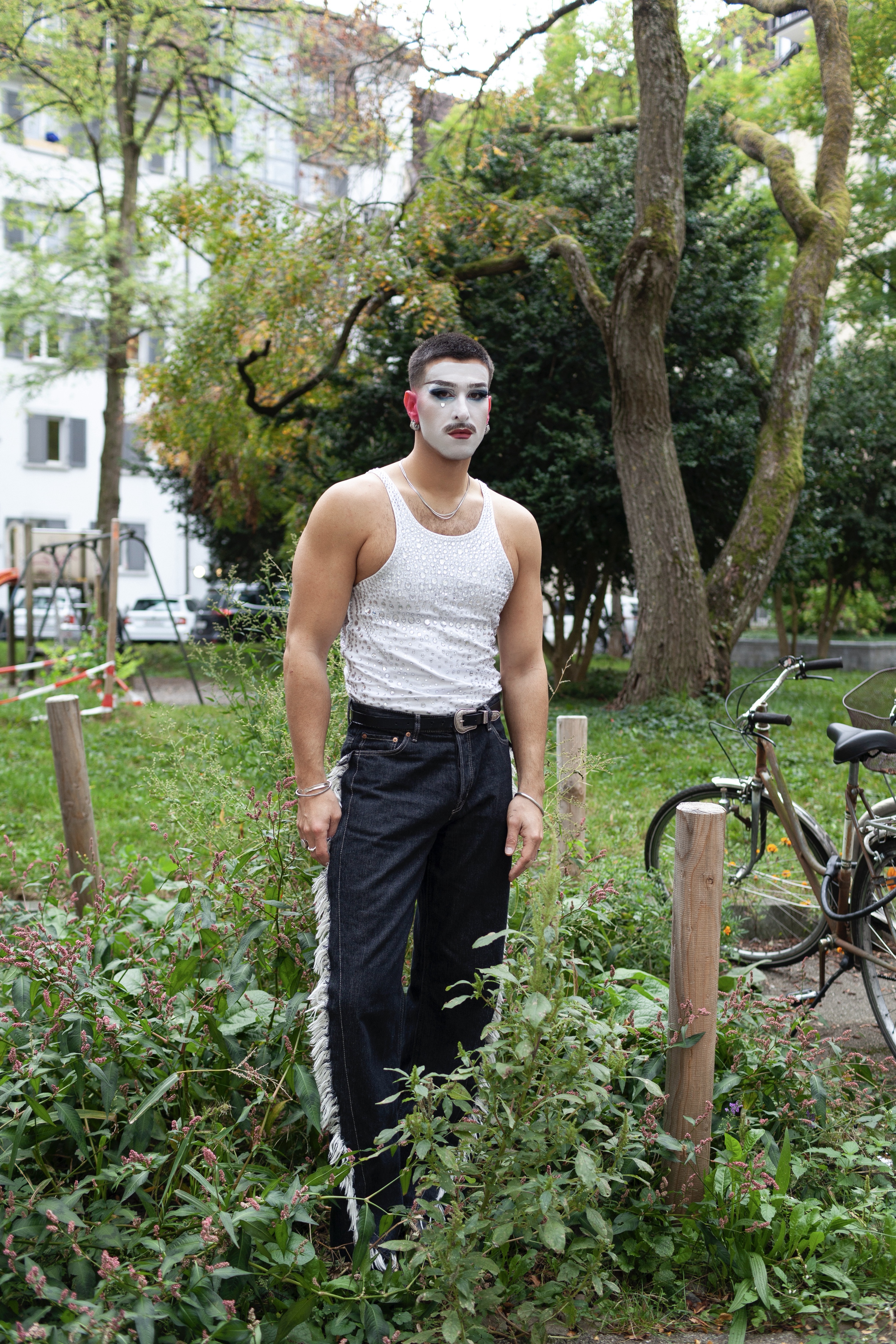
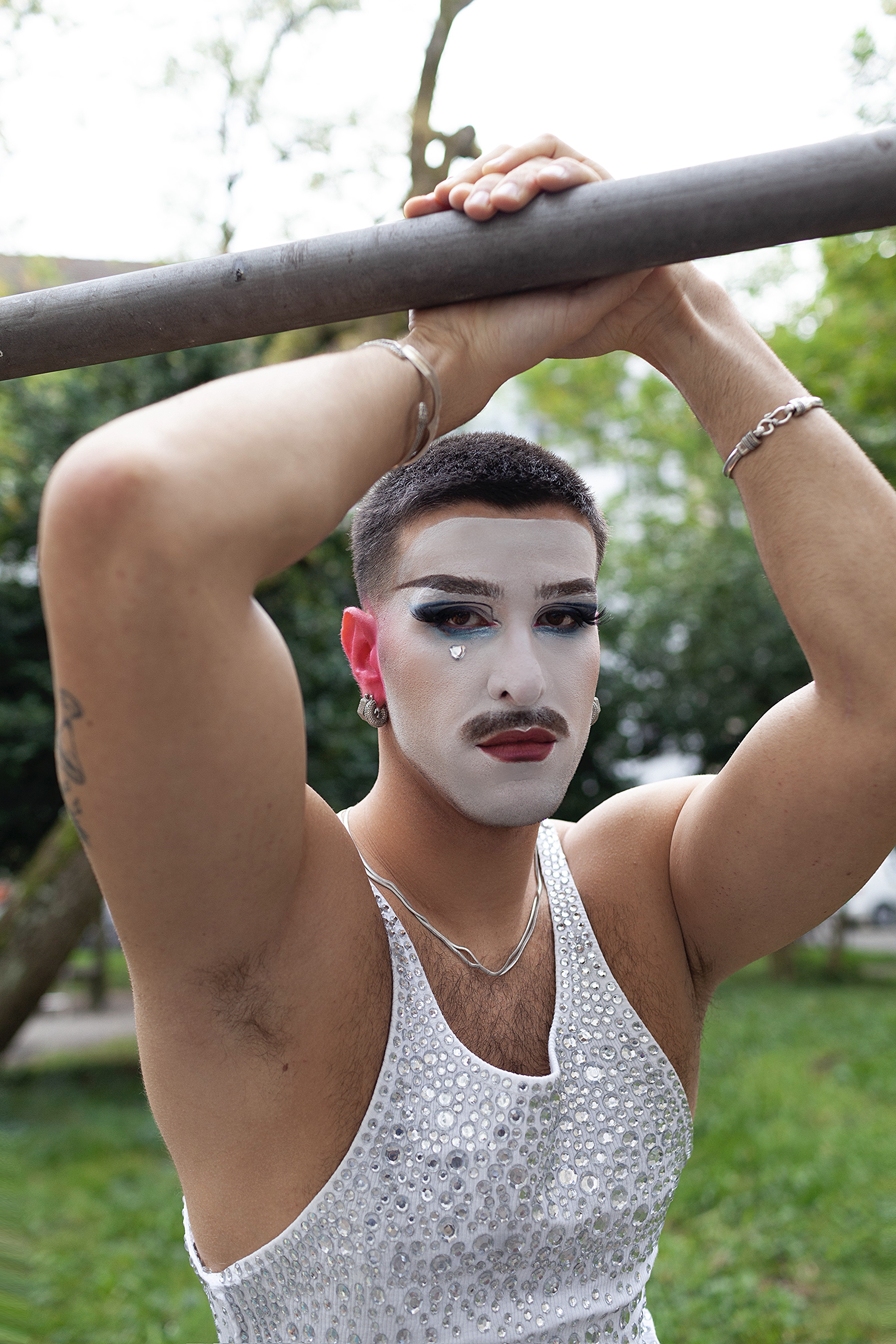
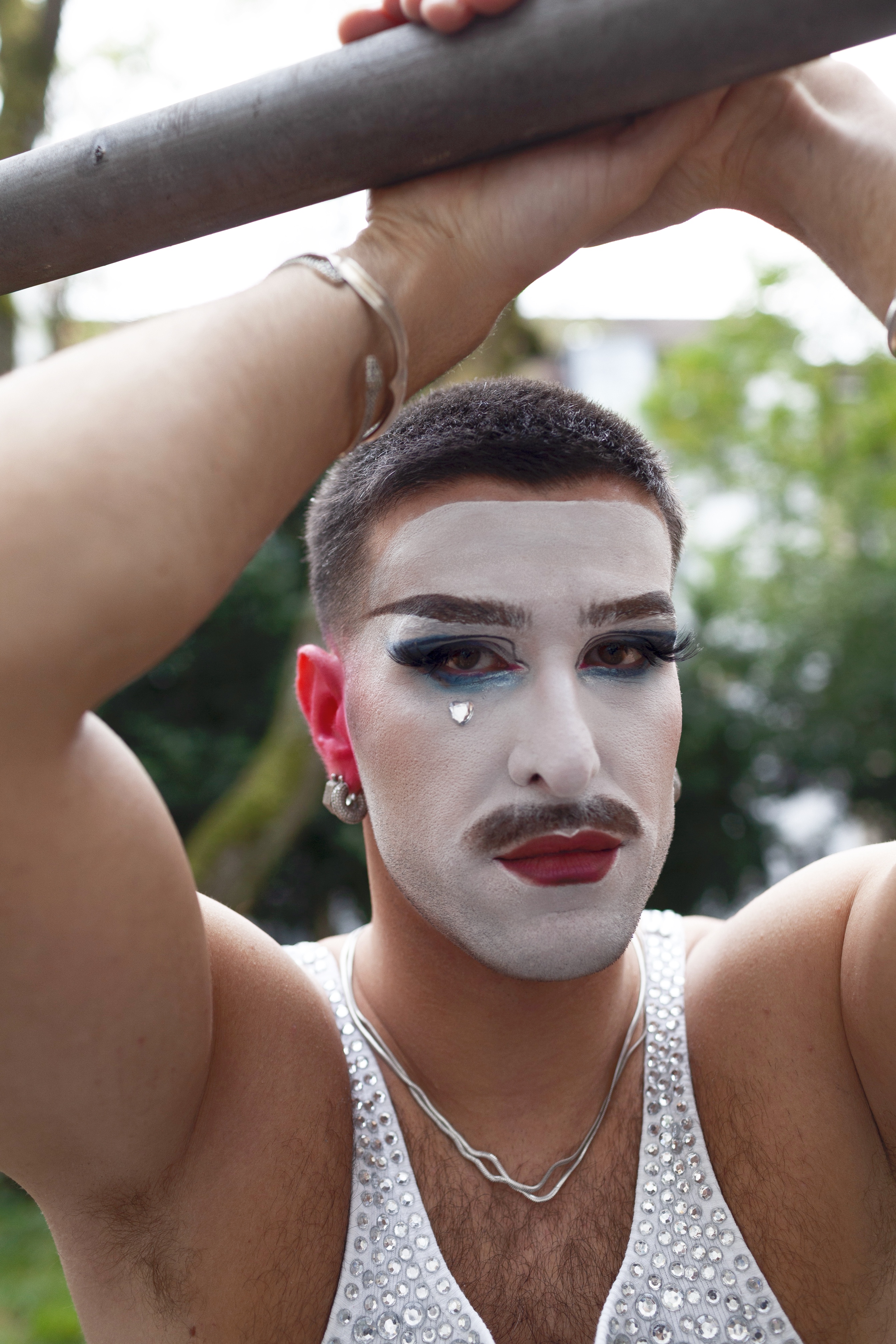
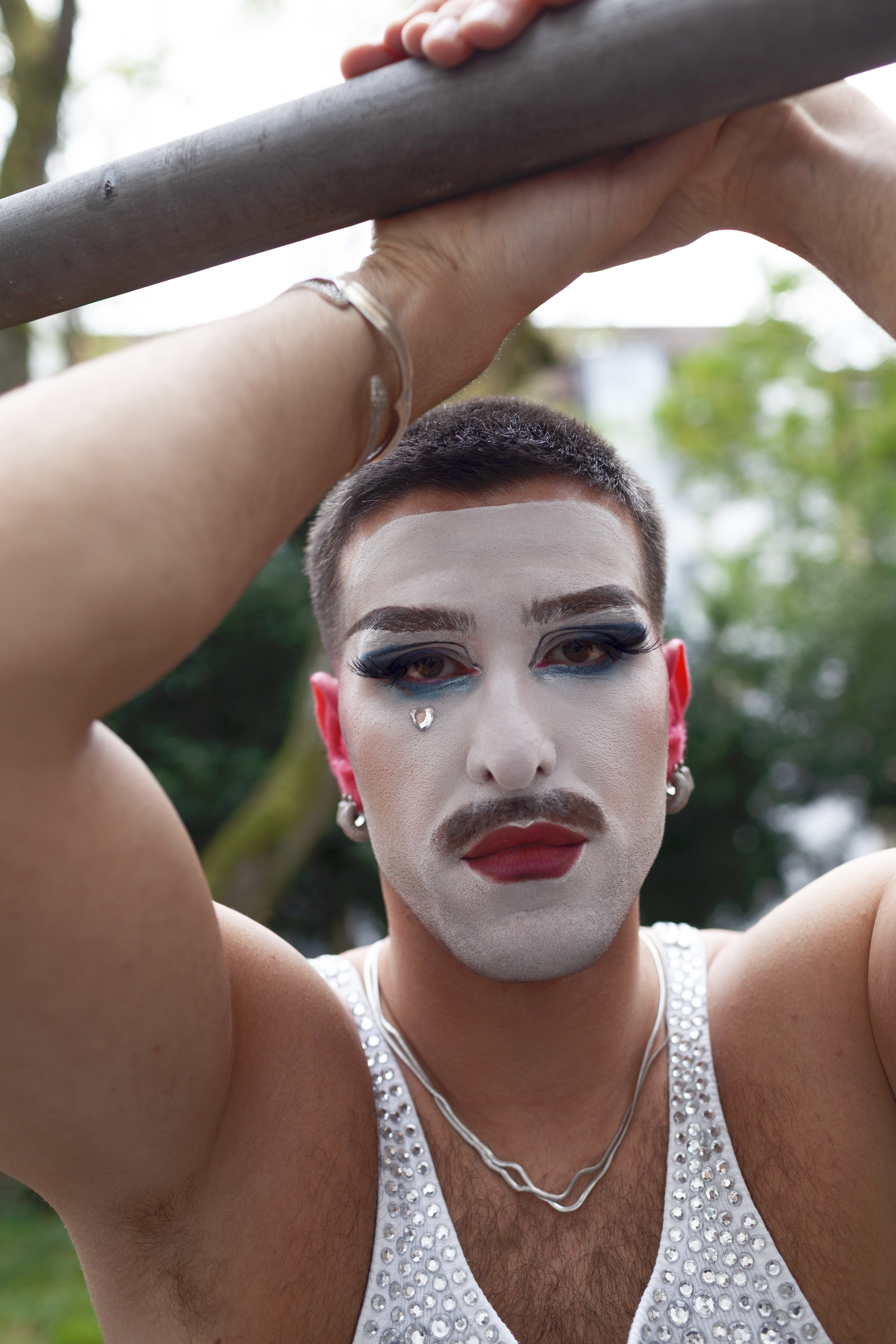
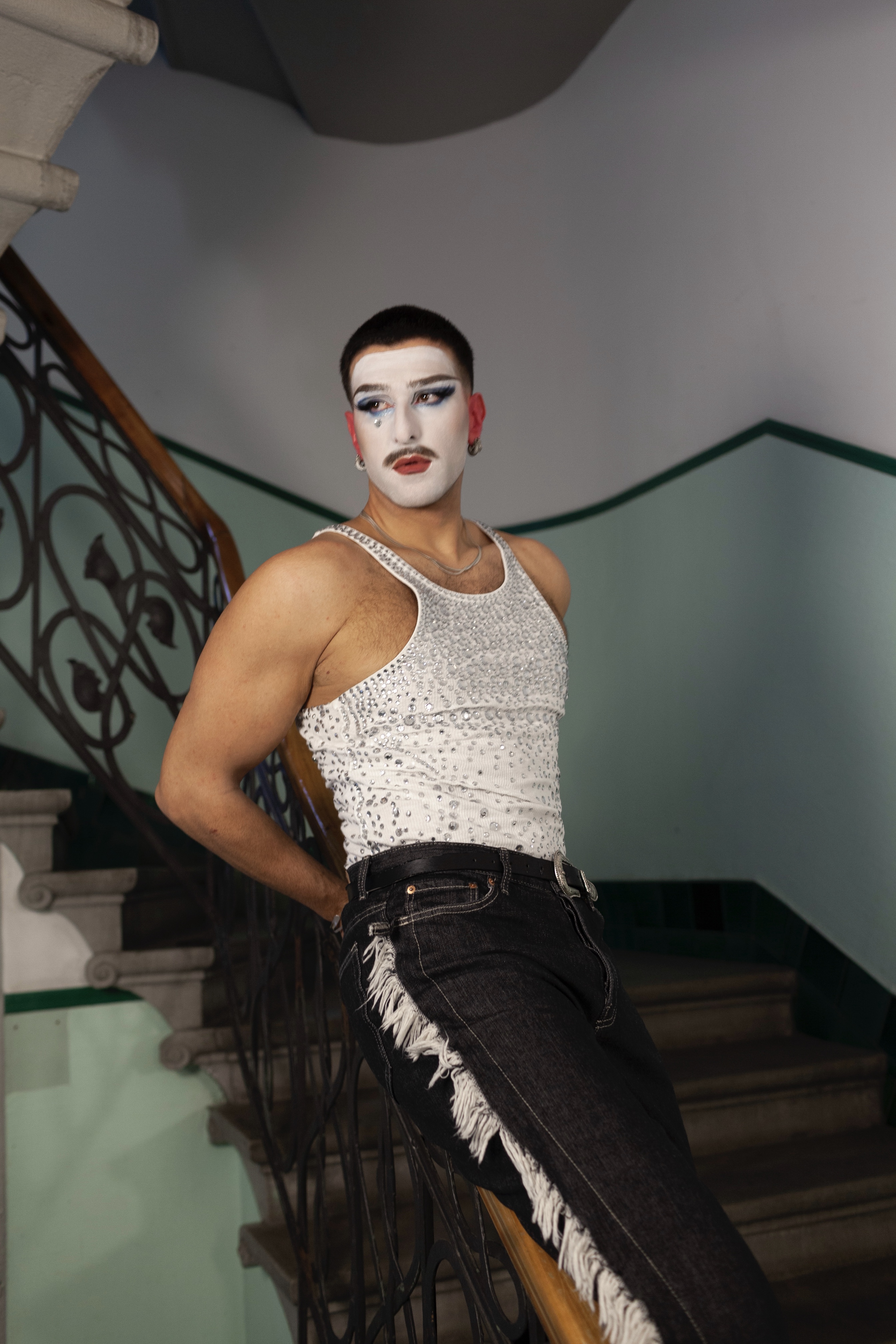
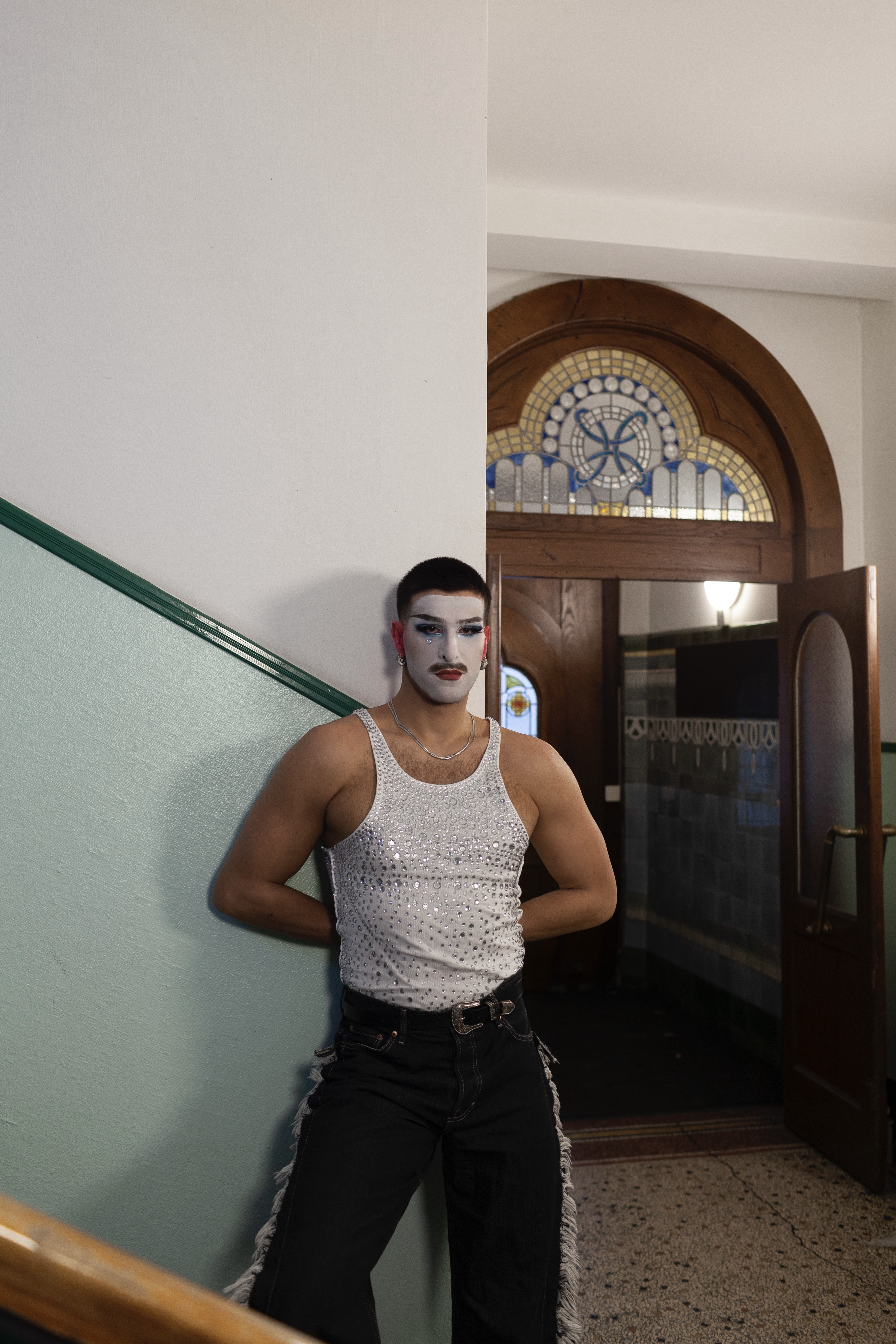
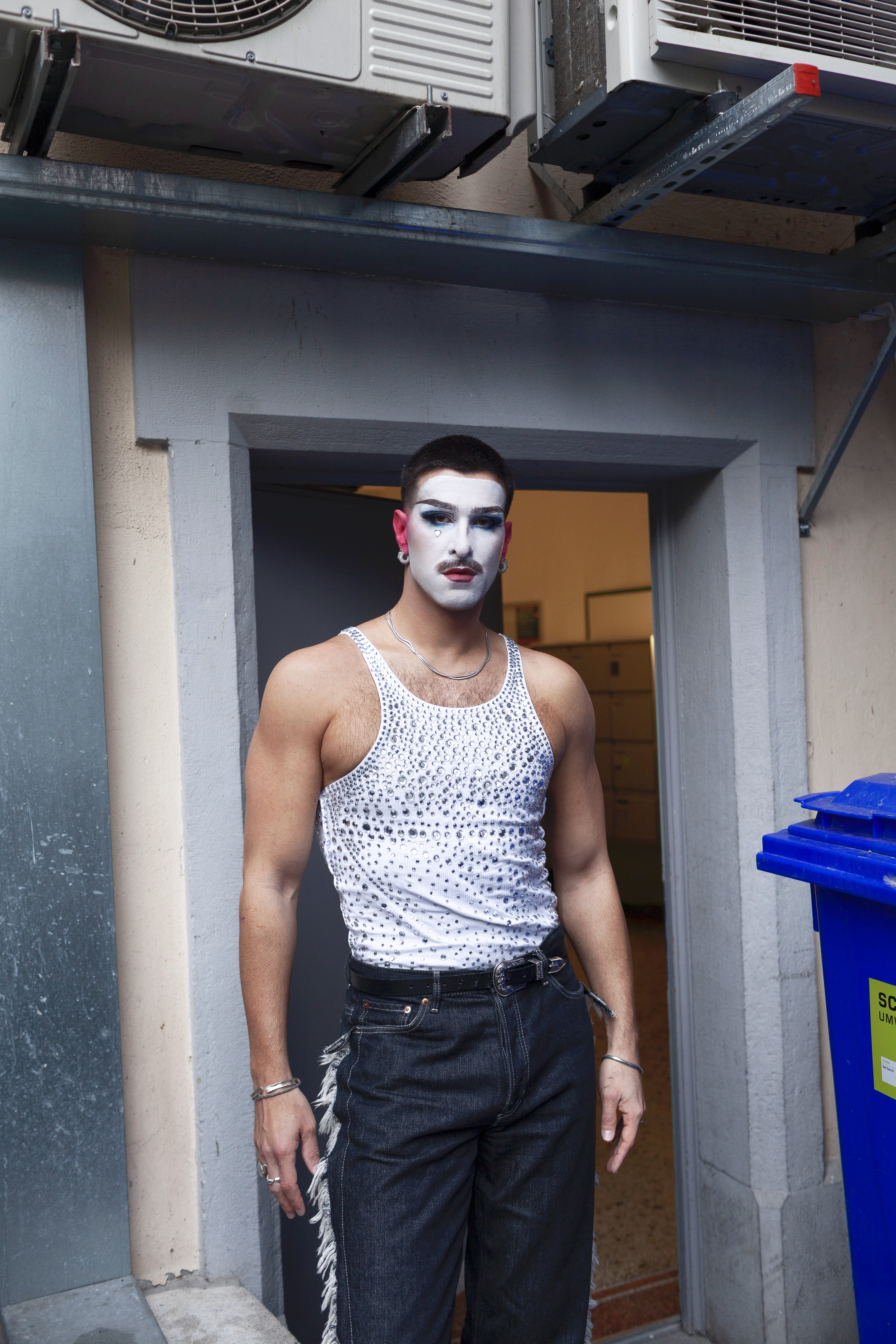
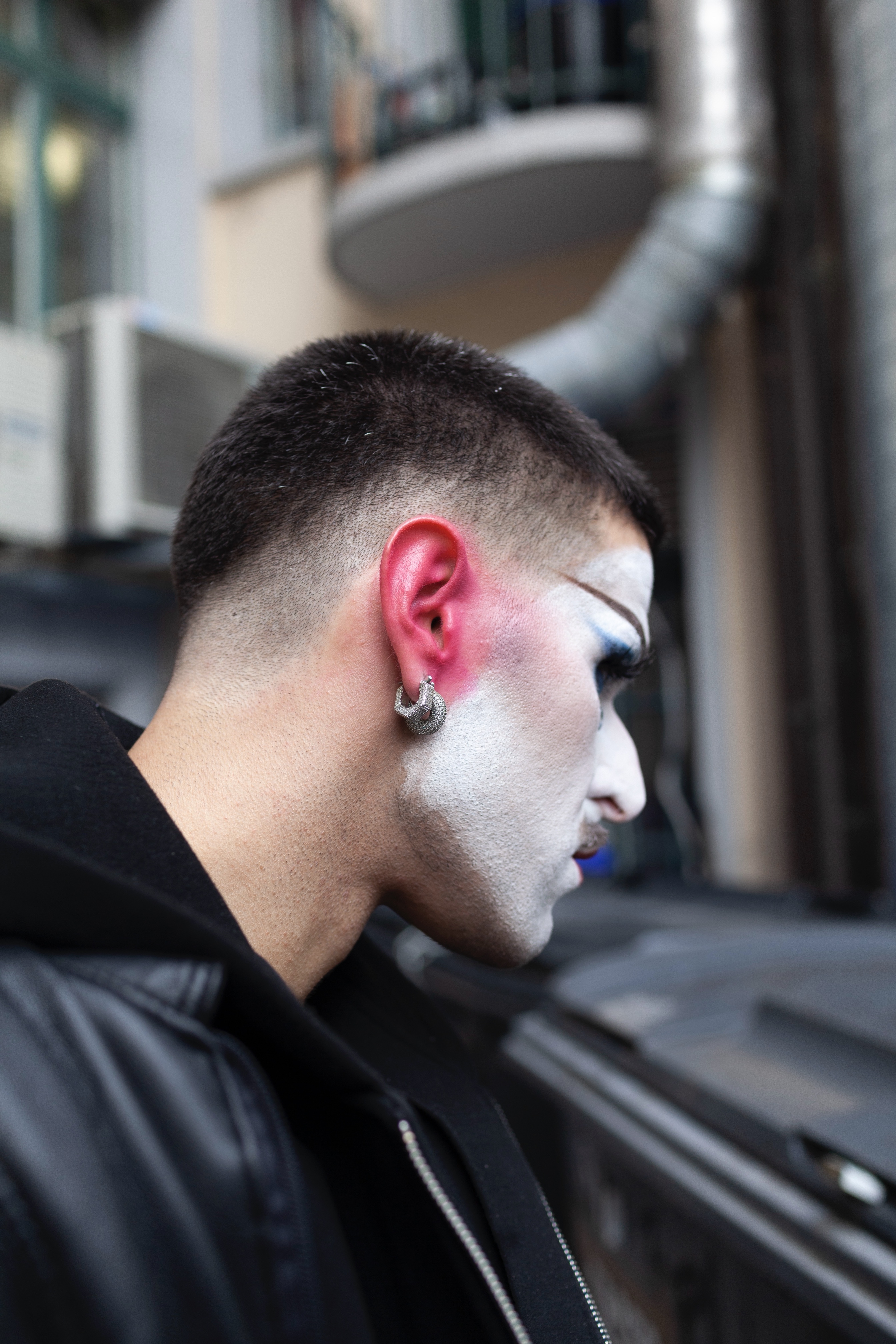
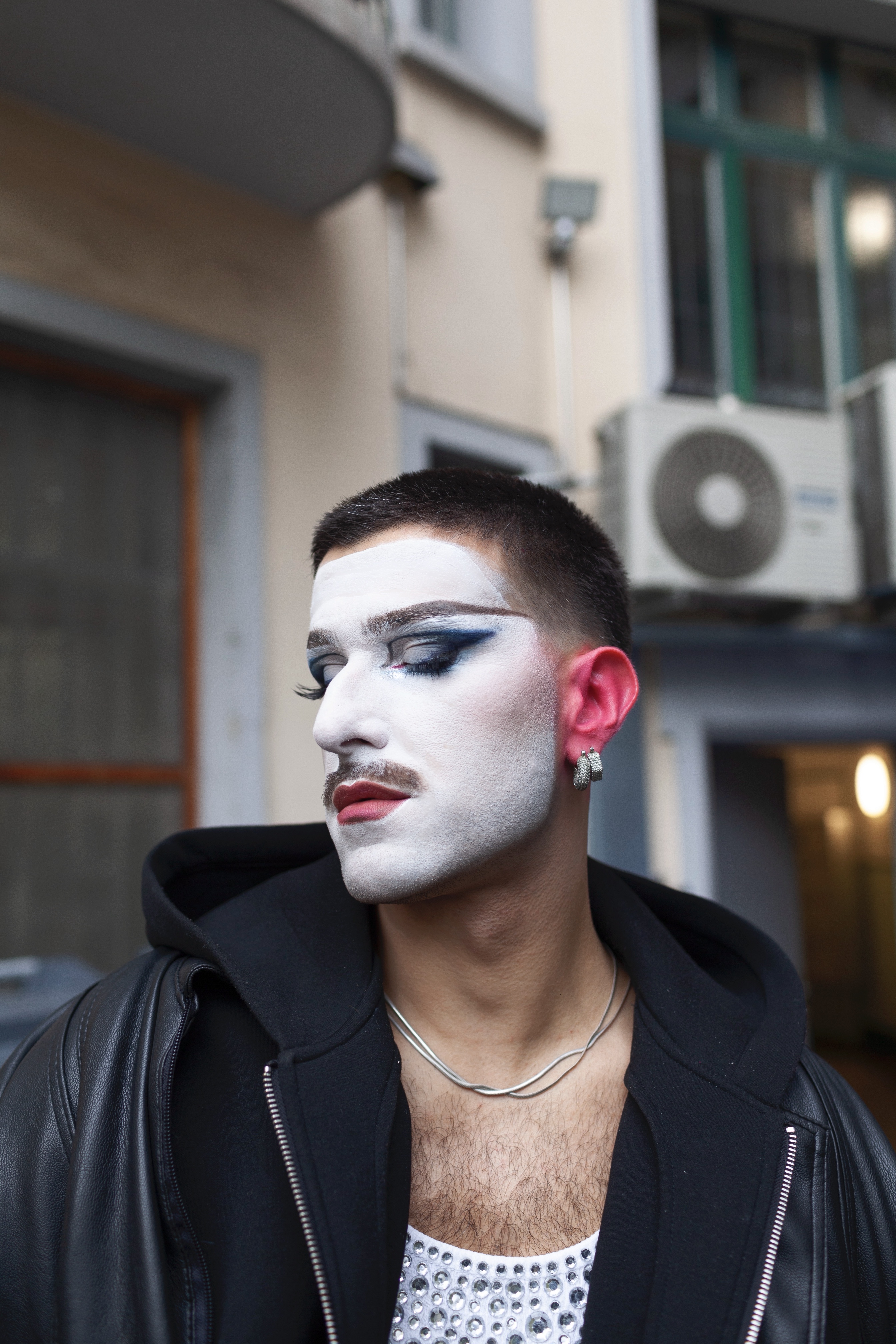
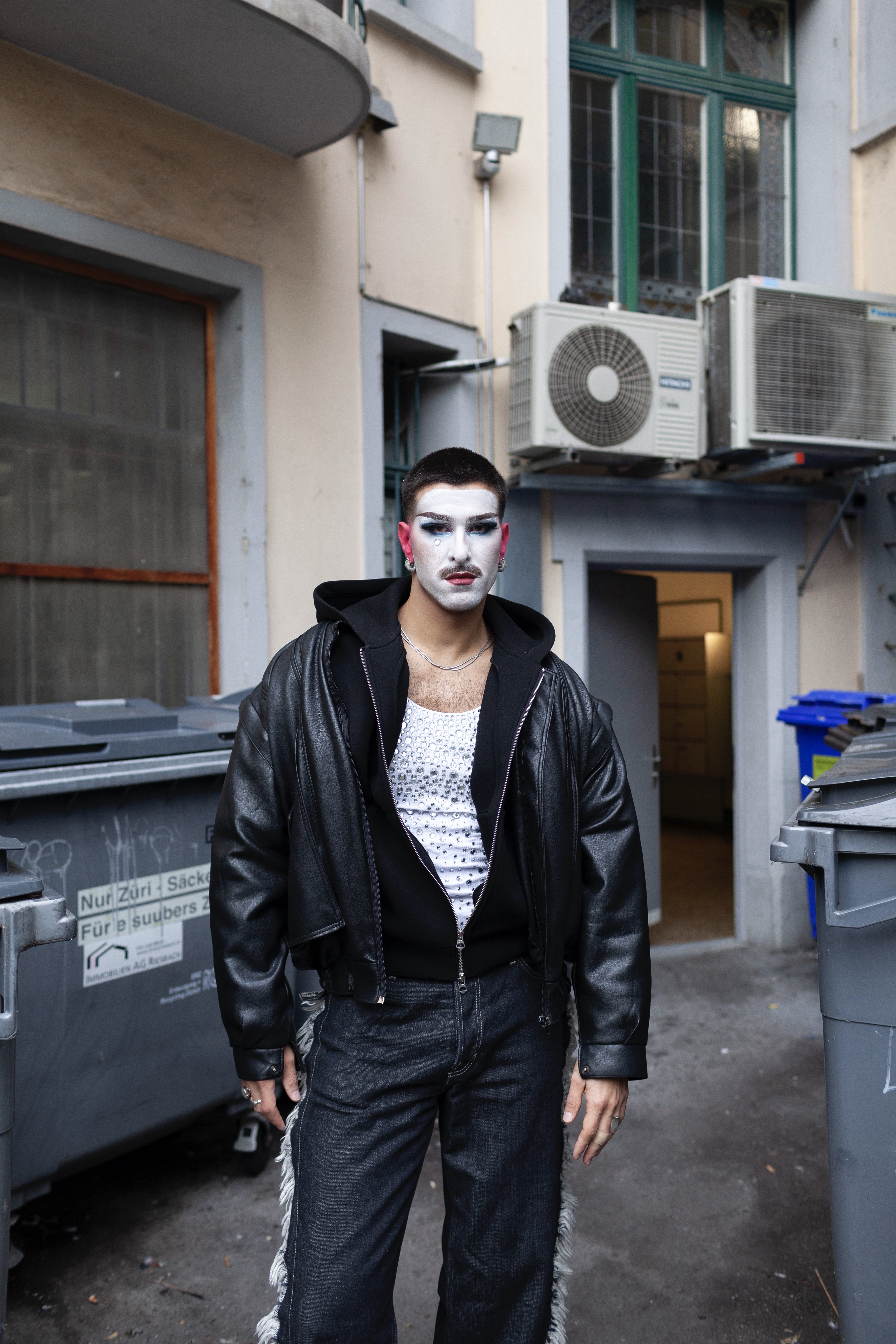
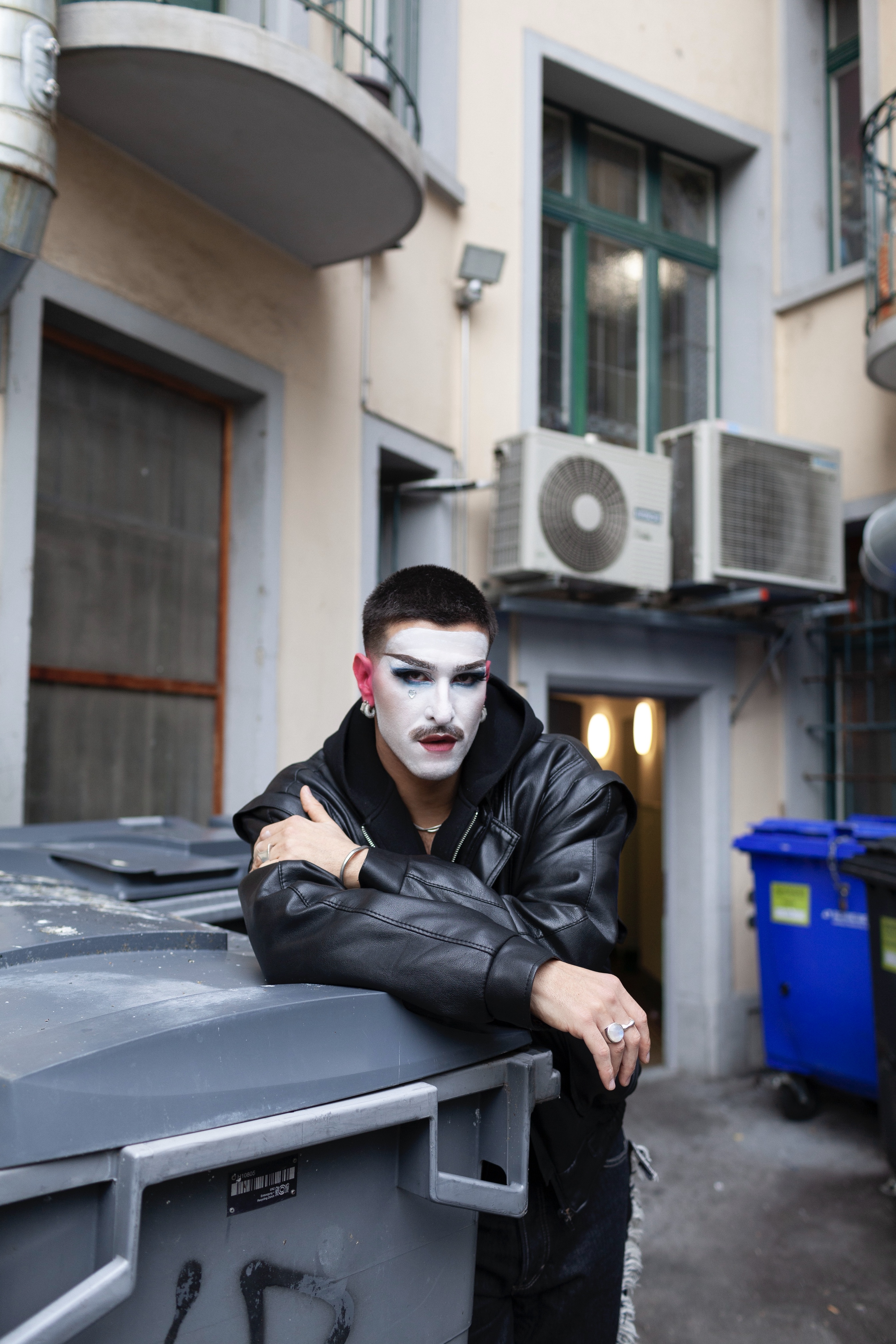
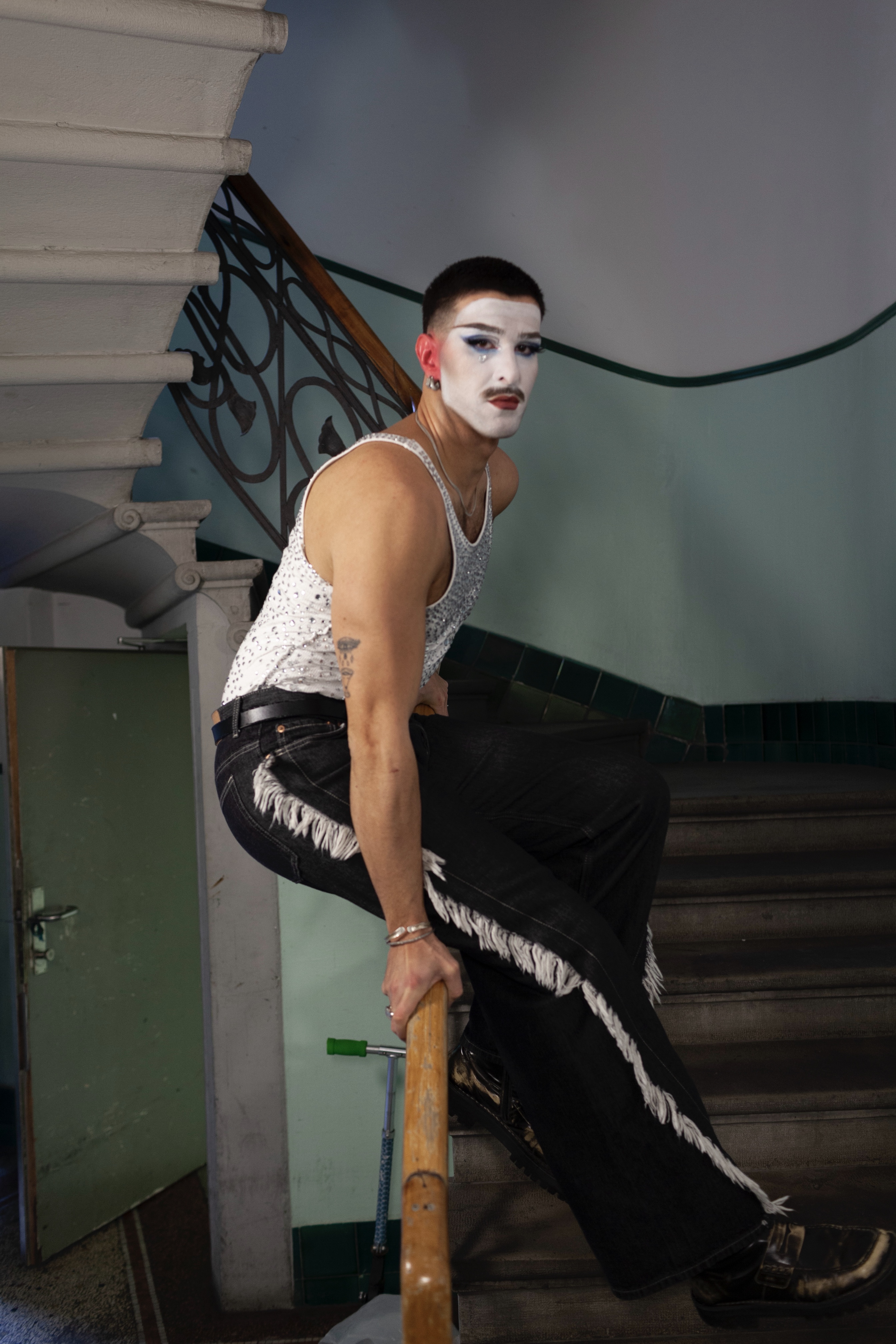
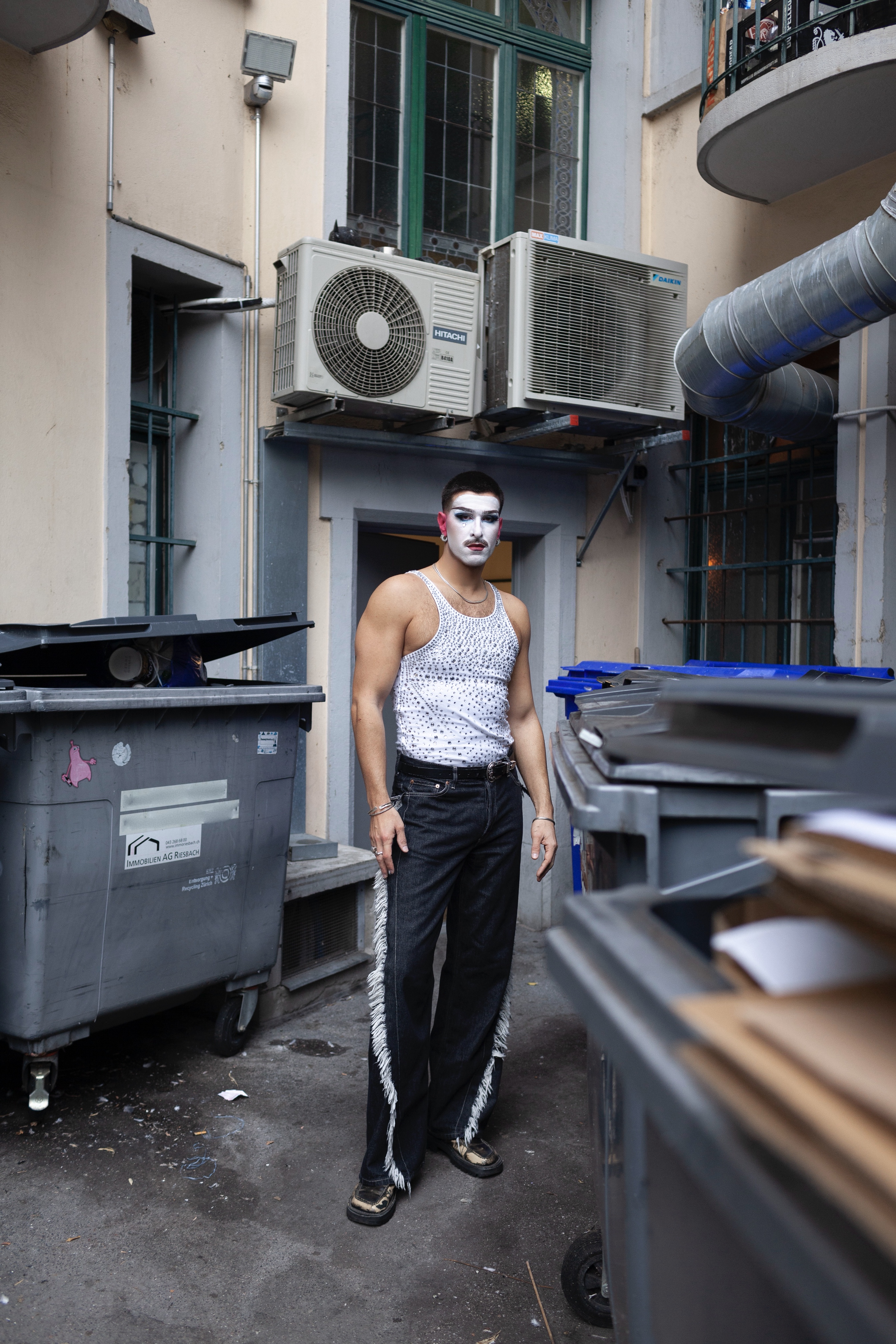
In Sharing the table with someone familiar, Andrea Popovic constructs a quiet yet charged scene of self-encounter. The performance unfolds as a ritual of preparation: a table is set for two, each gesture measured and deliberate, each object placed with the precision of a ceremony. Popovic, dressed in a drag version of a masculine gay man, performs both the anticipation and the labor of intimacy; organizing the space for a meeting that ultimately turns inward. The second guest never arrives; instead, the artist faces their own reflection, seated across the table in a mirror.
This gesture: turning performance into a mirrored duet with the self, anchors much of Popovic’s practice. Here, drag becomes less an act of transformation than of doubling: a method of looking at the self through another lens, embodying desire and distance simultaneously. The artist performs not to seduce an audience but to witness the fragile architecture of self-intimacy. The choreography of gestures (opening doors, paying bills, leaning forward, loosening arms) is repeated, inverted, and ultimately absorbed back into the performer’s body.
The accompanying ceramic sculptures, part of the “Call me when you get home” series, extend this exploration of mirrored intimacy into material form. Each small-scale scene captures a suspended moment between two figures: reclining together, embracing, resting, entangled. Rendered in glazed ceramic and placed on industrial steel shelves, these works merge tenderness and structure, warmth and restraint. Their placement evokes both domestic display and museum taxonomy, situating desire within systems of observation and containment.
Popovic’s training in directing and animation emerges in these pieces as a sensitivity to spatial rhythm and emotional staging. Each sculpture is a miniature stage, a mise-en-scène where intimacy is not only represented but rehearsed. The figures’ imperfect surfaces and visible seams reject the smoothness of idealized bodies; instead, they hold the evidence of touch and process.
Placed on steel shelves, the works exist between warmth and coldness, exposure and protection. Like the table in the performance, these supports create distance while preserving proximity. Together, performance and sculpture trace the choreography of queer self-recognition: the constant oscillation between performing for the gaze and returning to one’s own.
Here, to share the table is to share the stage. To sit across from oneself, to hold one’s own gaze, and to find, in that reflection, someone familiar.
Sharing the table with someone familiar
I open the door, you walk through.
You open the door, I step out of the car.
You order a drink for us, I pay the bill.
You put your hand on my lower back as I make my way forward.
I hold your head, guiding you into rest.
I tighten my arms so you can feel the tension.
You slowly part your lips, waiting for mine to find yours.
You slowly part your lips, waiting for mine to find yours.
I loosen my arms, releasing the tension you can feel.
I let go of your head, letting you rest on your own.
You step back, your hand leaving my lower back.
I pay the bill, while you order a drink for us.
I step back into the car, you open the door.
You walk back through the door, and I close it behind you.
I raise the glass to my lips, and my own movements return to me, tracing each gesture, folding into my own presence, sharing the table with someone familiar.